Service · 03
AI product photography that keeps your product exactly as it is.
AI Vidia makes composite product photography for DTC and e-commerce brands: we start from photos of your real product, build the scene and light with AI, and check label, colour and shape against your originals before anything ships. Stills are scoped per catalogue inside the plan and delivered in 9:16 for paid social. The entry point is the EUR 2,000 Control Test.
- 9:16
- Vertical, ad-ready delivery
- 0
- New shoot days when your reference photos are usable

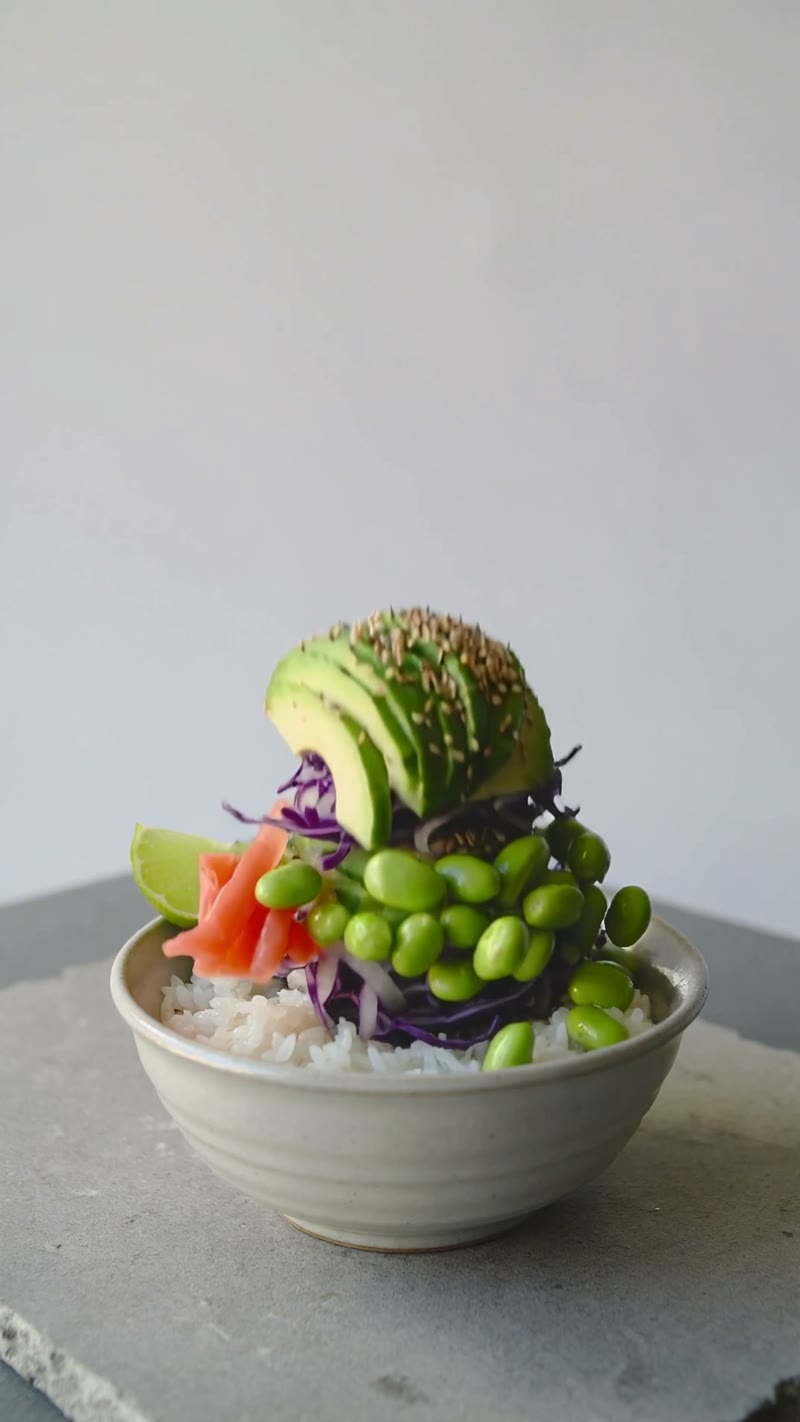


Poke bowl · product
Real client work
Who this is for
AI Vidia's product photography is for DTC and e-commerce brands that need their real product in new scenes and seasons for paid social, without booking a shoot for each one. The Performance Retainer suits brands spending EUR 50,000 a month or more on paid social. If you only need catalogue packshots on white, a product photographer is the better buy.
Gallery
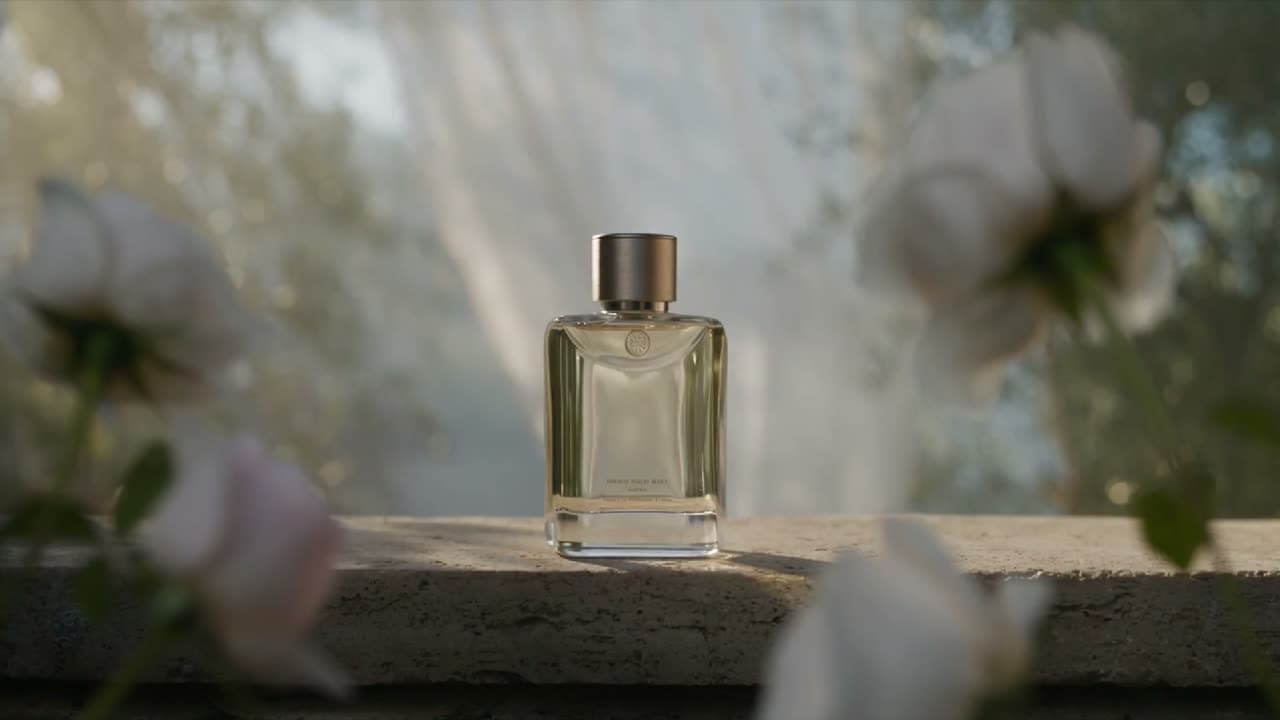
· live in production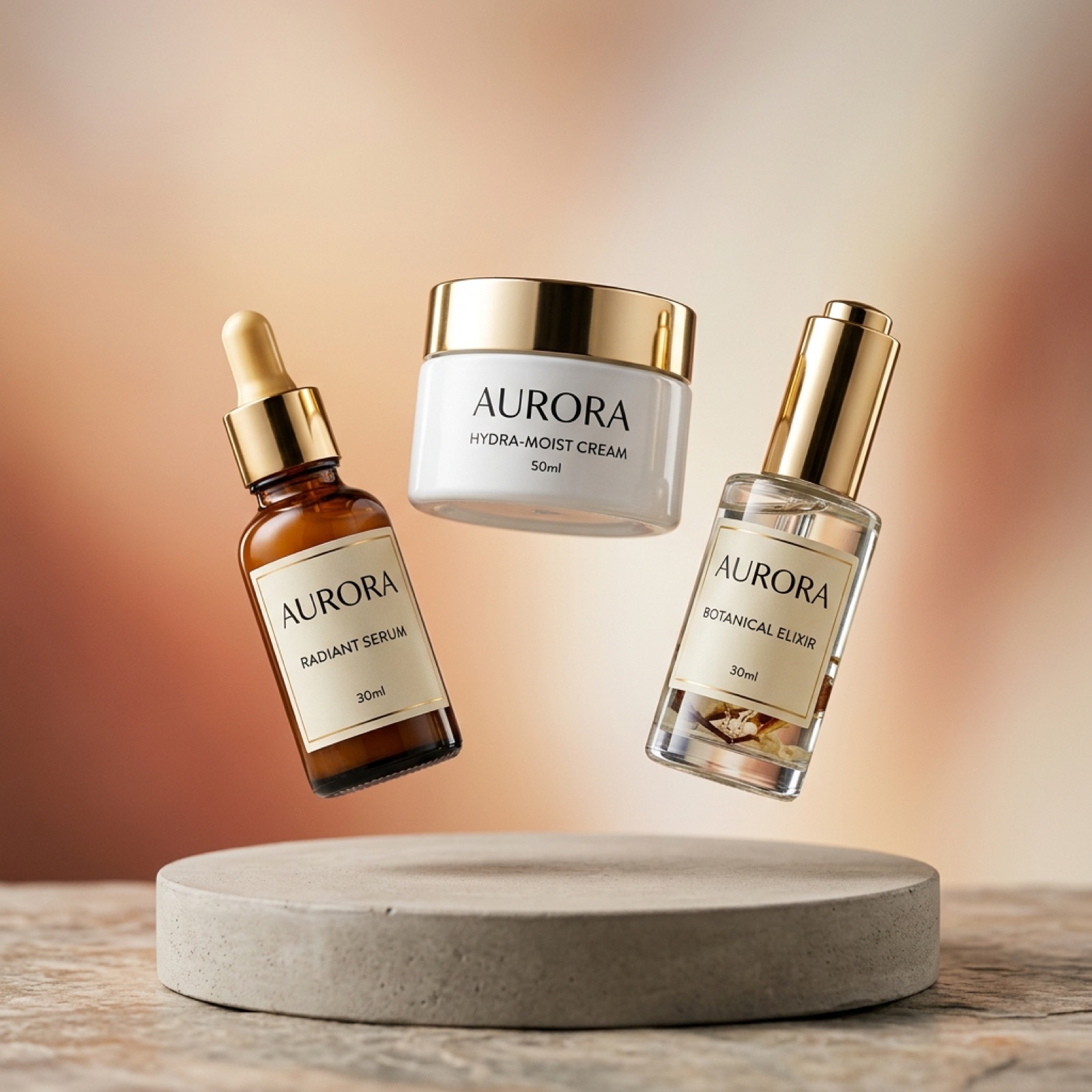
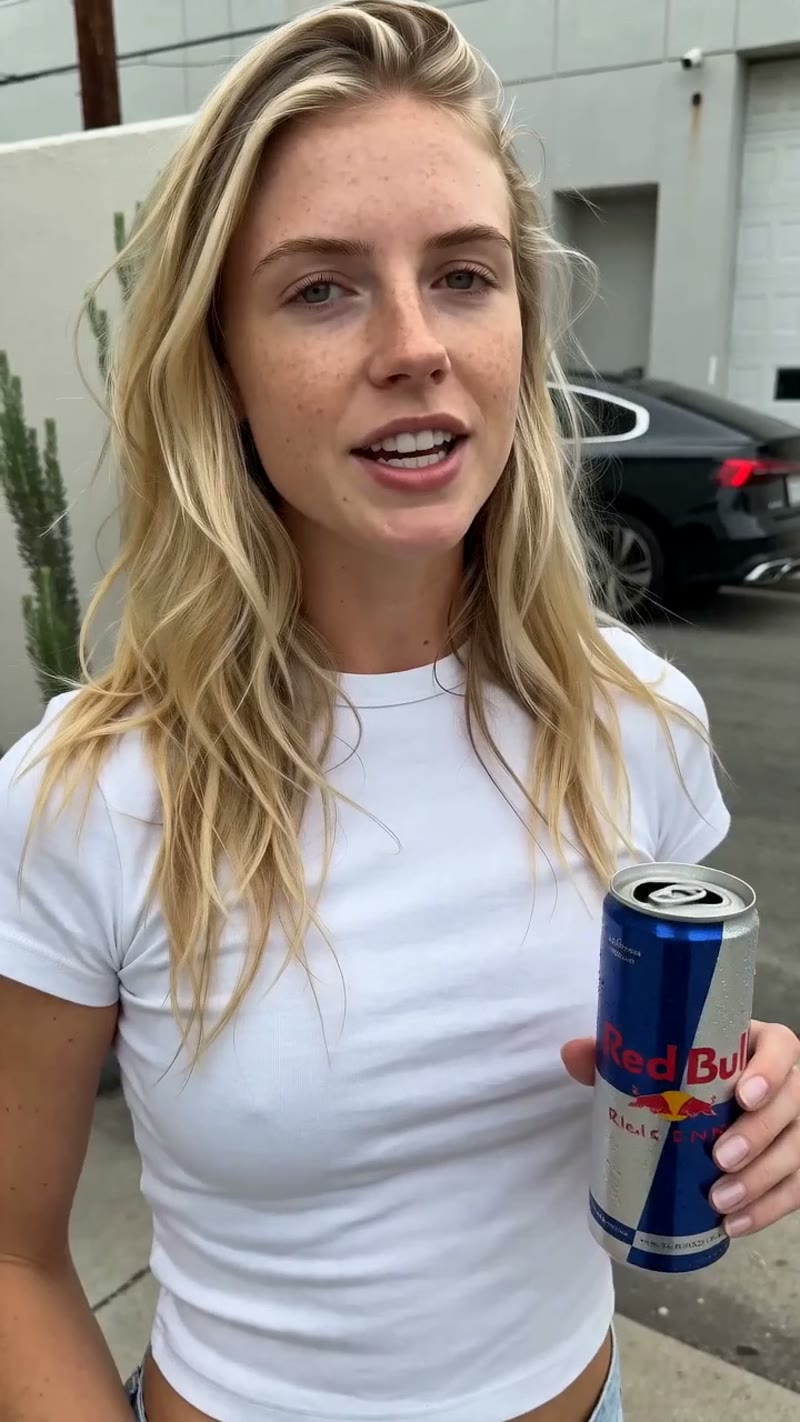
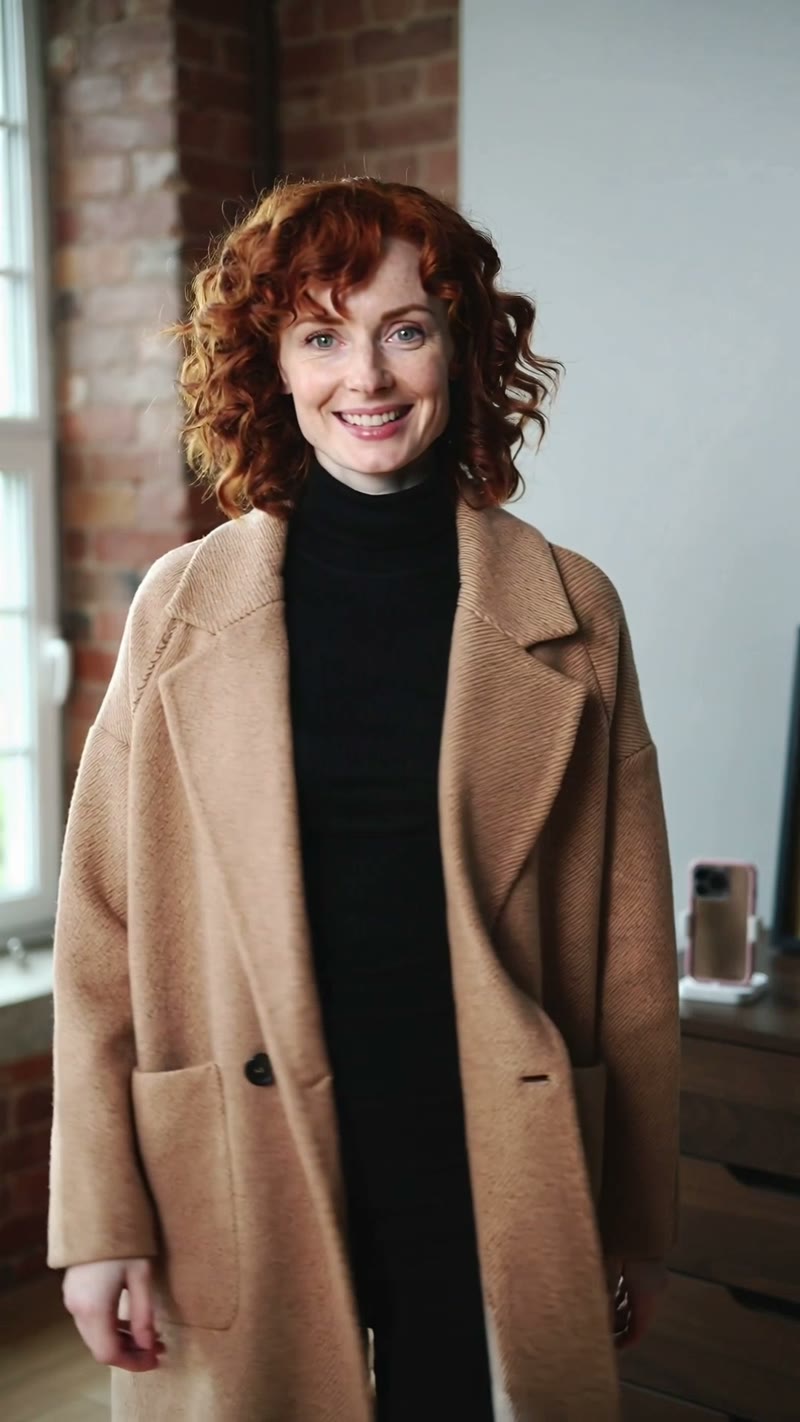
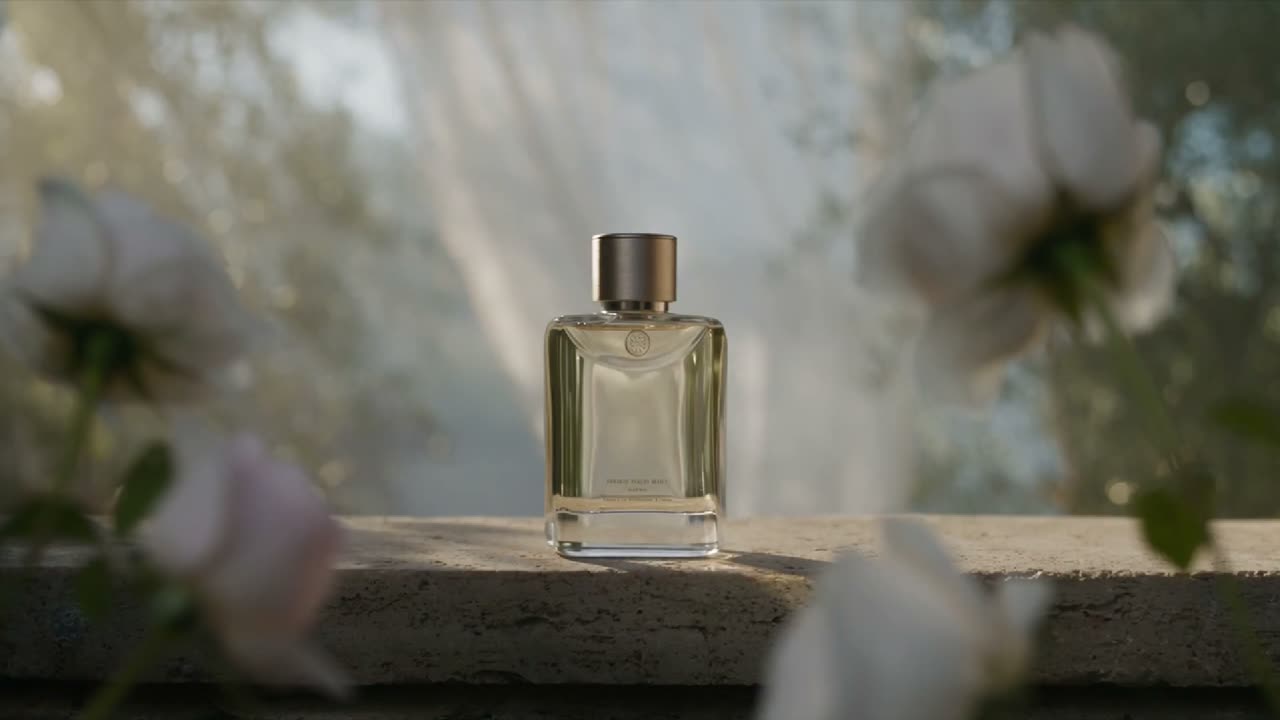
What you get
What our AI product photography includes
- 01
Composite photography
Photos of your real product, placed into new scenes, seasons and settings.
- 02
Locked lighting + palette
One lighting setup per brand, so product colour stays the same from one scene to the next.
- 03
Scene library
We build a reusable scene library per brand: lifestyle, editorial, seasonal, gift, studio. Swap product in or out as the catalog evolves.
- 04
9:16, ad-ready
Images are delivered in 9:16 as standard, ready for Reels, TikTok and Shorts, into your ad account or DAM. Other formats on request.
Worked demo · fictional product
Demo: from reference pack to approved ad image.
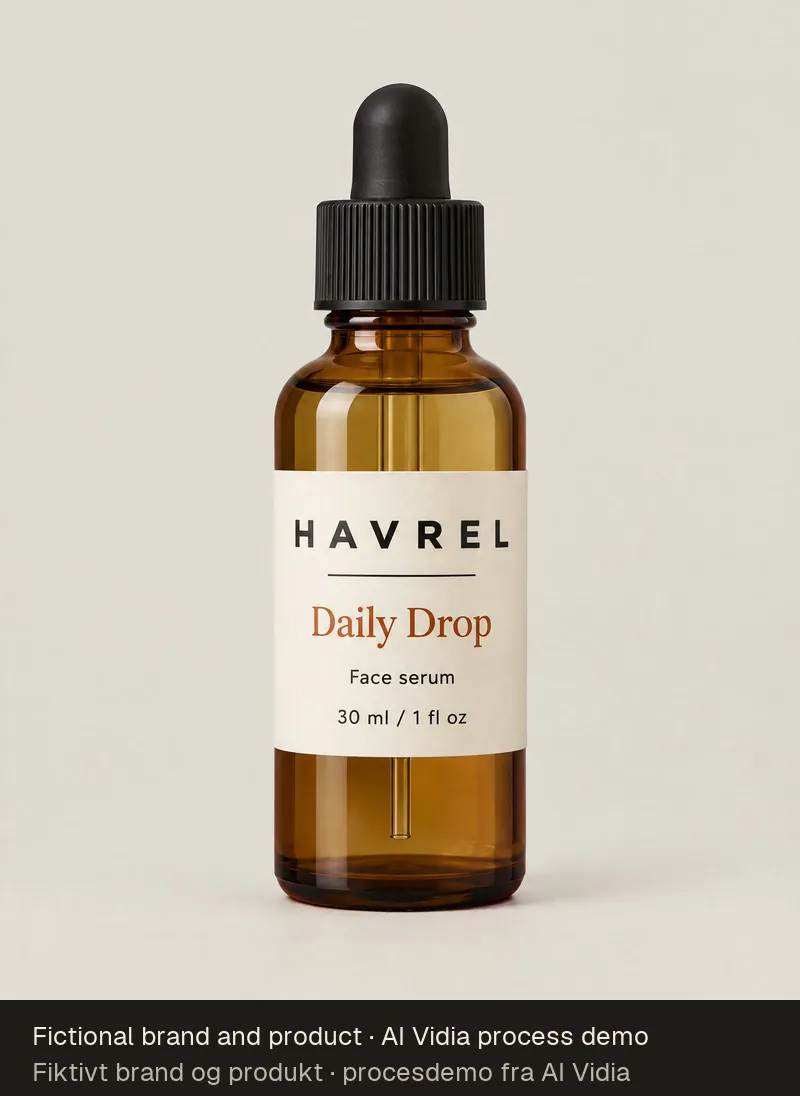
HAVREL and its Daily Drop face serum are fictional. AI Vidia invented the brand and the product for this demo to show how we check AI product shots; it is not a client, and the product does not exist. On a real job we start from your product photos. Here there was no product to photograph, so we generated the reference pack first and then treated it as the ground truth every ad image had to match. Every image carries a strip, added after generation, that marks it as fictional; nothing inside the frame was edited. Everything below is the recorded outcome, and every reject is shown or described.
1. The ground-truth sheet
Written before the first image and used to judge every one of them.
| Label text | HAVREL · thin rule · Daily Drop · Face serum · 30 ml / 1 fl oz. Four lines and one rule, in that order, and nothing else. |
|---|---|
| Parts | 1 amber glass bottle. 1 dropper of exactly 3 parts: black ribbed collar, black bulb, clear glass pipette. 1 cream front label. With the dropper lifted out, the neck is open and there is still only one pipette in the scene. |
| Must not change |
|
One hard defect fails an image, however good it looks: changed or misspelled label text, the wrong bottle, dropper or part count, the wrong colour or material, the wrong scale, an added claim or logo, or something physically impossible.
2. The reference pack
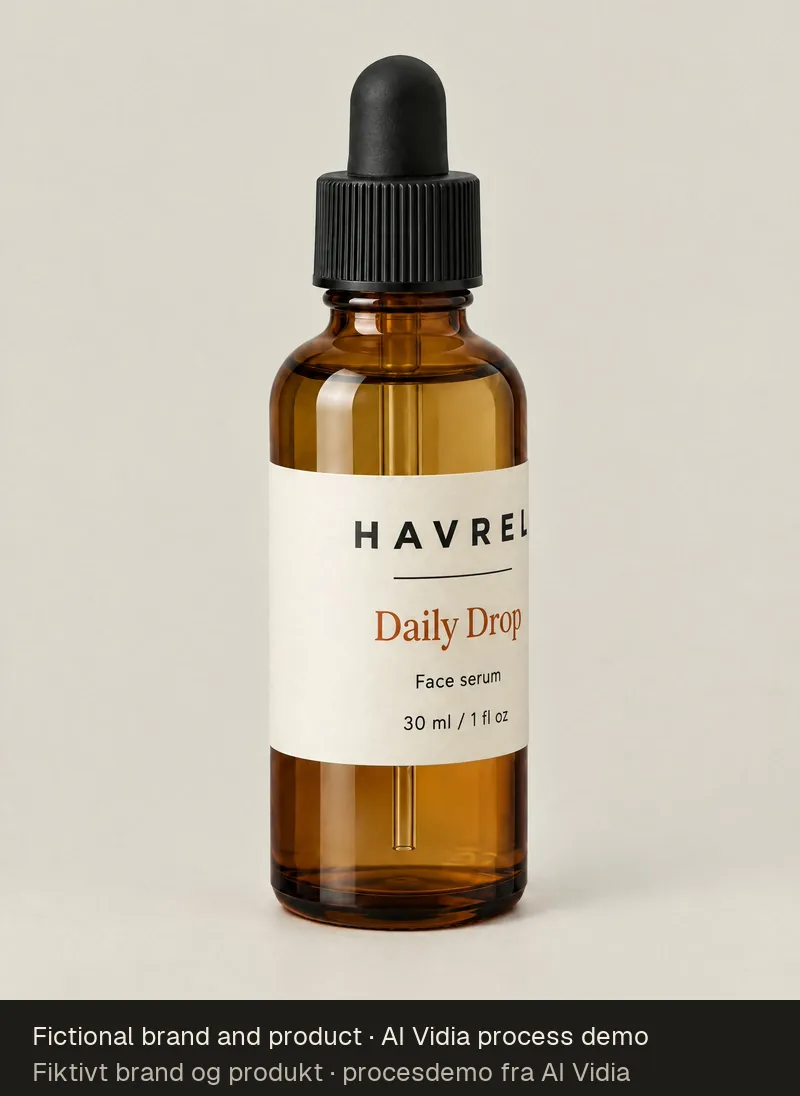
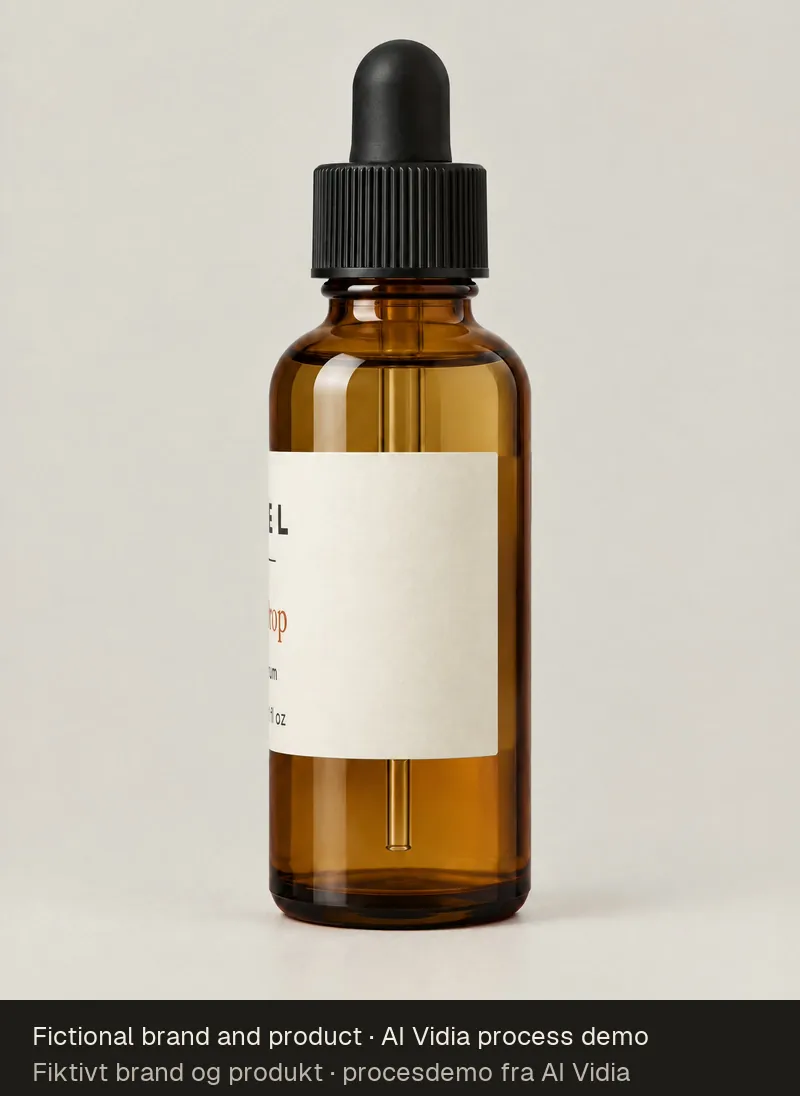
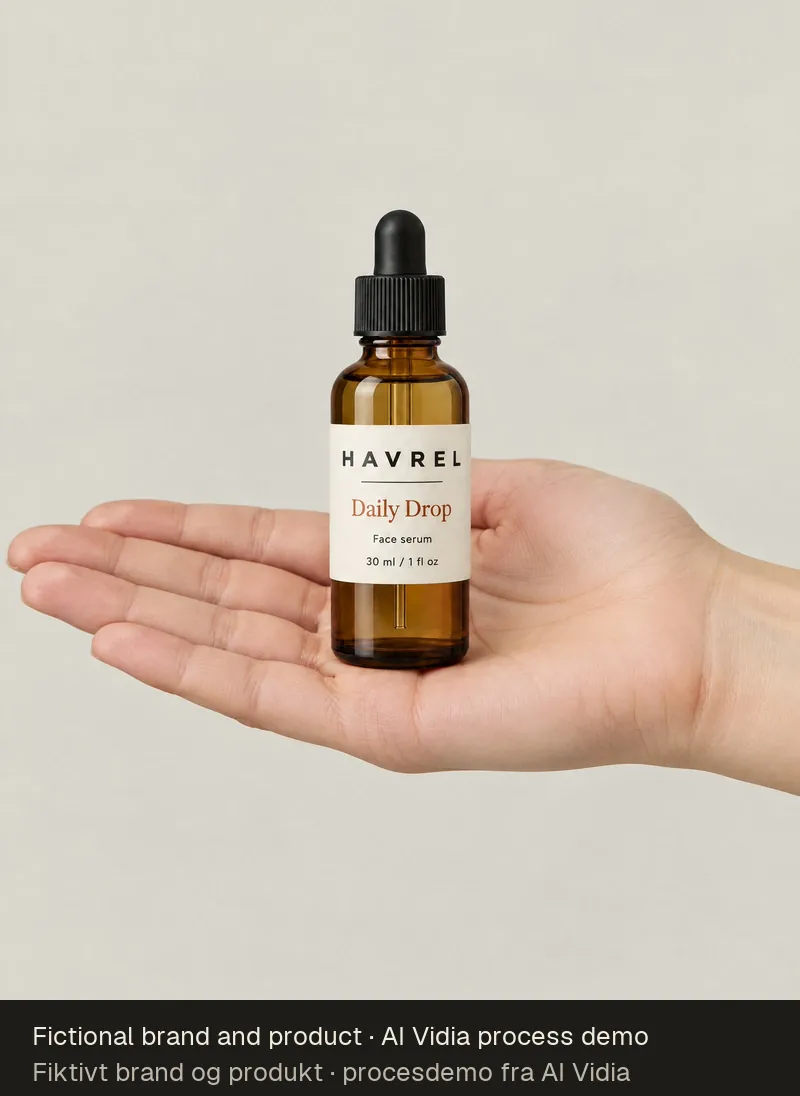
Generated from the sheet and checked against it before any ad image was made. It took 6 generations: 4 accepted, 2 rejected. The first front shot ended the pipette in a ball and made the bottle too squat. The first hand shot made the bottle about 1.8 times too big, so it read as a 100 ml bottle or larger. The accepted hand shot still reads slightly large, so it was set as the largest the bottle may ever look next to a hand.
 , open the full-size image
Fictional product · Front: the master packshot  , open the full-size image
Fictional product · Three-quarter view  , open the full-size image
Fictional product · Side: dropper and label edge  , open the full-size image
Fictional product · In the hand: scale
3. Concepts A, B and C, three attempts each
Each concept had one base prompt and three attempts with images from the reference pack attached; the attempts varied at most the camera distance and lens. Two blind AI review passes, not people, judged every attempt against the sheet, neither seeing the other's verdict. Each rejected attempt got one revision round and no more. A revision is a new generation from a corrected prompt, not an edit of the rejected image.
Concept A: One drop
Macro of one drop leaving the pipette above the open bottle, with the label sharp in the same frame.
 , open the full-size image
Fictional product · Attempt 1
Rejected by AI review
Two pipettes: one in the hand and one still inside the open bottle. The one in the hand also narrows to a tapered tip, and it is short.
 , open the full-size image
Fictional product · Revision of attempt 1
Still rejected after one revision
Second pipette gone, but the tip still narrows into a nozzle, and the pipette is short.
 , open the full-size image
Fictional product · Attempt 2
Rejected by AI review
Same defects: a second pipette left inside the bottle, and a beaded tip on a short pipette.
 , open the full-size image
Fictional product · Revision of attempt 2
Still rejected after one revision
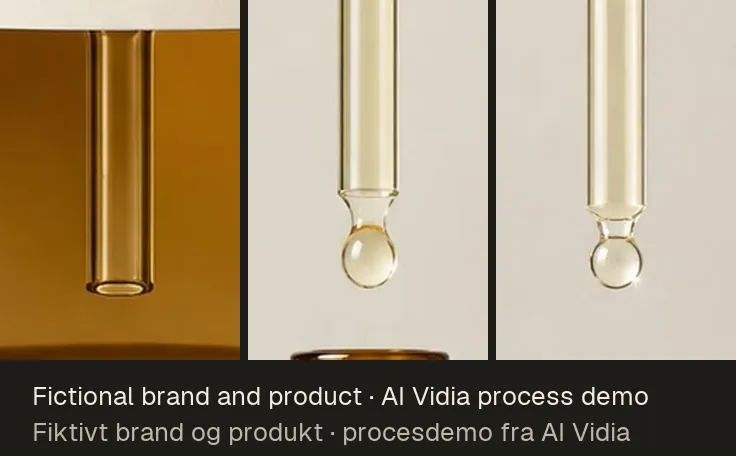
Self-review passed it: second pipette gone, one pipette with a flat rim. An independent check failed it: below the rim sits a clear, narrowed segment before the drop, the same nozzle as revision 3. It also misses the brief twice: the drop hangs about 6 mm above the neck, not 4 cm, and the hand reaches into the top 20 percent kept for captions.
 , open the full-size image
Fictional product · Attempt 3
Rejected by AI review
Same defects again: two pipettes, and a beaded tip on a short pipette.
 , open the full-size image
Fictional product · Revision of attempt 3
Still rejected after one revision
Second pipette gone and length close to the sheet, but the tip narrows into a nozzle again.
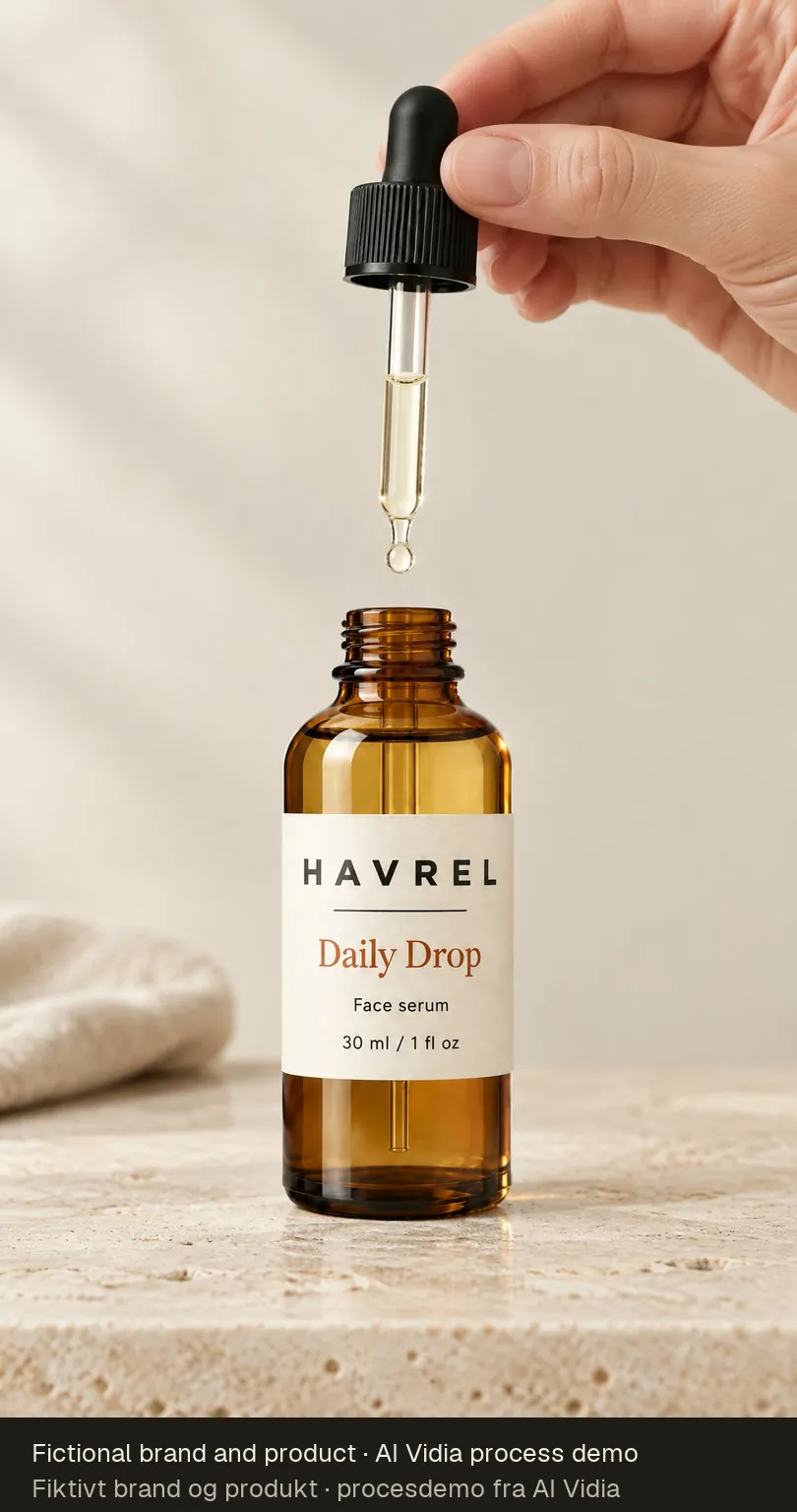
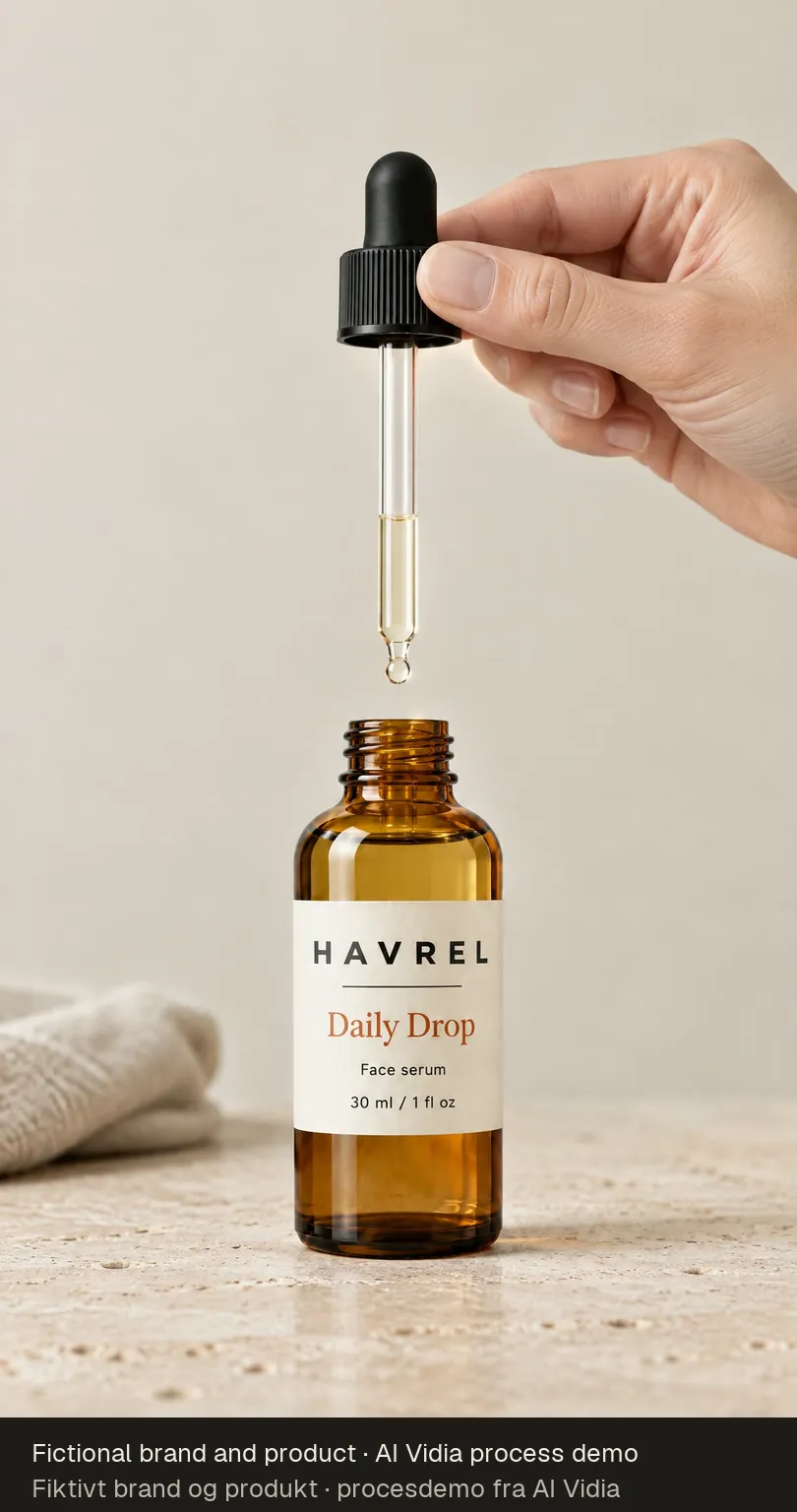
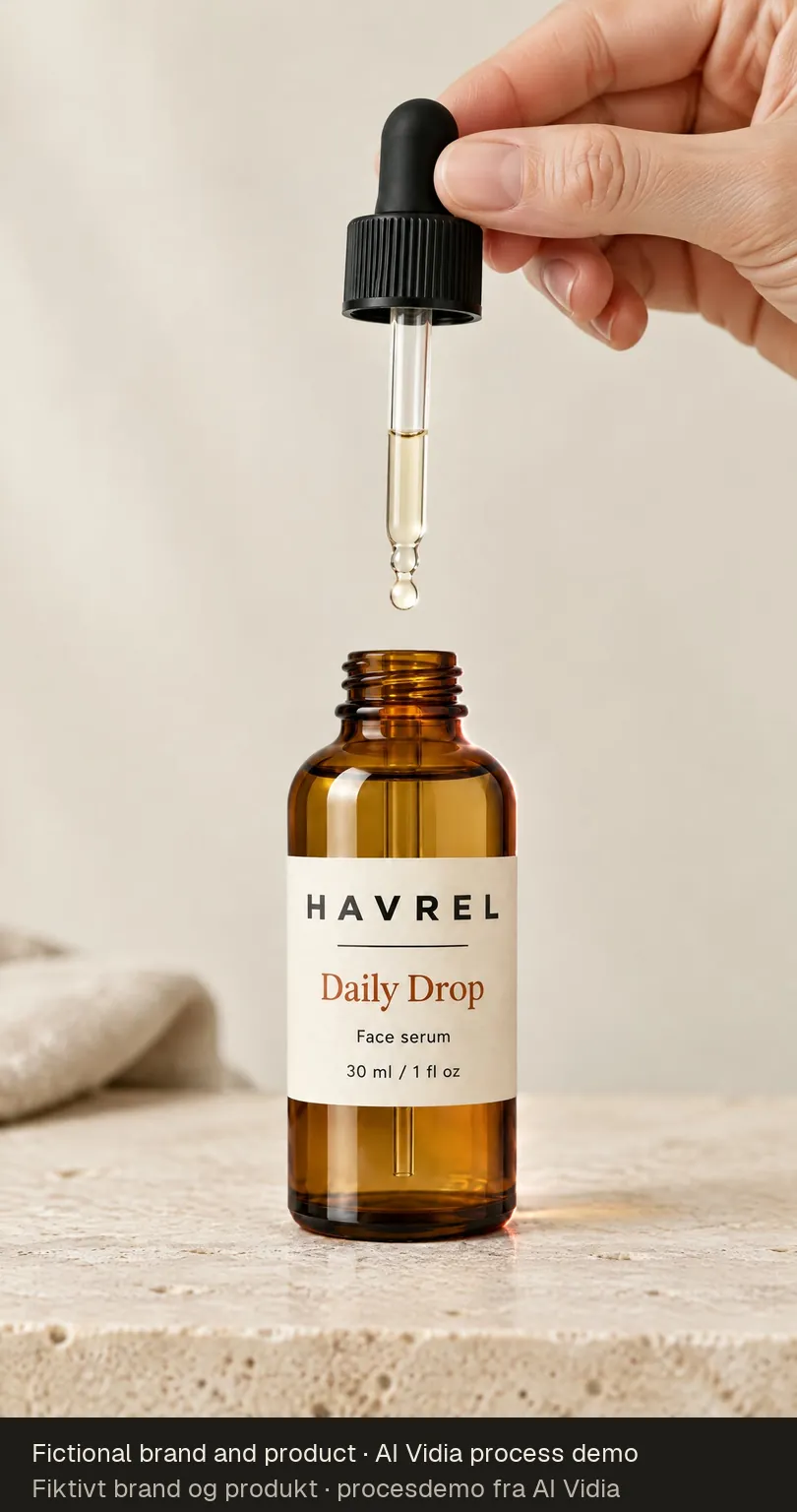
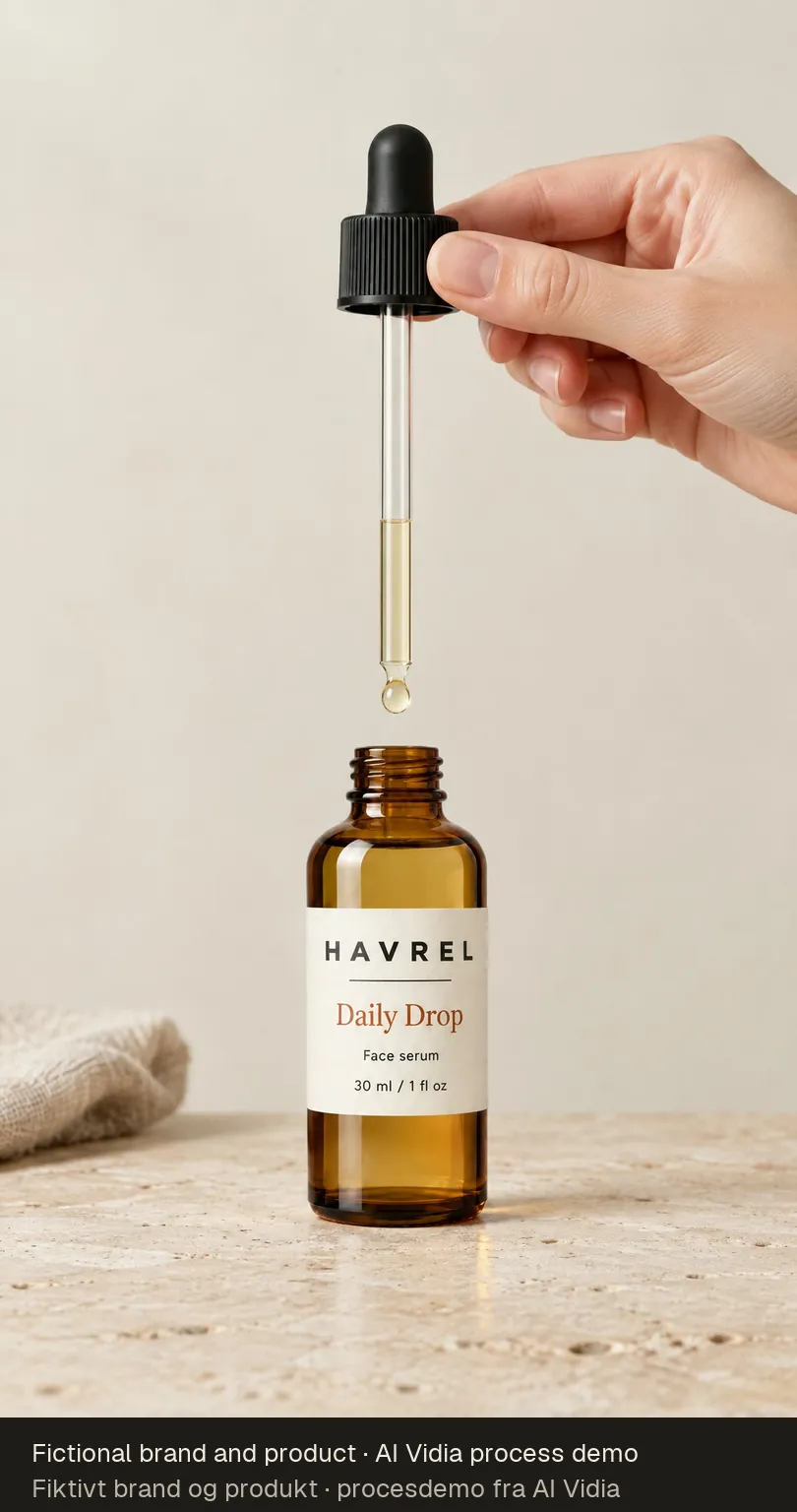
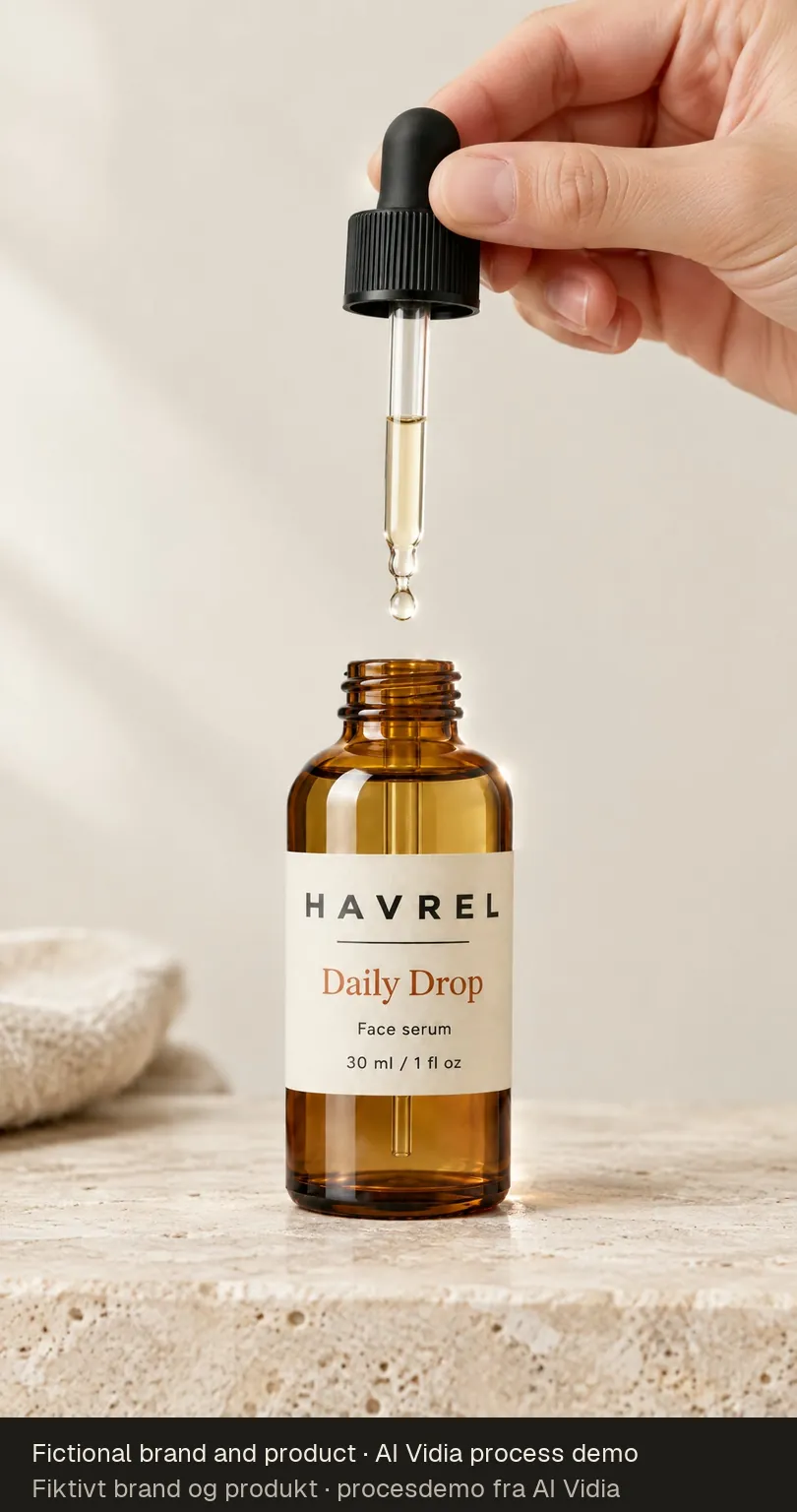
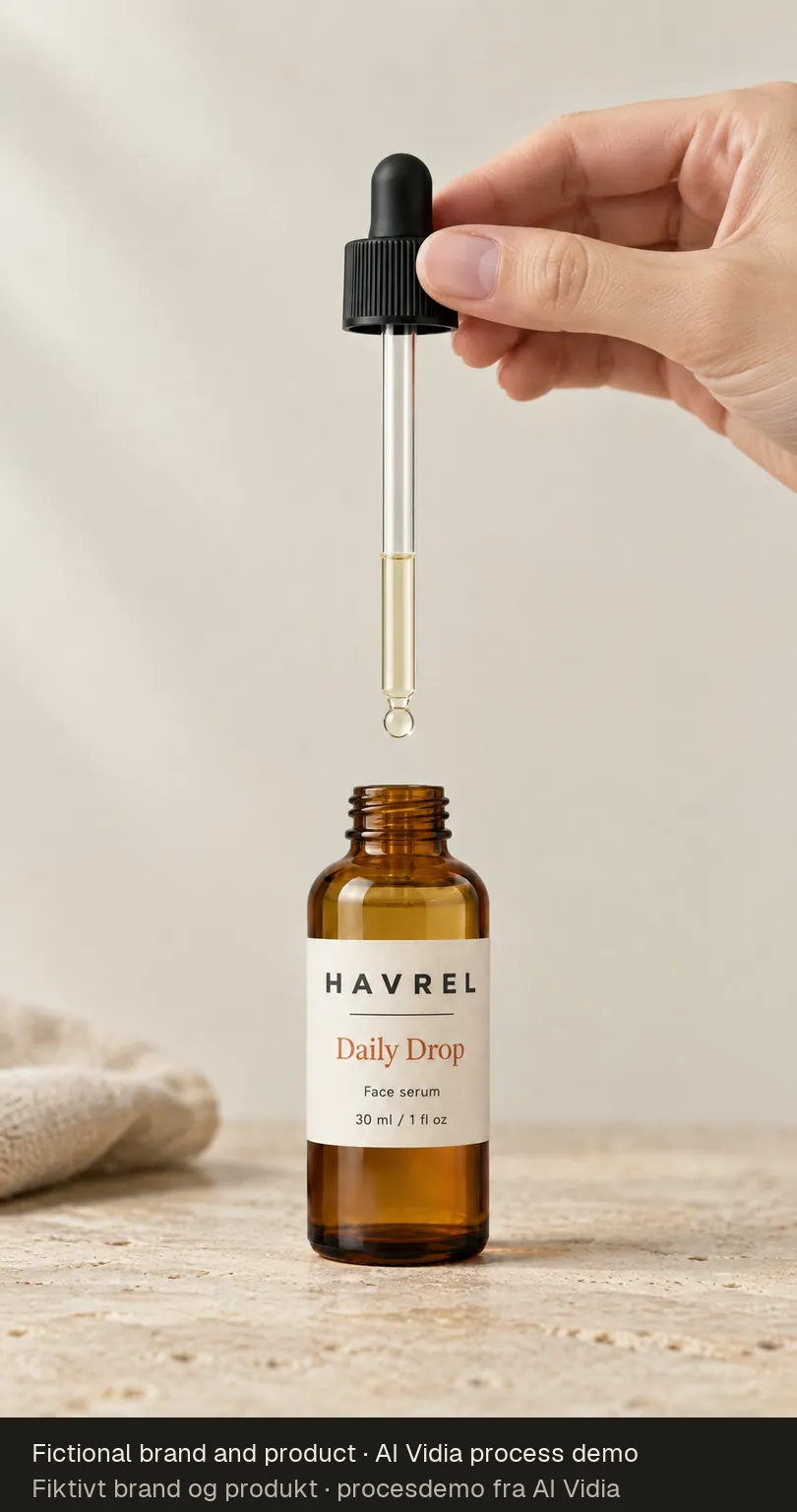
Why concept A failed: every reference image shows the bottle closed, with the pipette visible through the glass. Told to copy the product exactly, the model kept that pipette inside the open bottle and drew a second, shorter one in the hand. The revisions said the pipette in the hand is the same one and the open bottle holds no tube. That removed the second pipette in all 3 revisions, but the tip still narrowed into a nozzle in all 3. A self-review first passed revision 2; an independent check then found the same narrowed segment as in revision 3, as the close-up shows. Concept A ends with no approved image.
 , open the full-size image
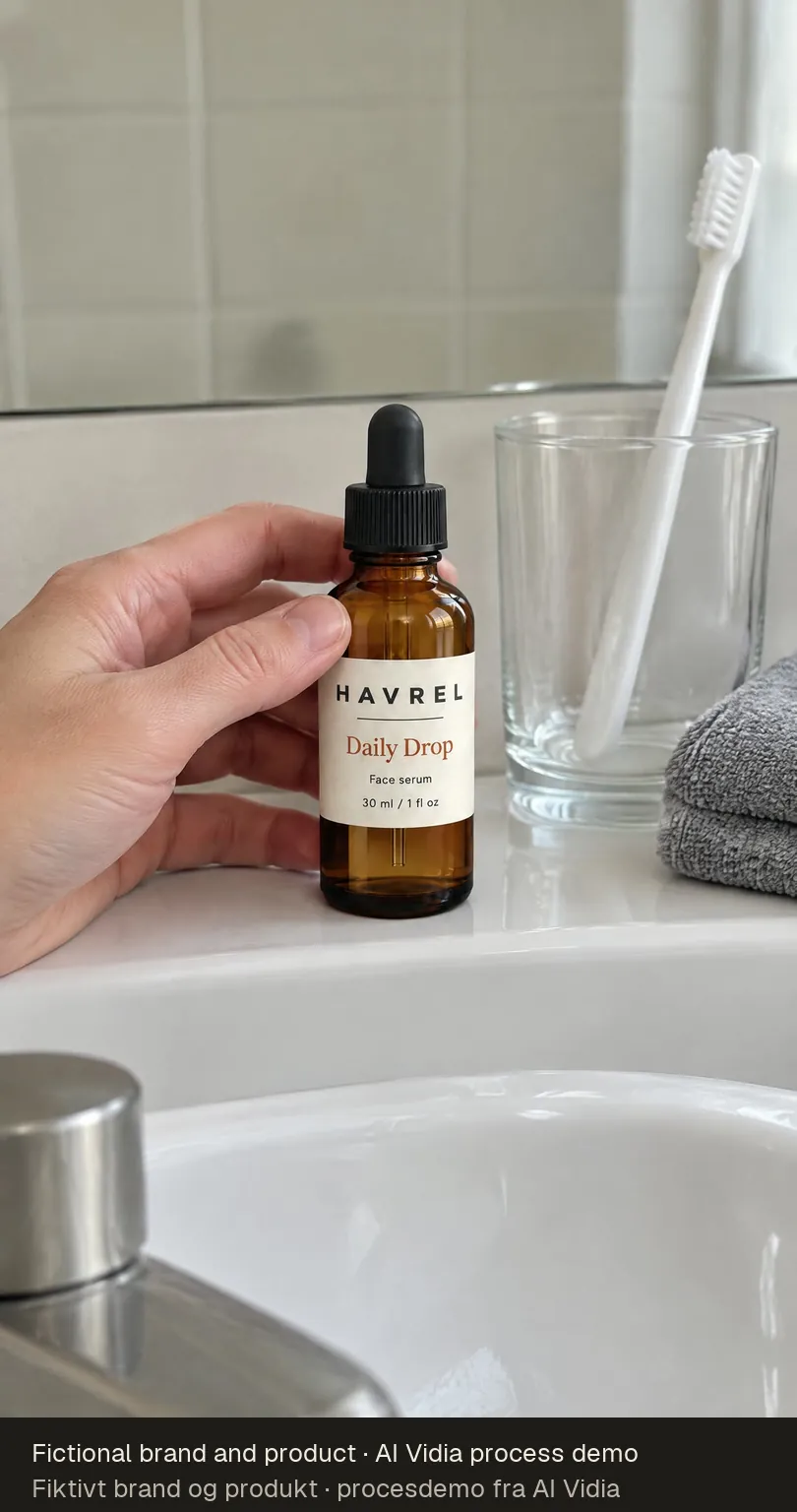
Concept B: By the sink
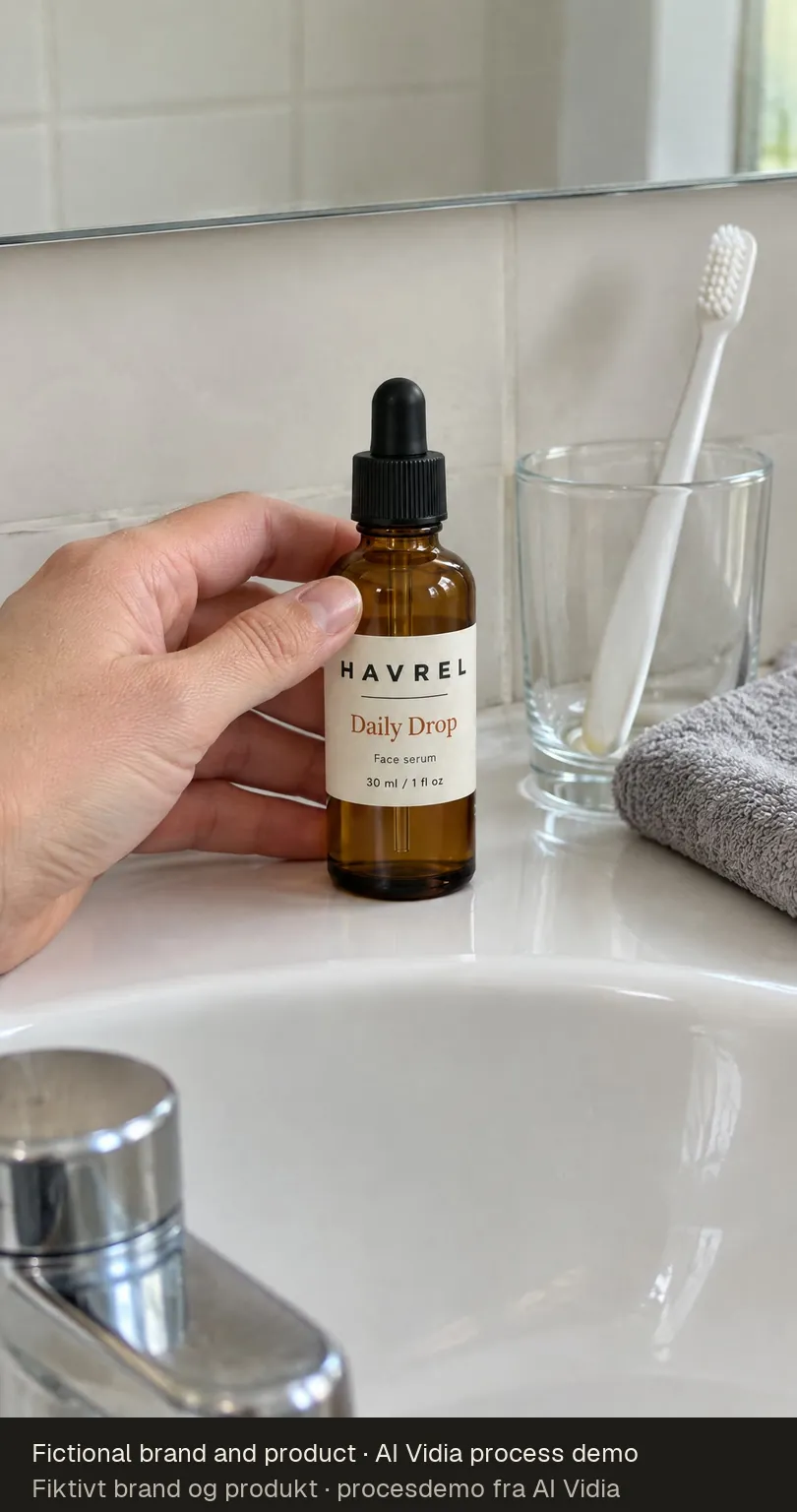
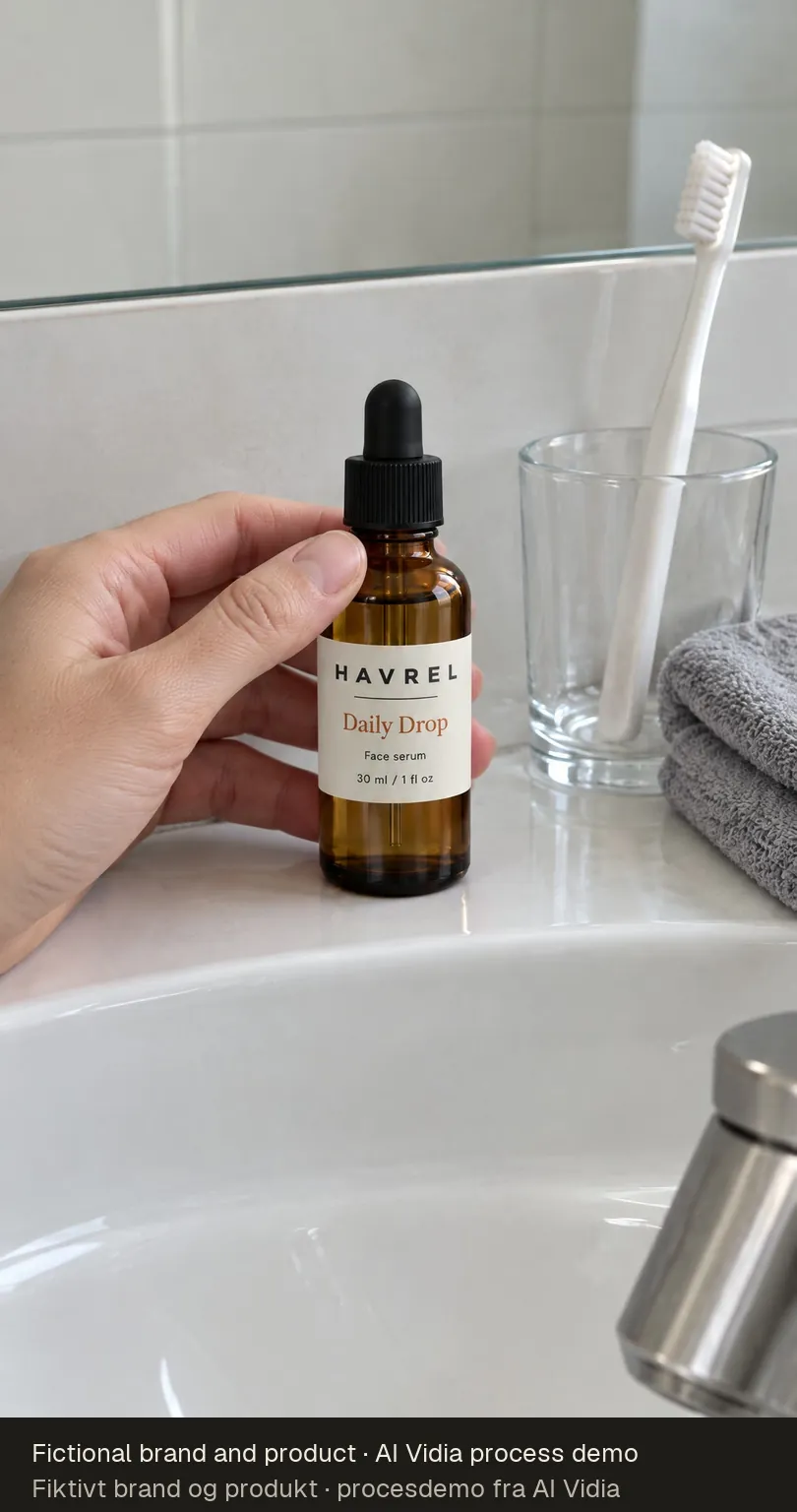
Phone-style photo on a bathroom basin ledge, with a hand about to lift the closed bottle.
 , open the full-size image
Fictional product · Attempt 1
Approved by AI review
No hard defect. Minor (1 of 5 recorded): the thumb touches the label's top corner; no text is covered.
 , open the full-size image
Fictional product · Attempt 2
Approved by AI review
No hard defect. Minor (1 of 4 recorded): fingertips show past the bottle's edge; the label stays clear.
 , open the full-size image
Fictional product · Attempt 3
Approved by AI review
No hard defect. Minor (1 of 4 recorded): the tap is large in the foreground and pulls the eye.
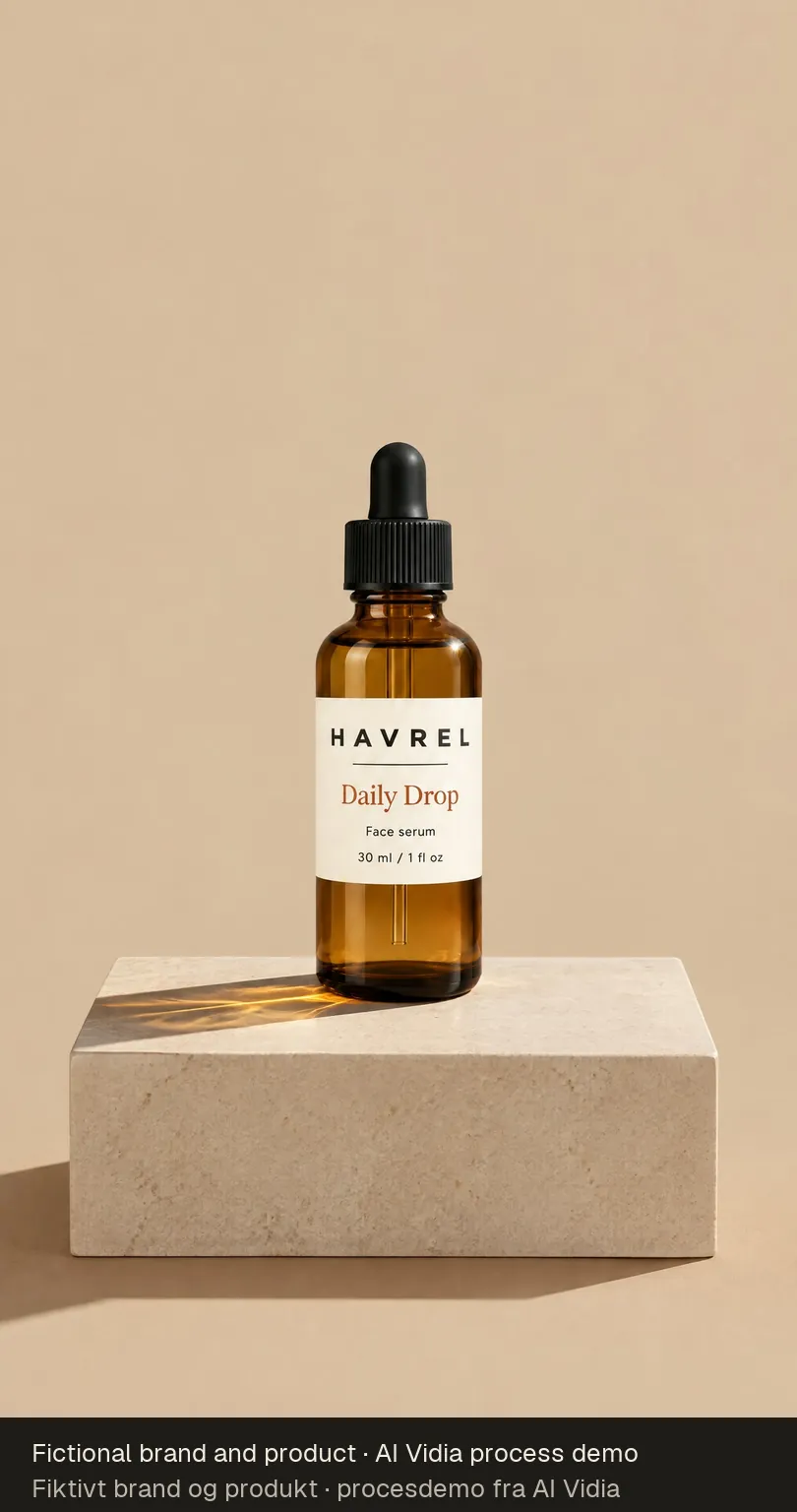
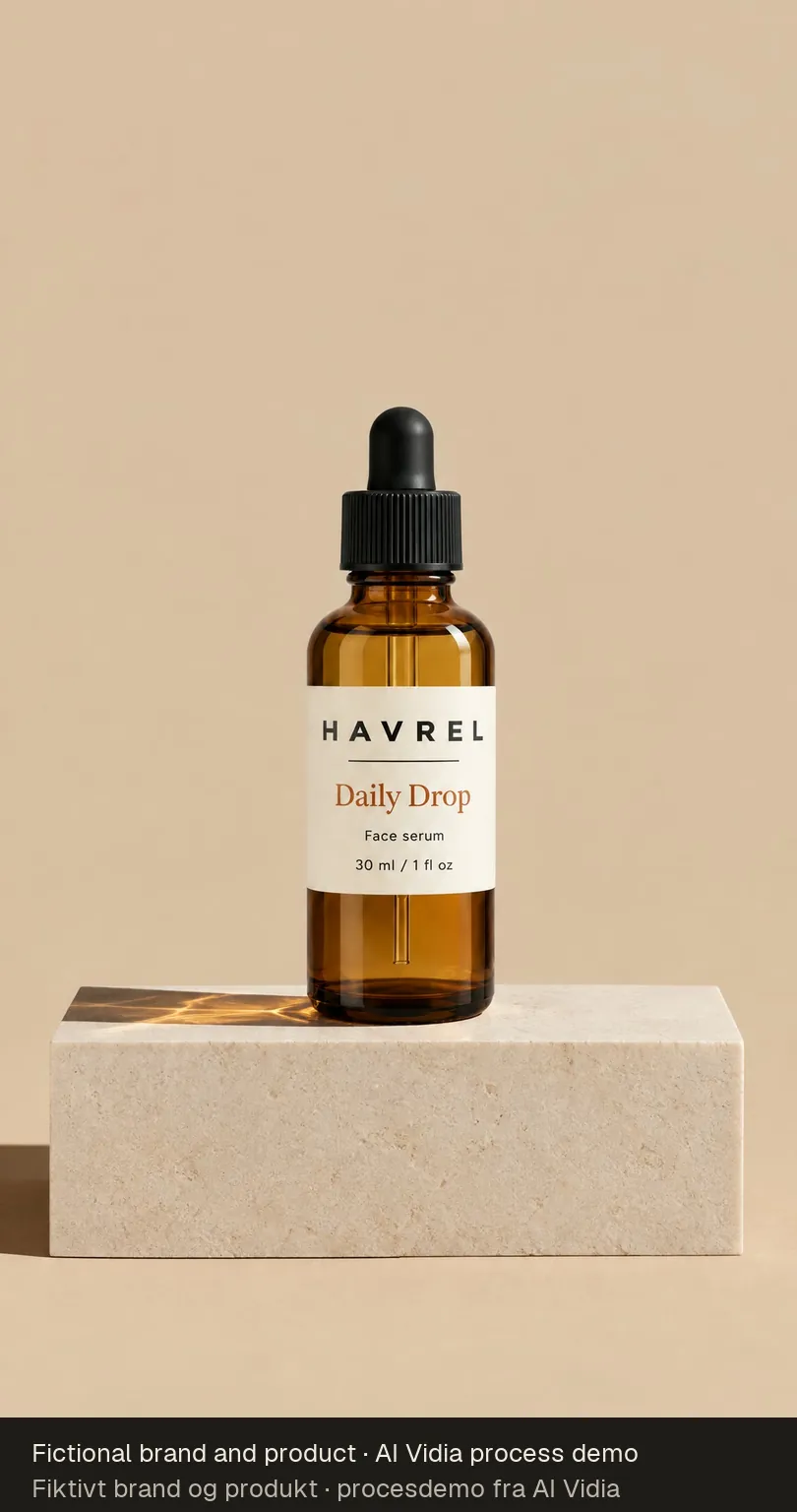
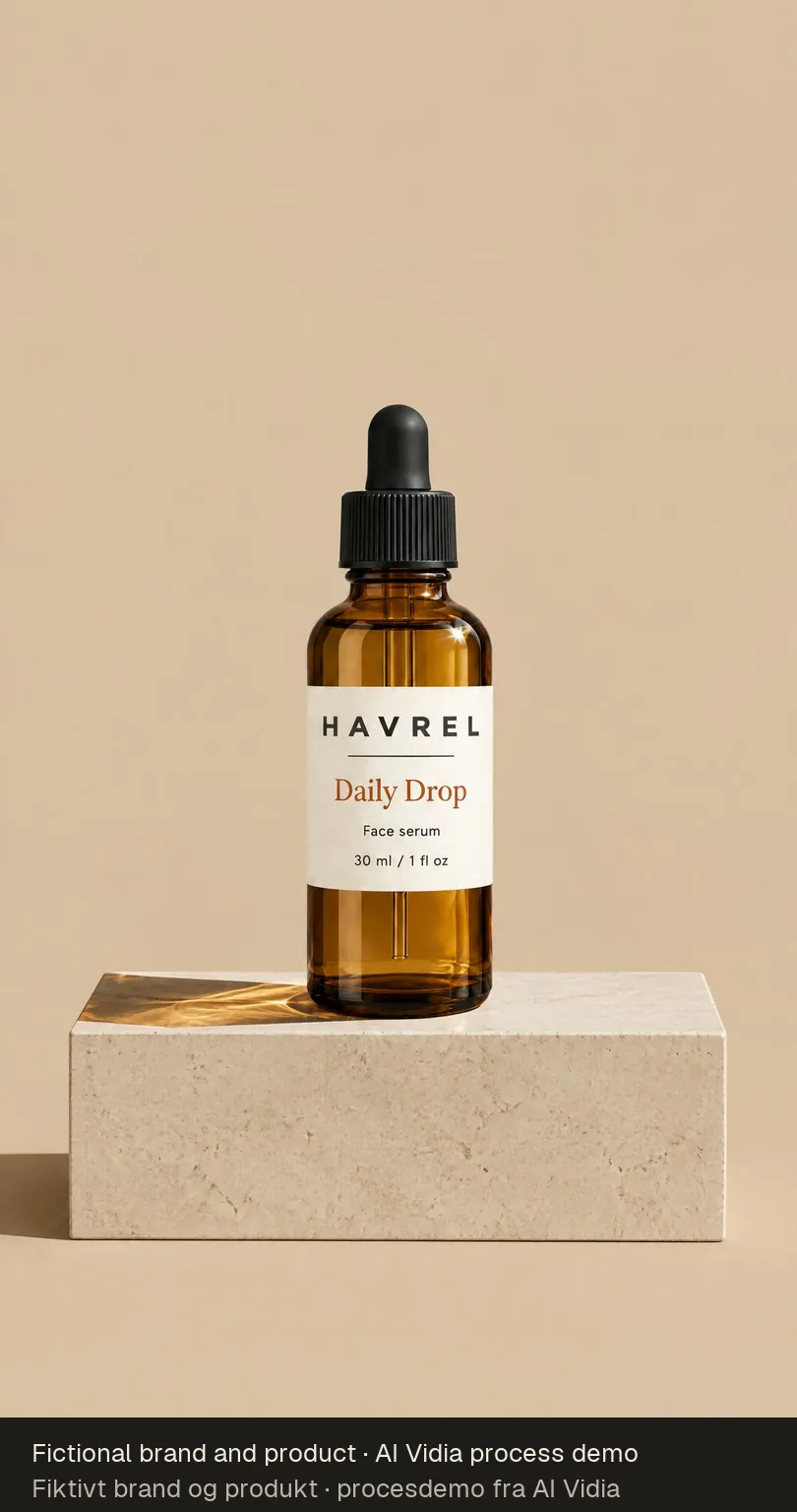
Concept C: Four lines
Studio still life on a limestone block in hard late-sun light, with empty space above for a headline.
 , open the full-size image
Fictional product · Attempt 1
Approved by AI review
No hard defect. Minor (1 of 4 recorded): a star-shaped glint on the shoulder looks like a filter effect.
 , open the full-size image
Fictional product · Attempt 2
Approved by AI review
No hard defect. Minor (1 of 3 recorded): the shadow is shorter than the brief asked for.
 , open the full-size image
Fictional product · Attempt 3
Approved by AI review
No hard defect. Minor (1 of 4 recorded): less empty space above the bottle than the headline needs.
4. The counts
- attempts, 3 per concept
- 9
- approved on the first pass
- 6 of 9
- approved after the revision round (0 of 3 revisions passed)
- 6 of 9
- times the two AI reviewers disagreed, out of 9
- 0
18 images generated in all: 6 for the reference pack, 9 attempts and 3 revisions.
How the reviews were done: in this demo every check was an AI review pass working from the sheet, not a person. Two blind passes judged the 9 attempts. Each revision was first checked by the pass that wrote its correction; that self-review passed revision 2, and a later independent AI check failed it, so it counts as rejected here. On a client job, a creative director at AI Vidia checks every file before it reaches you.
Who signs off what on a real job
On a client job the ground truth is yours: photos of your real product and the claims you have approved. AI Vidia checks every image against them before you see it, and anything with a hard defect is rebuilt, not sent. You approve the look before we generate and the final files before anything launches.
Want the same check on your own product?Request a 20-minute callBuild the reference kit for your own product
FAQ
AI product photography questions
- 01
How can we keep our packaging, label text, colours and product shape accurate in AI-generated ads?
Write a ground-truth sheet for the product before the first image, then reject any image that breaks it: label text, shape, part count, colour, material or scale. One hard defect fails an image, however good it looks. In our fictional-serum demo, AI review passes approved 6 of 9 attempts on the first pass, and the shot with the dropper above the open bottle failed all 3 attempts and all 3 revisions. On client work, a creative director checks every file against photos of your real product before you see it. See how we check AI product shots, shown on a fictional product
- 02
What should we look for in an AI creative production partner for a physical product?
Proof of product accuracy before volume: a partner that starts from photos of your real product and your approved claims, has a person check every file against them, rebuilds anything with a hard defect instead of sending it, can show its rejects in a worked demo and transfers full rights on delivery. Our fictional-serum demo shows or describes every reject, judged by AI review passes; on client work, a creative director checks every file. A shot proving a performance claim still needs the real product on camera.
- 03
How do we brief several ad concepts for one physical product so each tests a different angle?
Write the product facts once and the angle once per concept. One shared sheet fixes label text, parts, colour and scale. Check that the references show every state a concept needs, such as open. In our fictional-product demo, concepts A, B and C shared one sheet; the two closed-bottle ones passed AI review 3 of 3 each. The open-bottle concept failed all 3 attempts: every reference showed the bottle closed with the pipette inside, so the model drew a second pipette. The demo tested product accuracy, not which angle sells.
- 04
Do you need a real product photograph?
Yes. Photos of your real product are the starting point and the ground truth every image is checked against. Our fictional-product demo had no product to photograph, so its reference pack was four generated images: front, three-quarter, side and in the hand. If you don't have usable photos, we agree how the product should be photographed.
- 05
How is this different from pure AI-generated product shots?
We start from photos of your real product, while pure generative shots can drift on colour, material and proportion. We check label, colour and shape in every finished image against your photos, and rebuild any image with a hard defect instead of sending it.
- 06
Can you do seasonal campaigns?
Yes. Approved product and scene references are reused for summer, autumn, Christmas and other seasons. We agree scope and delivery date before we start.
- 07
What formats do you deliver?
Images are delivered in 9:16 vertical as standard, ready for Reels, TikTok and Shorts, and go into your ad account or DAM. Other formats can be agreed on request. If you only need catalogue packshots on white, a product photographer is the better buy.
- 08
What does it cost?
Product photography runs on the published plans. The entry point is the EUR 2,000 Control Test, and the fixed monthly plans are the Performance Retainer at EUR 8,500 and the Brand System at EUR 18,000. Stills are scoped per catalogue inside the plan, and we confirm that scope before we start.
More AI Vidia services
Built for these industries
Comparing vendors
Honest side-by-side breakdowns, including where the other option is the better buy.
Named clients: IndianBites, 2.4× ROAS on winning test cohorts · Singh Law, 19% lower cost per lead · Sorvan Design, customer base up 93% YoY