
All insights

Types of video ads for physical products, and which one to make first

Nine video ad formats for physical products, matched to what a buyer must understand before buying, with the AI limits and claim rules for each. A decision tree picks the format to make first.

Kenneth Dosanjh
Founder and Creative Director, AI Vidia · Lecturer, Business Academy Copenhagen

Nine video ad formats cover most physical products: the product demo, first-use routine, sensory close-up, problem and solution, comparison with the old way, unboxing, founder story, customer or creator review, and offer spotlight. Choose by what a first-time viewer must understand before buying. AI generates demos, close-ups and unboxings well from good product references; reviews need a real person who used the product, and any shot that proves a claim needs real footage.

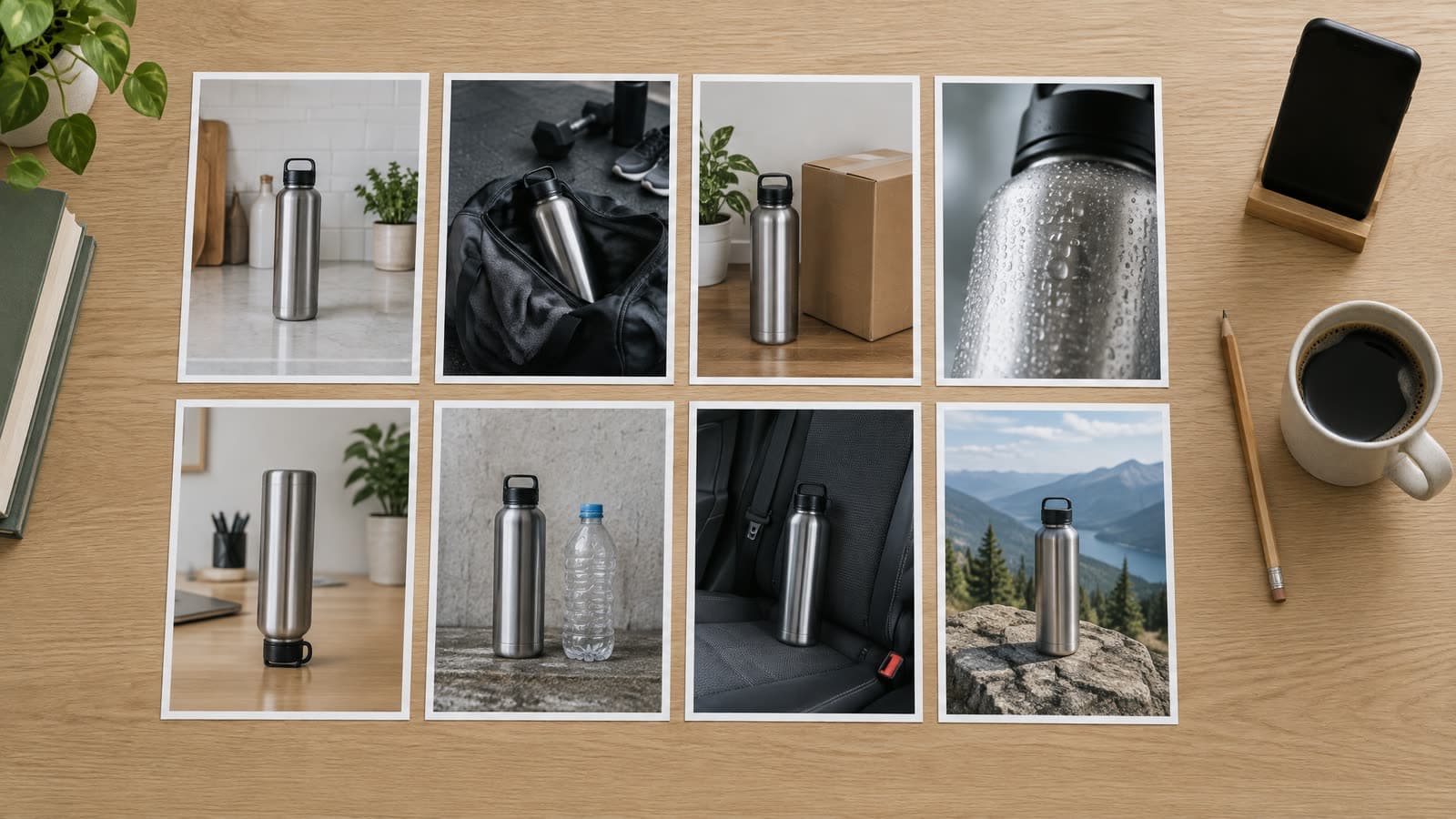
Overhead view of a light oak desk with eight printed photos in a grid, each showing the same plain steel water bottle in a different scene, from a kitchen counter and a gym bag to a mountain view, beside a phone on a stand, a pencil and a coffee mug
Image generated with AI: eight scene ideas for one steel bottle, laid out before choosing a format.
On this page7 sections
  1. 01Start from what a first-time viewer must understand
  2. 02Which video ad formats suit physical products?
  3. 03Which formats can AI make well, and which need a camera or a person?
  4. 04Which formats carry claim or disclosure risk?
  5. 05What do Meta, TikTok and YouTube say about formats?
  6. 06Which format should you make first?
  7. 07How many formats should one product test at once?

A video ad for a physical product has one job in its opening seconds: show a stranger the single thing they need to understand before they would buy. For a stain remover, that is the stain lifting. For a knitted throw, it is the texture up close. For a supplement, it is often the person who makes it, because the result takes weeks and no camera can capture it in fifteen seconds.

That choice decides the format. It also decides how much of the ad AI can generate, and where a claim rule or a disclosure rule starts to apply.

Start from what a first-time viewer must understand

A good product page answers eight questions: how it works, how it feels, what problem it fixes, who else uses it, who makes it, why buy now, why switch, and what arrives in the box. A 15-second ad has room for one. Pick the question your best customers asked before their first order, and the format follows from it.

A worked example runs through the rest of this piece. Say you sell a EUR 45 insulated steel bottle, and the product page promises drinks stay cold for 24 hours. That promise is a claim, and it takes a full day to prove, so no 15-second demo can show it honestly. The weight in the hand, the click of the lid and the condensation on a cold morning can each be shown in a single shot.

Guessing costs a whole batch.

Which video ad formats suit physical products?

Nine formats cover the eight questions, with the "how it works" question split in two: results you can film in one shot, and results that take days. The table maps each format to its question and to the frame it opens on, because the opening frame is where a viewer decides whether to keep watching.

Nine video ad formats for physical products. The mapping is AI Vidia editorial guidance built on the platform and regulator sources cited below, and it ranks nothing by performance.
FormatQuestion it answersWhat frame one showsWhat must be true
Product demoHow does it work?The product mid action, already in useThe result on screen is the real result
First-use routineWhat is it like to use?A hand reaching for it in a real settingNo result claim when results take days
Sensory close-upHow does it look and feel?Texture, drape, pour or finish filling the screenColour and texture match the real product
Problem and solutionDoes it fix my problem?The problem on screen before anyone names itThe fix works as shown
Comparison with the old wayWhy switch?The old item beside the new productA competitor is named only with evidence
UnboxingWhat arrives?The closed box, a hand on the lidThe contents match what ships
Founder storyWho makes it, and why?The founder with the productA real person telling a true story
Customer or creator reviewDo people like me use it?A real person holding the productThey used it; any connection is disclosed
Offer spotlightWhy buy now?The product with the offer on screenThe offer is live and the end date real

No column in that table ranks formats by results. No platform publishes conversion rates by creative format for physical products, so treat any ranking you are shown as a claim that needs its data.

Which formats can AI make well, and which need a camera or a person?

AI video copies how a product looks far better than how it behaves. That splits the nine formats into groups by what production they need.

  • Generate from references. Sensory close-ups, unboxings, first-use routines and demos where nothing is being proven. Supply front, back and side photos plus the flat label artwork, then check every frame against them.
  • Generate the scene, film the proof. Demos and problem-solution ads that show a result. The setting, the problem and the pack shot can be generated; the moment the stain lifts or the lid seals has to be real footage whenever the ad presents it as proof.
  • Cast a real person. Founder stories and customer or creator reviews. The person, their words and their experience have to be real.

Offer spotlights and comparisons belong to the first group for production and to the second for claims. A generated steel bottle beside a generated plastic one is an illustration. A generated shot of ice still floating after a day is a claim demonstration.
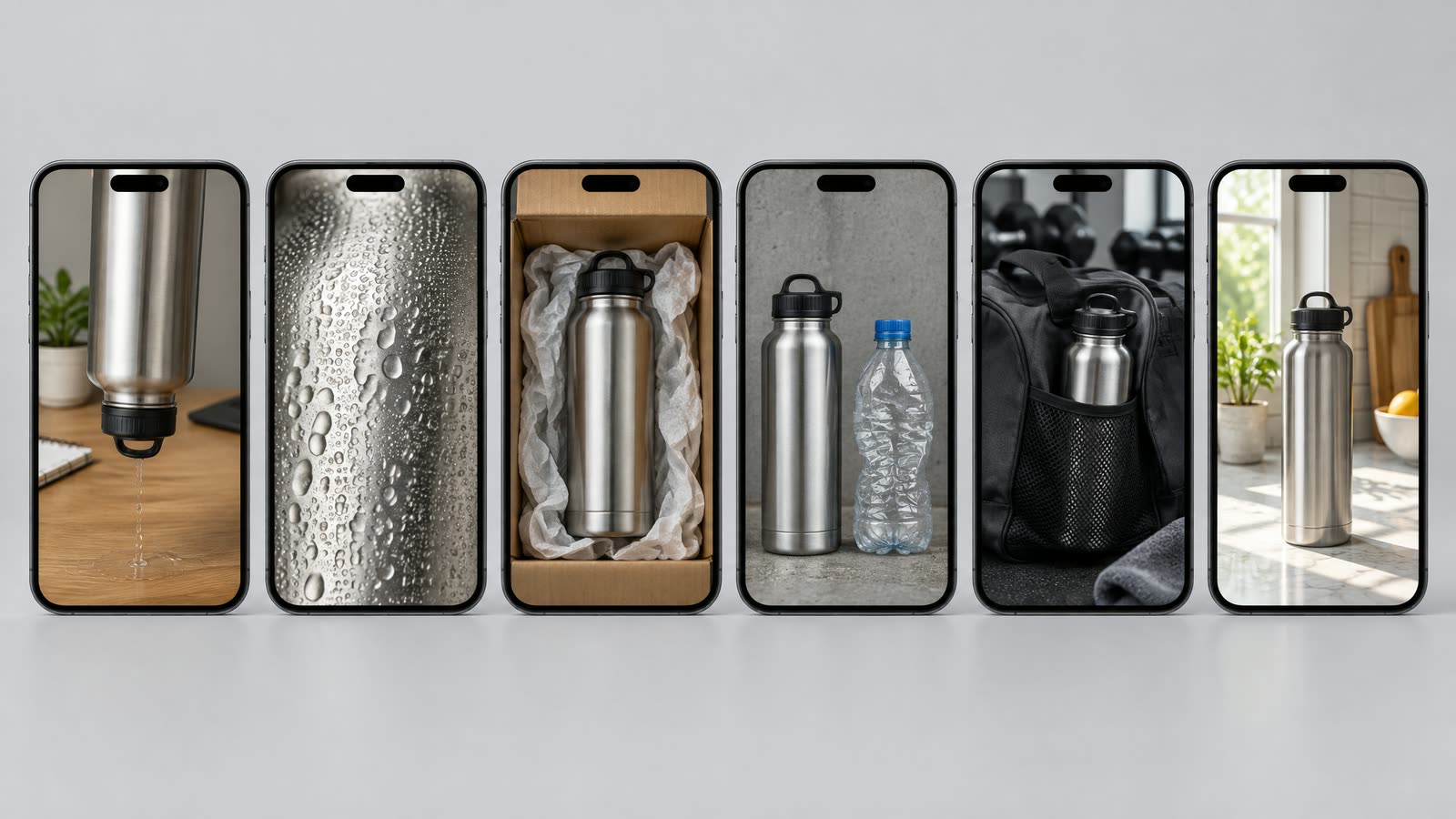
Six vertical phone screens in a row showing the same plain steel bottle: tipped upside down over a desk with water dripping from the lid, cold condensation up close, in a shipping box with tissue paper, beside a crumpled plastic bottle, in a gym bag pocket and on a kitchen counter
Image generated with AI: six opening frames for one bottle. The first shows water dripping from the lid, which the prompt never asked for, the kind of error a frame check catches before a demo runs.

Material matters as much as format. Clear glass, liquids and fine repeating patterns are the hardest things for current models to keep accurate, and a hand gripping the product fails more often than the product standing alone. The guide to products that are hard for AI video rates materials and scores individual shots.

Which formats carry claim or disclosure risk?

Reviews, demonstrations and problem-solution ads in health categories carry legal weight on top of creative risk. The rules below bind advertisers, which puts them in a stronger evidence grade than any platform tip.

Reviews and testimonials. The US Federal Trade Commission's final rule on fake reviews and testimonials, announced on 14 August 2024, bans reviews that misrepresent that they come from someone who does not exist, and the announcement names AI-generated fake reviews. The FTC's Endorsement Guides add two limits: an endorser cannot talk about experience with a product they have not tried, and a relative, employee or paid endorser needs that connection disclosed clearly. An AI presenter styled as a happy customer fails both.

AI-generated ads in a UGC style stay usable when they are labelled as generated and never pose as a customer. The explainer on UGC ads covers where that line sits.

Demonstrations. In FTC v. Colgate-Palmolive (1965), the US Supreme Court held that it is deceptive to give viewers the false impression they are watching an actual test that proves a product claim when an undisclosed mock-up is used. The shaving cream ad in that case shaved plexiglass covered in sand. A generated clip of your stain lifting is a mock-up by that definition if the ad offers it as proof.

Health, weight and skin. Meta's health and wellness ad standards require ads for dietary and weight loss products to target people aged 18 or older, and they forbid statements that attack a person's appearance, body parts or hygiene. A problem-solution ad for an acne patch has to show the situation without telling the viewer something is wrong with their face.

Check each market you sell in. These are the US and Meta baselines.
Need new ads?
Describe your product and what you want to test.
Send your brief

What do Meta, TikTok and YouTube say about formats?

All three platforms publish creative guidance, and all three point toward variety in format. Grade it as platform advice drawn from each platform's own data: useful direction from the party that sells the ad space, and no independent test.

  • TikTok's creative best practices for performance ads ask for vertical 9:16 video, the content proposition in the first 3 seconds, the hook in the first 6, and 3 to 5 creatives per ad group, with "big differences" between them when testing. They also recommend a DIY style featuring creators, employees or customers.
  • TikTok's holiday shopping ads guide names unboxings, product demos, creator collaborations and flash-deal spotlights as the formats to plan for variety.
  • Google's ABCDs of effective video ads tell advertisers with a consideration goal to show how the product works and to hero the product, and tell those with an action goal to make the product the ad.
  • Meta's guidance on creative diversification, published on 16 December 2025, asks for ads that are different in look, feel, storyline and message, and says ads that look or feel alike are treated as variations of the same creative.

Read together, the guidance favours demos and product-led formats for people close to buying, and a real spread of formats in any test. None of the three publishes format-level conversion data. Remember that gap whenever a vendor quotes one.

Which format should you make first?

Run the tree below for one product. Start from the question your customers ask most often before a first order, and follow it to a result card. Each card names the opening frame, what AI generates reliably, what needs real footage or a real person, and the claim check to run before launch.

Decision treeWhich video ad format should you make first?Answer for one product. Start from the question customers ask most before a first order.

Question 1

What must a first-time viewer understand before they would buy?

See every path

What must a first-time viewer understand before they would buy?

  • How it works or how easy it is

    Can the result be seen inside one shot, such as a stain lifting or a lid sealing?

    • Yes, in one shot

      Result: Product demo. Frame one: the product already in use, mid action. AI generates the setting, the product at rest and the pack shot reliably from clean references. Film the moment that proves a claim, such as the lid sealing or the stain lifting. Claim check: the result on screen is the real result. Platform guidance: Google's ABCDs, show how it works. Which products are hard for AI video

    • No, it takes days or weeks

      Result: First-use routine. Frame one: a hand reaching for the product in a real setting, such as a bathroom shelf or a gym bag. AI generates routines well when the product stays at rest or in a simple grip. Claim check: show the routine and leave out any result, because the result takes days to appear. Platform guidance: TikTok, a DIY style with real people. How to plan the opening frame

  • How it looks, feels or pours up close

    Result: Sensory close-up. Frame one: texture, drape, pour or finish filling the screen. AI generates matte surfaces and fabric well; glass, liquids and fine patterns need a close check against real photos. Claim check: colour and texture match the product that ships. Platform guidance: Google's ABCDs, make the product the ad. Which products are hard for AI video

  • That it fixes a problem they already have

    Is the product sold for health, weight loss, skin or as a supplement?

    • Yes

      Result: Problem and solution, with restricted framing. Frame one: the situation, with nobody being judged. Show the routine or the product in use, and never tell the viewer something is wrong with their appearance, body or hygiene. On Meta, dietary and weight loss ads must target people aged 18 and over. Film any result you show. Claim check: Meta health and wellness standards plus the rules in each market. AI ads: labelling, approval and rejection

    • No

      Result: Problem and solution. Frame one: the problem on screen before anyone names it. AI generates the setting and the problem scene reliably. Film the fix if the ad presents it as proof. Claim check: the product solves the problem the way the ad shows. Platform guidance: TikTok, a hook, then the selling point, then a clear call to action. How to plan the opening frame

  • That people like them use it

    Do you have a real customer or creator who has used the product and agreed to appear?

    • Yes

      Result: Customer or creator review. Frame one: the real person holding the product. AI can help with pack shots, inserts and captions; the person, their words and their experience must be real. Claim check: they used the product, and any payment, gift or employment is disclosed clearly. Platform guidance: TikTok, featuring creators, employees or customers. What UGC ads are, and where AI fits

    • No

      Result: Stop here: make a demo or a founder story. A review ad without a real reviewer breaks the FTC rule on fake testimonials, and an AI presenter styled as a customer counts as one. Make a product demo or a founder story instead. A generated presenter works only when the ad labels it as generated and it never claims to have used the product. AI spokesperson or real creator

  • Who makes it and why

    Result: Founder story. Frame one: the founder with the product, where it is made or tested. The founder is real and speaks in their own words; AI can supply product inserts and pack shots. Claim check: every fact about origin, materials and testing is true. Platform guidance: TikTok, featuring employees. AI video ads

  • Why they should buy now

    Is there a live offer with a real end date?

    • Yes

      Result: Offer spotlight. Frame one: the product with the offer inside the safe zone of the screen. AI generates pack shots and offer scenes reliably. Claim check: the offer is live, the end date is real and the price matches checkout. Platform guidance: TikTok's holiday guide names flash deal spotlights. When to refresh your ads

    • No

      Result: Pick another question first. An offer spotlight without a live offer invents urgency. Go back and choose what a first-time viewer must understand about the product itself. Add an offer end card later, when a real promotion runs.

  • Why to switch from what they use today

    Result: Comparison with the old way. Frame one: the item people use today beside your product. AI generates both objects reliably from references. Film any performance difference the ad claims. Claim check: compare against a generic old way, and name a competitor only with evidence. Platform guidance: Meta, vary the storyline and the message. Build a creative testing matrix

  • What arrives in the box

    Result: Unboxing. Frame one: the closed box with a hand on the lid. AI generates packaging and contents well from references, and hands on lids need a frame by frame check. Claim check: what comes out of the box is exactly what ships. Platform guidance: TikTok's holiday guide names unboxings. AI video ads

Result cards are AI Vidia editorial guidance built on the platform and regulator sources cited in this article. They are no ranking of which format performs best.

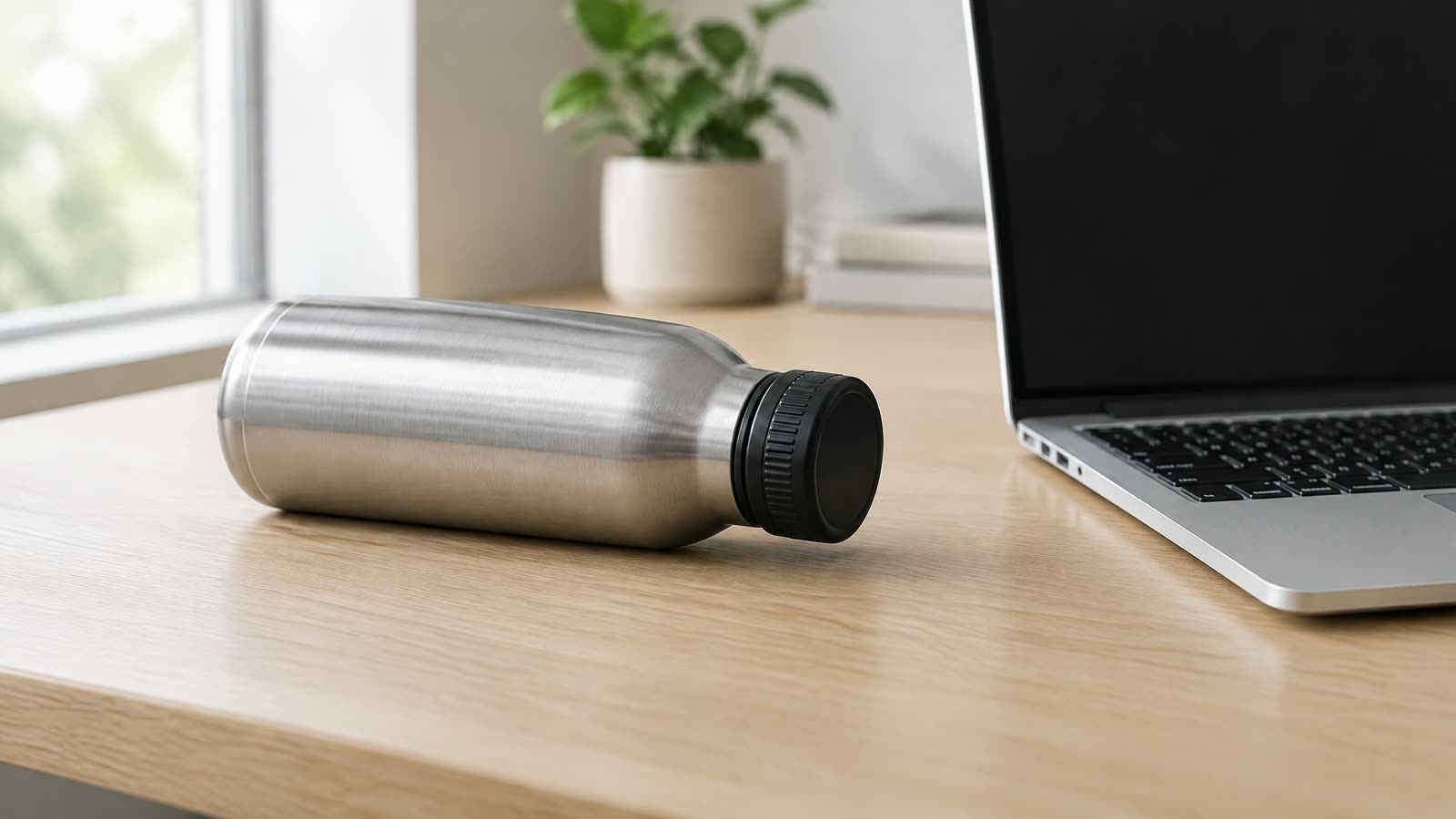
For the steel bottle, the path runs through "how it works" to the product demo: the lid clicks shut, the bottle tips upside down over a laptop, and nothing drips. Everything in that ad can be generated from good references except the moment that proves it does not leak, which is a claim and should be filmed. The 24-hour promise belongs in a different ad, as a first-use routine with no timer on screen.

A plain steel water bottle with a black screw lid lying on its side on a light oak desk next to an open laptop, with the desk dry around the lid
Image generated with AI: a setting for the steel bottle demo. The moment that proves the bottle does not leak would be filmed.

How many formats should one product test at once?

Test formats against each other before you test small edits within one. A demo, an unboxing and a comparison give the delivery system genuinely different ads to learn from, while three demos with different music give it one creative in three versions, by Meta's own description.

TikTok's suggestion of 3 to 5 creatives per ad group is a sensible first round. Then build variants inside the format that earns its budget: new opening frames, new first lines, new end cards. The creative testing matrix shows how to size that second round, and the opening frame guide covers the first second of each variant.

AI Vidia produces demos, sensory close-ups, unboxings and comparison ads as 9:16 AI video ads from a brand's own product references, and plans real footage wherever a claim has to be proven.

Your next step takes about 20 minutes. Pull the five questions customers asked most before their first order from your support inbox or reviews, run the most common one through the tree, and write the first frame of that format in one sentence.

Frequently asked questions

01What are the main types of video ads for a physical product?
The main formats are the product demo, first-use routine, sensory close-up, problem and solution, comparison with the old way, unboxing, founder story, customer or creator review, and offer spotlight. Each one answers a single buyer question. Platform guides also list carousel, catalog and live shopping ads, which are ad units that any of these creative formats can fill.
02Which video ad format works best for ecommerce?
The best format is the one that answers the question your customers ask before a first order. No platform publishes conversion data by creative format for physical products. Google's ABCD guidance leans toward showing how the product works for people considering a purchase, and toward making the product the ad for people ready to act. Test formats against each other to find your own answer.
03Can AI make a testimonial or review video ad?
AI can make the scenes around a review, and the reviewer must be a real person who used the product. The FTC's 2024 rule bans testimonials that misrepresent that they come from someone who does not exist, including AI-generated ones. A generated presenter is usable only when the ad labels it as generated and it never claims to have used the product.
04Is it legal to show an AI-generated product demo?
A generated demo is fine as an illustration and risky as proof. If the ad presents the clip as an actual test that proves a claim, US law treats an undisclosed simulation as deceptive, following FTC v. Colgate-Palmolive in 1965. Film the moment that proves the claim, or keep generated demos free of claims.
05How many video ad formats should I test at once?
Start with 3 to 5 clearly different formats per product. TikTok suggests 3 to 5 creatives per ad group with big differences between them when testing, and Meta treats ads that look alike as variations of one creative. Small edits of a single format therefore teach a first test very little.

How we made this article

Sources were read on 25 September 2026. Platform guidance and legal rules are quoted from the cited pages; the format table and the decision tree are AI Vidia editorial guidance built on those sources, and the article reports no performance data or tests of our own.

We research and draft with AI assistance and check figures against the sources below.

Sources

  1. 01TikTok Ads Help: Creative best practices for performance ads
  2. 02TikTok for Business: Holiday shopping ads guide, strategy and best practices
  3. 03Google Ads Help: About the ABCDs of effective video ads
  4. 04Meta for Business: Demystifying creative diversification, 16 December 2025
  5. 05Federal Trade Commission: Federal Trade Commission announces final rule banning fake reviews and testimonials, 14 August 2024
  6. 06Federal Trade Commission: FTC's Endorsement Guides, what people are asking
  7. 07Meta Transparency Center: Advertising standards, health and wellness
  8. 08US Supreme Court: FTC v. Colgate-Palmolive Co., 380 U.S. 374 (1965), full opinion via FindLaw

Next step

Get a proposal for your next ads.

Tell us about your product, audience and ad production needs. We review your brief and reply with a proposed next step.

Send your brief

Read next