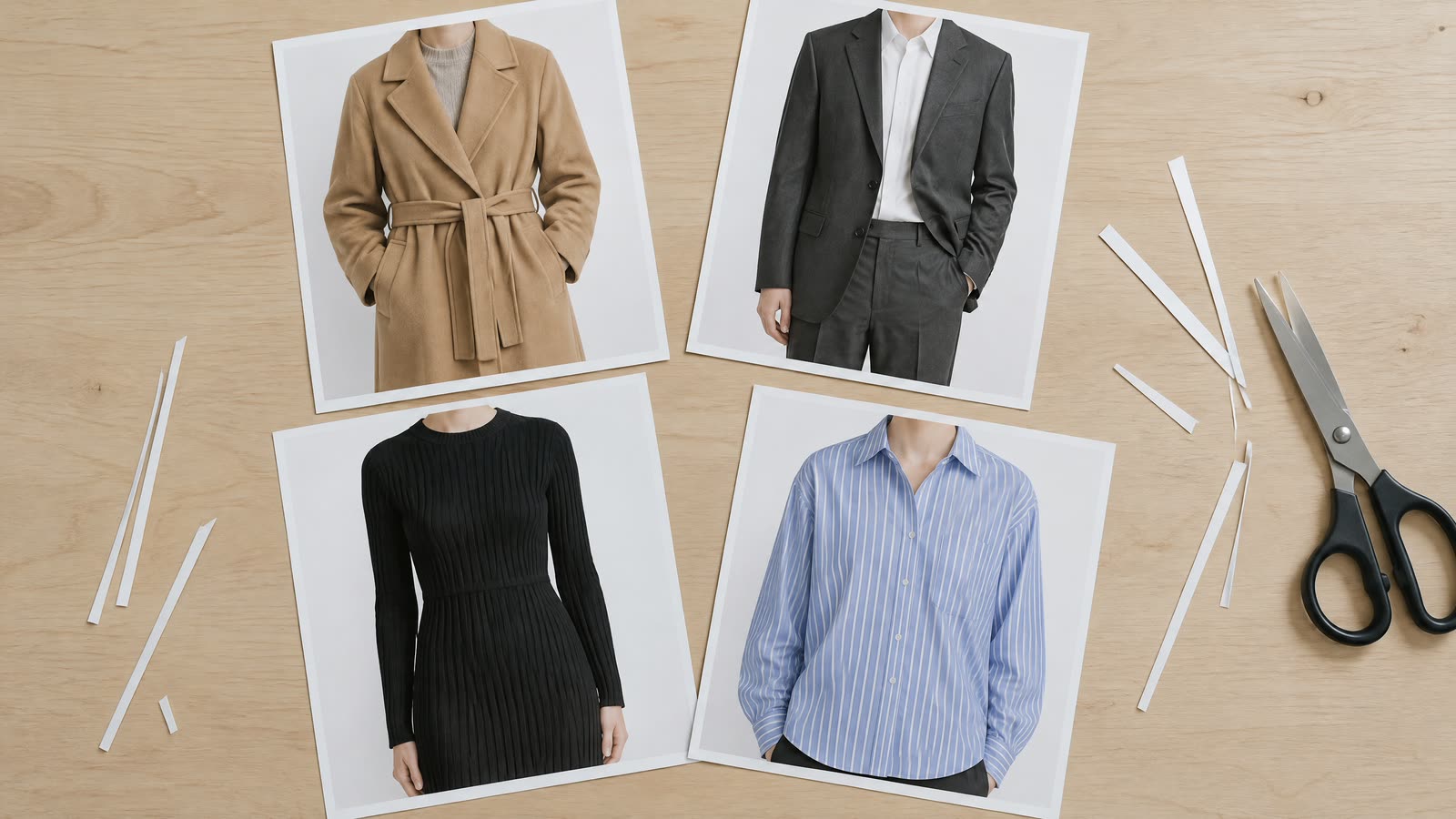
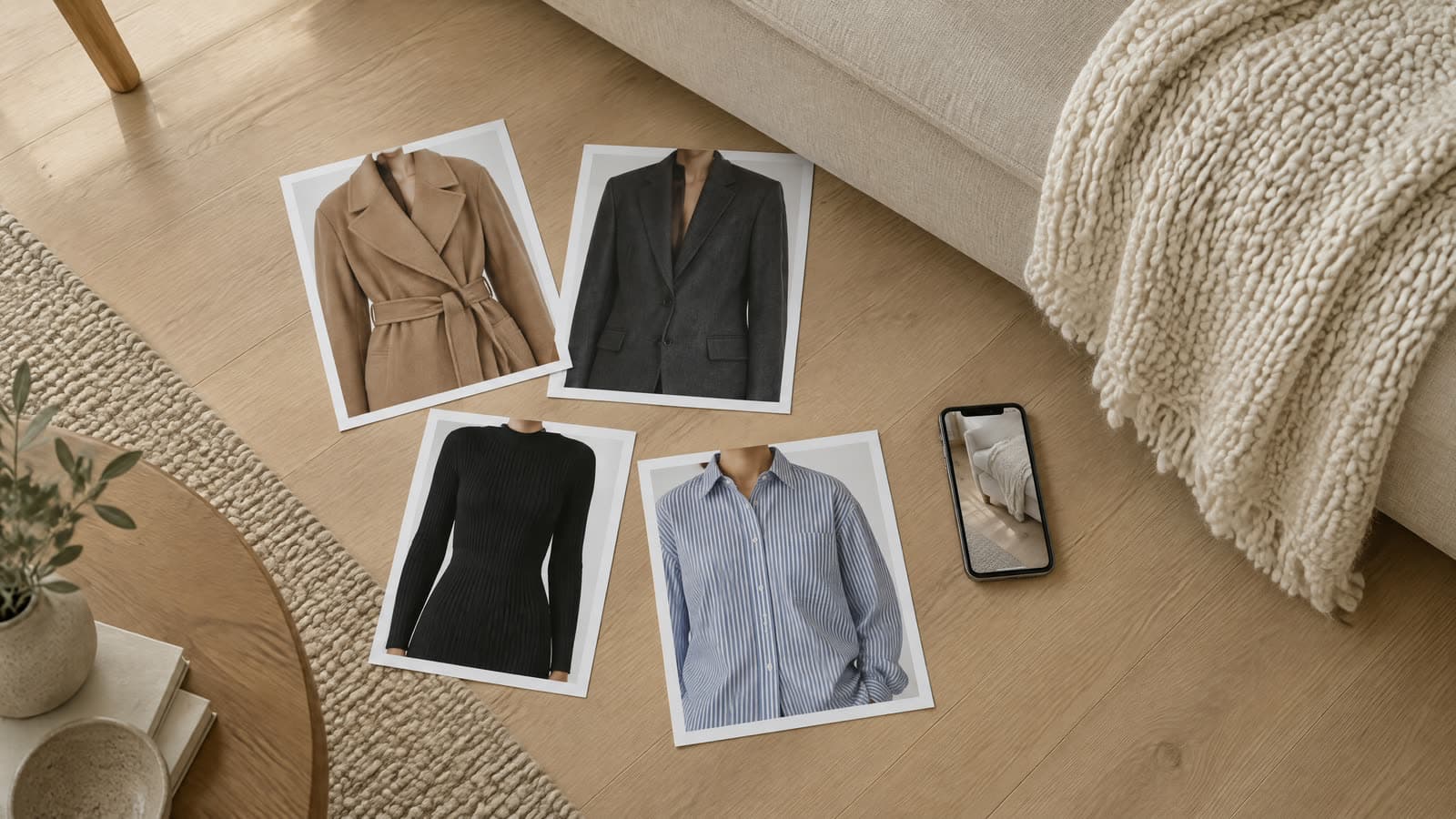
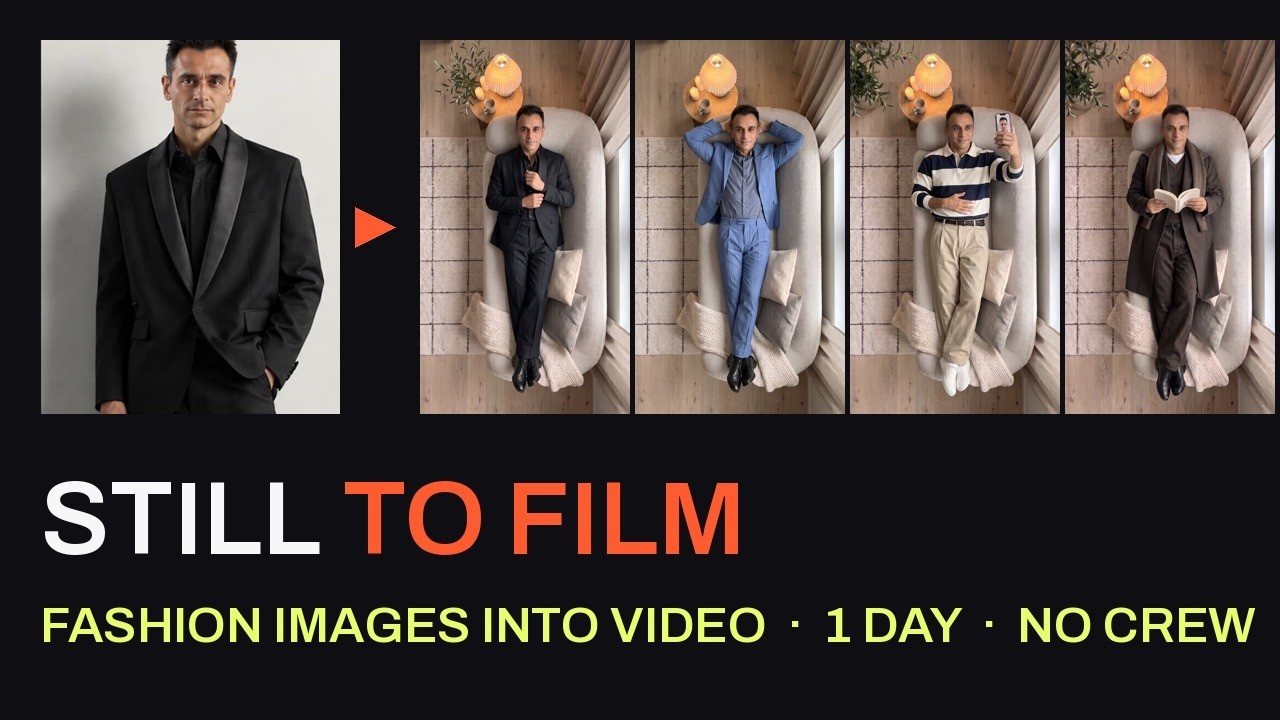
Four product photos of clothing can become a 16-second vertical fashion video in one working day, with no film crew, no location and no model on set. The method has four steps: lock one person, swap the clothes on a single master image, generate each camera move from a start frame only, and hide every outfit change inside the edit. AI Vidia's walkthrough film shows each step, and the sections below grade the evidence for doing it.
The film is a spec piece. Its garments come from a high-street retailer's public product photos, the retailer has no affiliation with AI Vidia, and the person on screen is an AI avatar of Kenneth Dosanjh, AI Vidia's co-founder, made from his own character sheet with his consent.
| Step | Input | Output | Failure it prevents |
|---|---|---|---|
| 1. Lock the person | Front, profile and close-up of one face | One approved master image | A slightly different face in every outfit |
| 2. Swap only the clothes | Master image plus product photos cropped at the collar | One still per outfit, same set and light | Four outfits that look like four strangers |
| 3. Start frame only | One still per outfit | One continuous camera move per outfit | A dissolve or a hard cut instead of a move |
| 4. Hide the change | The clips and a music track | One vertical film cut on the beat | A visible jump when the clothes switch |
Video earns its place in a fashion ad account, with one exception
The strongest evidence is a set of lab studies. Anne Roggeveen, Dhruv Grewal, Claudia Townsend and R. Krishnan found in the Journal of Marketing (2015) that showing a product in video instead of a still raised choice of the more hedonic option by more than 79 percent across their studies. Video draws people into the product experience, much like using it. Clothing is a hedonic purchase.
The platform evidence points the same way and comes from Meta itself. On Meta's first quarter 2026 earnings call on 29 April 2026, Mark Zuckerberg said video is driving all-time high engagement on Facebook and Instagram. CFO Susan Li reported that ranking improvements drove a 10 percent lift in Reels time spent on Instagram, and that total video time on Facebook grew more than 8 percent from the previous quarter. These are platform-reported attention figures. They say nothing about sales.
Ad results bring the exception. ATTN Agency published Meta benchmarks in March 2026, later cited by Segwise, in which video had the higher click-through rate and static images the lower cost per acquisition. ATTN publishes no method or sample for these figures, so read them as one agency's numbers.
| Metric | Video | Static image |
|---|---|---|
| Click-through rate | 1.9% | 1.1% |
| Cost per acquisition | $48.20 | $34.50 |
Read together, the evidence supports video for reaching people who have never seen the brand. Stills keep their place with people who already know it. That split shapes the test in the last section.
What stops fashion brands from making more video
Most businesses already make some video. In Wyzowl's 2026 video marketing survey, 91 percent of businesses said they use it. Among those that do not, the top reasons were that video is not needed or that it is too expensive, at 24 percent each, followed by a lack of time at 19 percent.
Fashion has a sharper version of the cost problem. A shoot needs a model, a crew, a location and weeks of planning, and every new look starts the cycle again. A brand that adds new pieces every month either books more shoots or leaves most of its new pieces as stills.
Generated video changes what one look costs. The inputs are product photos the brand already owns, and a new look is a new generation run with no new shoot. That puts a ten-look test within reach of a budget that could never pay for a ten-look shoot. AI Vidia makes these as AI video ads for Meta, TikTok and YouTube, delivered in 9:16.
Step 1: lock the person before any outfit exists
Every frame depends on one identity reference: a front view, a profile and a close-up of the face. The person in the film is built from Kenneth's own character sheet, the same kind of locked reference that sits behind an AI spokesperson or branded presenter.
The first attempts in the production showed a slightly different face in every outfit. Repairing those faces made them worse, because each fix became a compromise between two faces. Starting over worked. The team picked one good image of the person, approved it as the master, and generated every later outfit from that image and from no other.