
All insights

TikTok ads: seven openings to test (2026)

Explore seven TikTok opening ideas based on customer questions, accurate product facts and a clear test purpose.

Kevin Dosanjh
Co-founder / CMO, AI Vidia · Updated
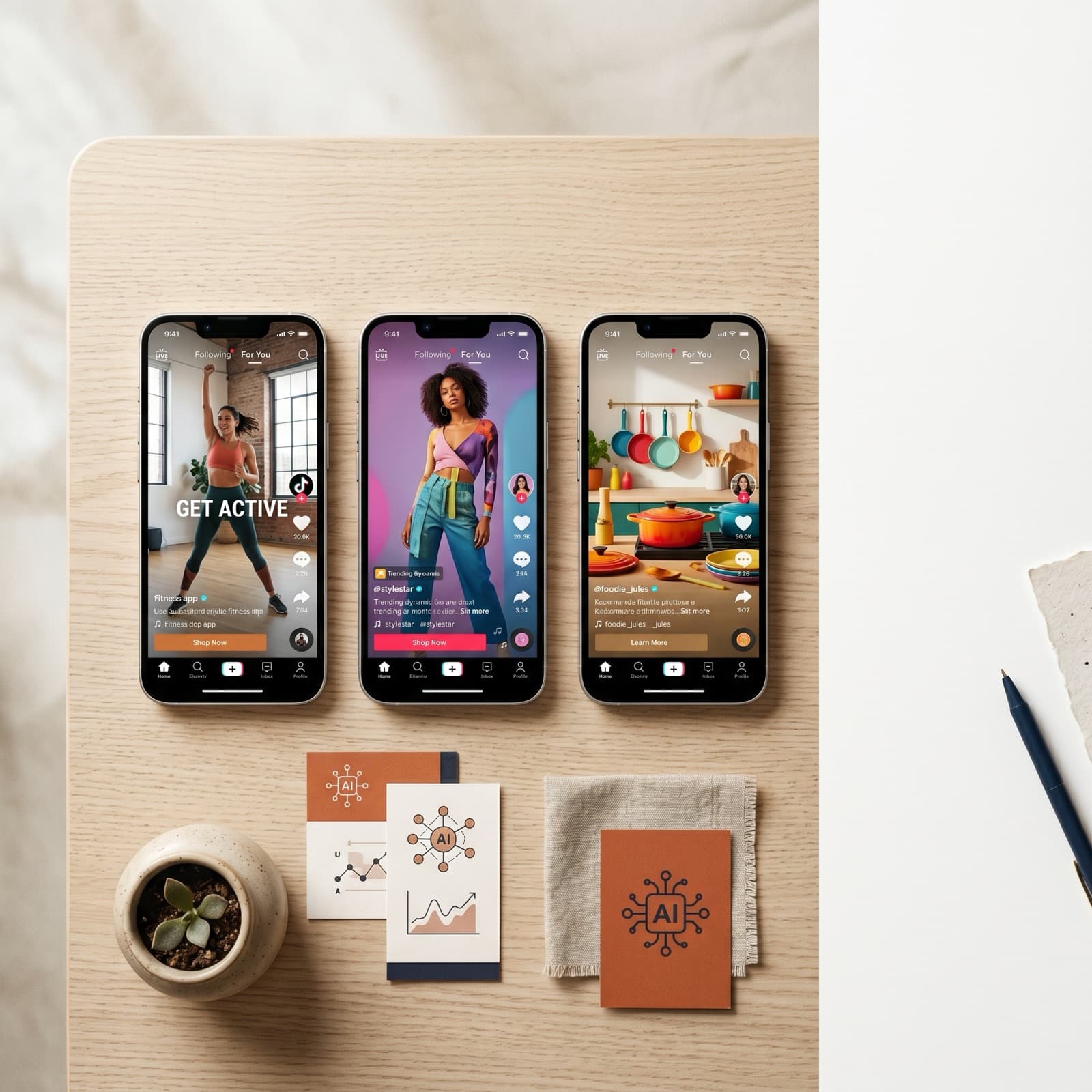
Editorial overhead flat lay of three vertical phone frames showing distinct TikTok ad hook openers on a warm off-white Nordic studio surface with burnt orange and deep ink paper accents.
On this page7 sections
  1. 01Treat each idea as a question
  2. 02Seven ways to begin
  3. 03A hypothetical lunchbox test
  4. 04Keep attention connected to understanding
  5. 05Check readability in the actual display
  6. 06Connect the opening to the rest
  7. 07Keep learning that can inform the next brief

An effective ad opening makes the product's relevance clear. Here are seven ways to begin a TikTok video that you can adapt to documented product benefits and a specific test.

Treat each idea as a question

No opening is an established winner for every product. Choose one that helps customers understand something relevant, and agree what you intend to investigate with the advertising owner. A striking effect is not a goal on its own.

Using AI does not change the need for accurate products and claims. A demonstration must represent the function faithfully. A synthetic presenter should not invent personal experience.

Seven ways to begin

  1. Show the product in use: Start with a simple action demonstrating a documented function.
  2. Answer a size question: Show measurements or a relevant, accurate comparison.
  3. Address a practical problem: Describe a situation the product is actually designed for.
  4. Compare variants: Help customers choose among real options.
  5. Explain a detail: Show material, a fastening or another specific feature up close.
  6. Start with a customer question: Use a documented question without inventing a quotation.
  7. Show packaging or a setup: Explain what is included without adding items that are not supplied.

These openings may share a pace while answering different needs. Choose according to the product and record the purpose in the brief.

A hypothetical lunchbox test

One opening shows compartments, another explains how the lid closes and a third compares actual sizes in the range. Each may be relevant, but they are distinct ideas rather than minor variations of one concept.

To investigate wording, create two openings about the same size question and keep the rest of the video consistent. Changing product, story and offer together investigates a broader difference. Record that distinction before testing.

This hypothetical example turns openings into a production plan without predicting a purchase or viewing advantage.

Need new ads?
Describe your product and what you want to test.
Send your brief

Keep attention connected to understanding

A dramatic visual change can distract from the explanation. Check that the product remains clear and the next clip follows logically. The rest of the video must deliver on the opening line.

Avoid before-and-after imagery implying unsupported results. An AI presenter should not claim the product changed their daily life without a real, approved experience behind the statement. Explain a concrete feature instead.

Check readability in the actual display

Test sound, subtitles and cropping on a phone at normal speed. A correct sentence can still be too long for its scene. Viewers should be able to read it while following the product.

Assess whether the opening makes your specific item and message understandable, then use comparable data from your own advertising. Check current upload requirements rather than treating an editorial idea as a platform rule.

Connect the opening to the rest

Watch the first frame, main explanation and ending in sequence. If the opening raises a size question, the video should answer it. Moving immediately to an unrelated benefit can leave the opening promise unresolved.

For a new variant, review more than its changed beginning. Check the existing clips and whether the destination addresses the same buying interest. A new opening may require a later edit for continuity.

Record those edits so the test owner knows whether only the opening changed. A precise description supports a more useful conclusion.

Review ideas with the product owner before making many variants. Some require measurements, footage or evidence that is not ready. Select ideas that can be executed accurately and list the remaining inputs needed.

Keep learning that can inform the next brief

Name the opening, concept and variant. Save the question, approved file and observations with their limitations. Record insufficient activity as an unresolved result rather than a rule that the opening never works.

For the next series, find a customer question still lacking a useful answer. Use the opening library to organise ideas and the completion guide to interpret attention. When the objective is sales, follow views and clicks through to actual purchases.

Frequently asked questions

01Which TikTok opening works best?
It depends on the product and situation. Test a relevant idea with a clear purpose rather than assuming a universal winner.
02Must the product appear in the first second?
Decide when customers need to see the product to understand your particular message.
03Can an AI presenter share a customer experience?
It must not invent one. Use a documented, approved statement or explain factual product features without claiming personal experience.

Next step

Get a proposal for your next ads.

Tell us about your product, audience and ad production needs. We review your brief and reply with a proposed next step.

Send your brief

Read next