AI/Vidia
All insights

Kling 3.0 Prompting Techniques for Ad Creative

Kling 3 prompting techniques for ad creative: the five-block prompt anatomy, five failure modes with fixes, and the one-variable iteration loop AI Vidia runs.

Founder, AI Vidia
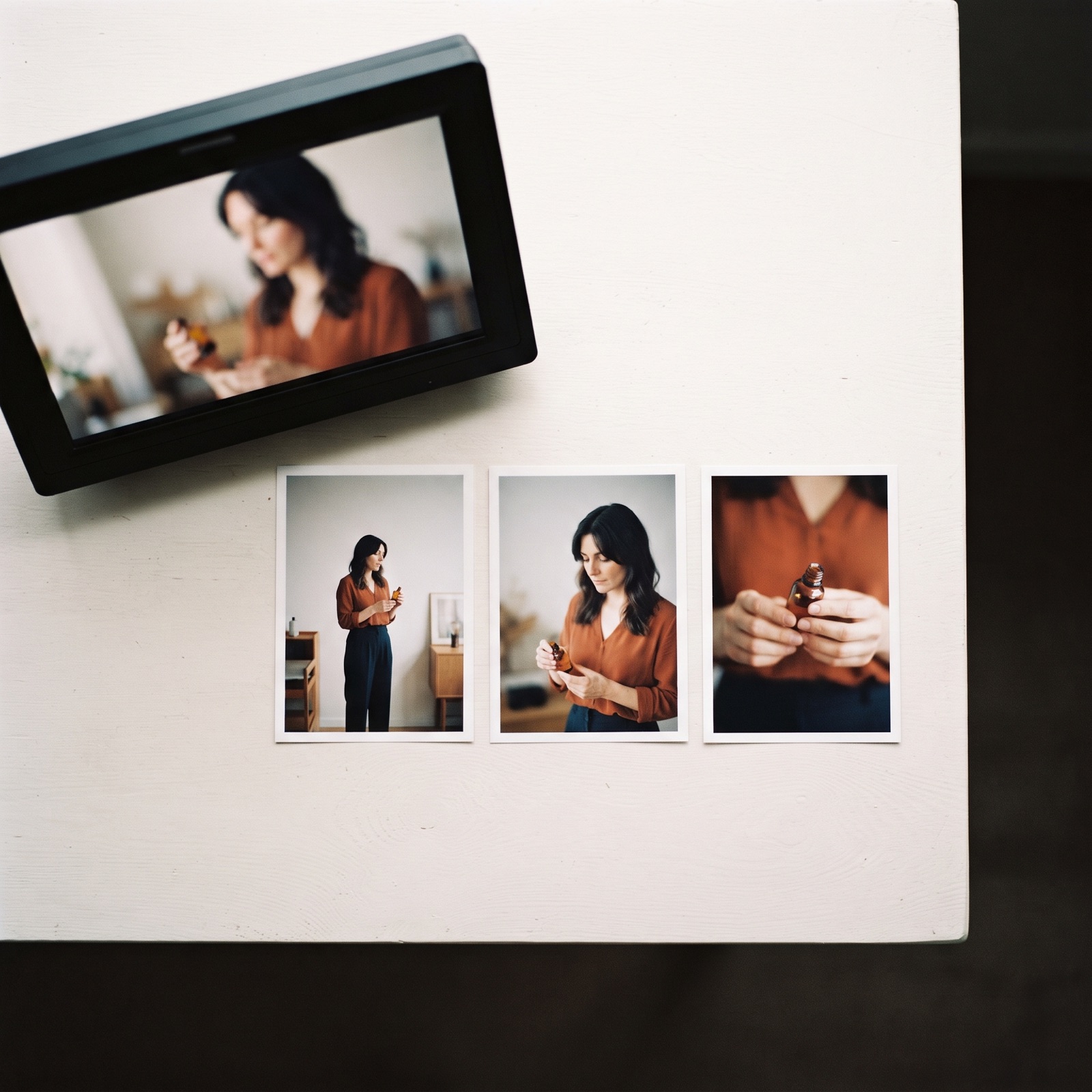
Editorial overhead scene of a field monitor and printed video frames showing the same presenter and product at wide, medium, and close shot sizes on a warm white studio table.
On this page8 sections

AI Vidia runs Kling 3.0 as a core generation model for paid social video, and the Kling 3 prompting techniques that move ad performance are structural, not secret. A Kling prompt that ships usable ad footage is built from five blocks: subject, action, scene, camera, realism. The model rewards cinematic natural language and punishes keyword stacks. AI Vidia ships 40 to 200 AI video ads per brand per month, and roughly 5 percent of creatives become winners, so prompting speed matters more than single-prompt perfection. This article teaches the framework layer the AI Vidia team runs in production: the prompt anatomy, the five failure modes and their fixes, the iteration loop, and the decision rules for when Kling 3.0 beats the alternatives for ad creative.

Why prompting speed beats prompt perfection

5BLOCKS PER PRODUCTION PROMPT
4 to 6GENERATIONS PER CONCEPT BATCH
~5%OF CREATIVES BECOME WINNERS
40 to 200AI VIDEO ADS PER BRAND PER MONTH

For a DTC brand testing 30 or more ad variants per week, prompting is a throughput problem before it is a craft problem. Roughly 5 percent of creatives become winners on a mature paid social account, so a brand that needs 3 new winners a month needs about 60 shipped creatives behind them. A growth lead who spends an afternoon polishing one Kling prompt has optimized 1 of those 60. The math favors the team that can produce 20 acceptable generations a day over the team that produces one beautiful generation a week. The volume side of that equation is covered in the AI Vidia benchmark on how many ad creatives a brand needs per month.

The external benchmarks point the same direction. Meta for Business reports that campaigns with 5 or more creative variations see 30 to 50 percent lower CPA. Wyzowl 2025 finds 91 percent of businesses use video marketing, with 30 percent citing production cost as the top barrier. Content Marketing Institute 2025 reports that 73 percent of B2B marketing teams name producing enough content as their biggest challenge. Prompting speed is the lever under all three numbers: the faster a team turns briefs into acceptable takes, the cheaper variation becomes.

There is also a compliance floor. Meta and TikTok both run disclosure rules for photorealistic AI content, so a prompting habit that drifts toward uncanny realism without a disclosure plan is a policy risk, not just a taste problem. Prompt structure is the first brand-safety control: what is specified cannot drift, and what is left unspecified is where both quality failures and policy failures start.

Field monitor beside printed frames of the same presenter and product at wide, medium, and close shot sizes on a studio table
The same subject at three shot sizes: when the camera block states the framing, shot size stops being a re-roll variable.

Five failure modes and the framework-level fix

Kling 3.0 fails in predictable ways, and every one of the five recurring failure modes has a structural fix that requires no secret prompt. The table maps what the AI Vidia team hits most often in ad production, what it looks like on screen, the fix at the framework level, and the point where the right answer is post-production rather than another generation.

Failure modeSymptom on screenFramework-level fixWhen to move to post
Hand and finger morphingFingers fuse, multiply, or bend mid-actionKeep hands occupied with the product or out of frame; simplify to one motionAfter two failed re-rolls on a close-up grip, cut to a locked product shot
Garbled on-screen textPackaging, signage, and captions render as broken glyphsNever ask the model to render text; keep packaging small or angled awayAlways: composite every legible word in the edit
Physics drift on fabric and liquidPours, splashes, and flowing garments dissolve or loopShorten the duration and reduce the motion to one simple arcWhen liquid or cloth is the hero, render a still and animate in post
Character drift across cutsFace, hair, or wardrobe shifts between generationsLock a reference frame and re-anchor every new generation to itWhen a story spans many scenes, bridge with product cutaways
Lip-sync limitsMouth movement never matches scripted dialogueWrite VO to land on cutaways; keep the speaker off screen while lines runWhen the ad is dialogue-led, move the dialogue to another tool or a live shoot

Two rows deserve emphasis. Hand and finger morphing is the highest-frequency failure in product-in-hand ad work, and the structural insight is that prevention beats correction: a prompt that gives the hands a job, gripping a bottle or resting flat on a counter, fails far less often than a prompt that leaves the hands idle. On-screen text is the opposite case, the one failure with a 100 percent post-production answer. The AI Vidia team never asks Kling 3.0 to render a single legible word; every caption, price, and pack claim is composited in the edit, where it stays sharp and stays editable.

Notice what all five fixes have in common. None of them is a magic phrase. Each one is a decision about what to ask the model for, which is why they survive model updates that break phrase-level tricks overnight.

The Five-Block Kling Prompt

The Five-Block Kling Prompt is the strategic framework AI Vidia uses to structure every ad generation in Kling 3.0. Each block answers one question and the blocks run in a fixed order. Over-stacked directives degrade adherence, so every block stays short; the discipline is in what gets left out, not what gets piled in.

  1. Subject block. Define who or what carries the frame: one person or one product, the wardrobe, and what is in the hands. Kling 3.0 holds a single subject well and degrades on ensembles, so cast one. A simplified fragment of a subject block reads "a woman in her 30s in a rust knit sweater, amber serum bottle in her right hand"; production subject blocks are longer and locked to a brand character sheet.
  2. Action block. One primary motion with a visible end state. Verbs with a clear finish generate cleaner takes than open-ended activity, so a simplified fragment like "lifts the bottle into the window light and pauses" beats "uses the product". The second action is the next variant, never the same prompt.
  3. Scene block. Environment and time of day, stated plainly; a simplified fragment reads "morning kitchen, low sun through sheer curtains". The scene block does the atmosphere work that adjective stacks fail at, because Kling 3.0 reads places and light sources far better than mood words.
  4. Camera block. Explicit camera grammar: shot size, angle, movement, lens feel. A simplified fragment reads "chest-up medium shot, slow handheld push-in". When the camera block is missing the model chooses the framing, and framing is the variable a performance editor most needs controlled.
  5. Realism block. The layer that fights the AI look: skin texture, natural micro-movement, a believable handheld feel. This block separates footage that reads as shot from footage that reads as generated, and it is where most of the AI Vidia team's production tuning lives.

Those five blocks are the anatomy, and the anatomy is teachable in an afternoon. The production phrasings per vertical, the style locks that keep 40 ads on brand across a quarter, and the per-client prompt libraries are retainer assets and stay off the blog. The system they plug into is described on the AI Vidia AI video ads service page.

A note on lighting, because it sits across two blocks. The scene block names the light source and the time of day; the realism block decides how that light behaves on skin and product. Splitting lighting this way keeps each block short while still giving the model the explicit lighting direction it rewards. When a generation looks flat, the fix is almost always in one of those two places, not in a longer prompt.

Want a structured plan for your AI creative pipeline?
20-minute call, no pitch deck.
Book a call

Kevin's take

The practical consequence is a training order. Teach the five blocks and the failure-mode table before anyone saves a single prompt, because a producer who can name which block a bad generation broke is worth more than a producer holding 200 stale prompts. The library is an output of the system, not the system.

The One-Variable Iteration Loop

The One-Variable Iteration Loop is the tactical framework AI Vidia runs on every Kling 3.0 concept between brief and client review. It is a batching discipline rather than a creative one, and it is the reason prompting speed scales without quality collapsing.

  1. Batch. Queue 4 to 6 generations per concept before judging any of them. A single generation invites tinkering; a batch produces comparison data. Past 6, review time grows faster than the information gained, so the batch caps there.
  2. Isolate. Change exactly one block between iterations. If the camera block and the action block change at once, a better take teaches nothing about why it is better. One variable per pass is what turns generations into data instead of lottery tickets.
  3. Kill on the first frame. A generation with a bad first frame never recovers, so score frame one before watching the clip. This one rule recovers more review time than any other habit in the loop.
  4. Score. Run the survivors against a fixed checklist before any client review: subject match, action completion, camera adherence, realism pass, and none of the five failure modes on screen. The checklist is the brand-safe gate; the AI Vidia version runs 14 points and holds a 99.2 percent pass rate.
  5. Re-anchor. Lock the best take's reference frame and anchor the next batch to it. Re-anchoring is what holds a character consistent across cuts, and it is how a good accident becomes a repeatable asset instead of a one-off.

The loop converges fast. Each pass eliminates one variable, so a concept reaches ship-or-kill inside 2 to 3 passes, and that convergence is how one producer holds a 30-variant weekly cadence without heroics or overtime.

Proof: what the anatomy ships at volume

AI Vidia has shipped 1,834 AI videos and 70,342 AI images across 48 brands in 14 countries, with EUR 2.4M+ in paid media spend optimized behind those assets. The brand-safe pass rate is 99.2 percent. Median ROAS on winning cohorts is 2.4x, average CTR lift on video is 38 percent, and concept to creative runs in 48 hours. Every video in that count went through the five-block anatomy and the iteration loop described above, in Kling or in a peer model chosen per shot.

The clearest public case is IndianBites, a fast-growing DTC food brand with a Meta account starving for fresh creative. The engagement shipped 142 AI ads in 11 weeks at 12x the previous weekly test volume, cut creative production cost 62 percent, and held 2.4x ROAS on winning cohorts. A large share of that volume was product-in-hand and recipe-in-action footage, exactly the shot types where Kling's motion realism earns its slot in the stack. The full breakdown is in the IndianBites case study.

Nobody buys a prompt. They buy the fortieth on-brand ad of the month arriving on schedule, and the anatomy is simply how the schedule survives contact with the model.
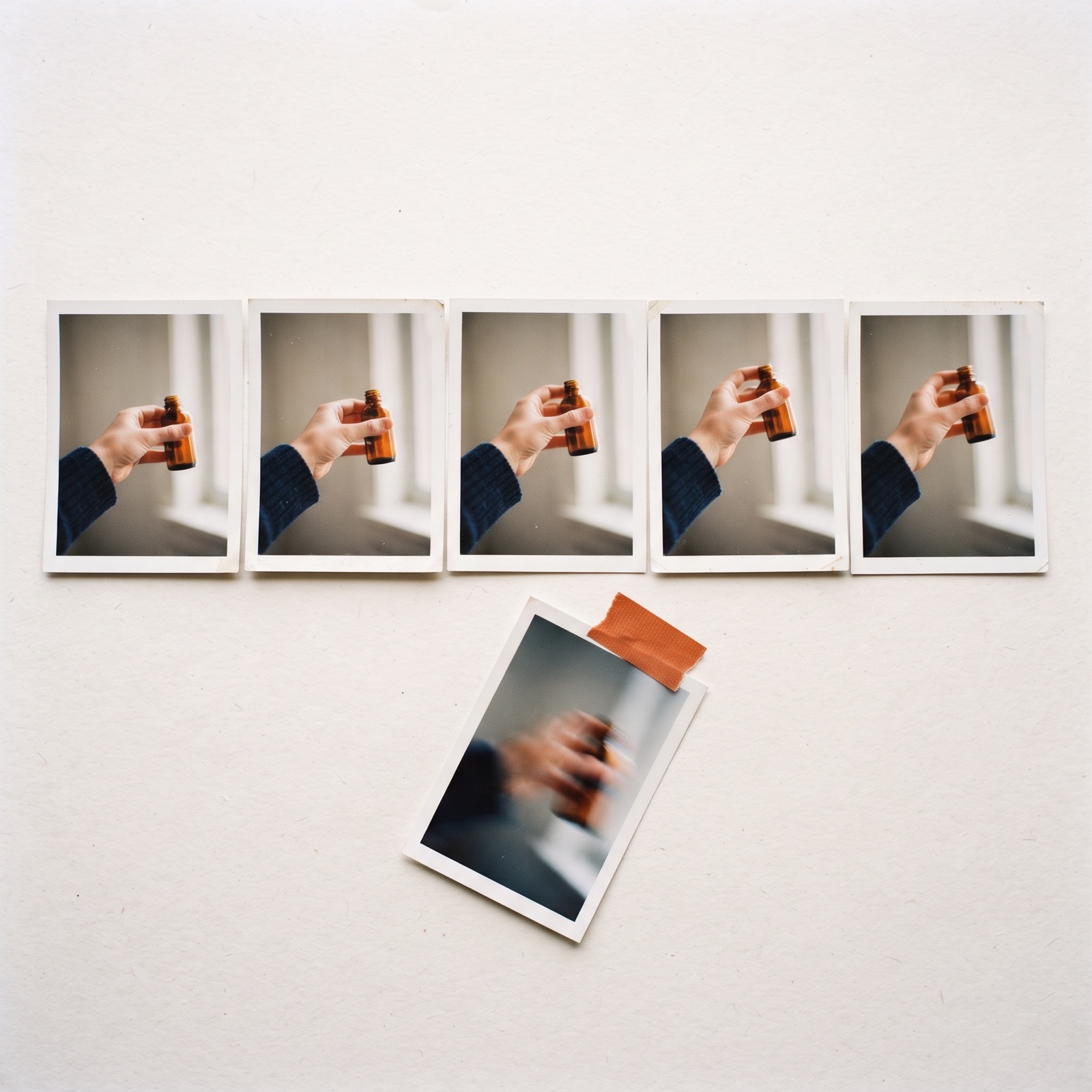
Grid of six printed video frames of the same product take, with one distorted frame pulled aside and marked with orange tape
A six-generation batch from one concept: the take with a broken first frame is pulled on sight, before review time is spent on it.

When Kling 3.0 wins, and when it loses

Choose Kling 3.0 when the ad depends on motion realism around people: product-in-hand shots, hands-on demos, and UGC-style handheld energy. Those are the shots where its natural-language adherence and human motion currently lead the field for ad work, and they are the backbone of DTC paid social. The comparison logic against its closest rival is laid out in the AI Vidia comparison of Kling and Runway Gen-4 for UGC ads.

Avoid Kling 3.0 when the concept is dialogue-driven or needs legible text in frame. Lip-sync remains a hard limit, so dialogue-led scripts belong in a different tool or a live shoot, and every legible word belongs in post. For the dialogue-capable end of the market, see the Veo 3 versus Kling ad video breakdown. The honest summary: Kling 3.0 is a body-language model, not a spokesperson model, and briefs should be sorted accordingly.

The sorting rule the AI Vidia team applies at brief stage takes 30 seconds per shot. If the shot lives on a face saying words, it leaves the Kling queue. If the shot needs a readable pack, price, or caption inside the frame, the words move to post and the shot stays. Everything else that involves a person moving, holding, applying, pouring, or demonstrating defaults to Kling 3.0 first, because that is where its adherence is strongest per generation.

The next step

If the anatomy makes sense but the production capacity does not exist in-house, that is the gap the retainer closes. AI Vidia puts the first creative in a client's hands within 72 hours of kickoff and scales to 40 to 200 AI video ads per brand per month, with the prompt system, style locks, and iteration discipline included. Book a 30 minute scoping call to see the framework applied to your account.

Frequently asked questions

01What are the most effective Kling 3 prompting techniques for ad creative?
The highest-yield technique is structuring every prompt into five blocks: subject, action, scene, camera, and realism. Kling 3.0 rewards cinematic natural language with one subject, one primary action, explicit camera grammar, and explicit lighting. Keyword stacks and over-stacked directives degrade adherence, so shorter, plainer prompts outperform long ones. AI Vidia runs this five-block anatomy on every ad generation and changes exactly one block per iteration.
02Why does Kling 3.0 work better with natural language than keyword stacks?
Kling 3.0 is trained to follow scene descriptions the way a director would give them, so a plain sentence describing one subject, one action, and one camera move produces higher adherence than a comma-separated list of style keywords. When directives stack up, the model starts trading them off against each other and adherence degrades across all of them. The practical rule is one subject, one primary action, explicit shot size and movement, and explicit lighting. Anything beyond that competes for the model's attention instead of adding control.
03How many Kling 3.0 generations should I run per ad concept?
AI Vidia batches 4 to 6 generations per concept and changes exactly one prompt block between iterations. A single generation invites endless tinkering, while a batch produces comparison data that shows which block to adjust next. Any generation with a bad first frame is killed immediately, because a bad first frame never recovers. Survivors are scored against a fixed checklist before anyone outside production sees them.
04Can Kling 3.0 render on-screen text or synced dialogue?
No, not at ad-production quality. Text in frame renders as broken glyphs, so every legible word, caption, price, and pack claim should be composited in post-production instead. Lip-sync is also a hard limit, so voiceover should be written to land on cutaways rather than on a speaking face. Dialogue-led ad scripts belong in a dialogue-capable tool or a live shoot, with Kling 3.0 covering the motion-realism shots around them.
05When should a brand choose Kling 3.0 over Veo or Runway for ad creative?
Choose Kling 3.0 when the ad depends on motion realism around people: product-in-hand shots, hands-on demos, and UGC-style handheld footage. Its human motion and natural-language adherence currently lead in those shot types. Choose a different model or a live shoot when the concept is dialogue-driven or needs legible text in frame, which are Kling's two hard limits. Most AI Vidia accounts run a mixed stack and route each shot to the model that handles it best.
06Does AI Vidia publish its Kling 3.0 production prompts?
No. The production prompt library, the per-vertical phrasings, and the style locks that keep a brand's ads consistent are part of the AI Vidia retainer, not public content. What AI Vidia does publish is the framework layer: the five-block prompt anatomy, the failure modes and fixes, and the iteration workflow, which any team can apply. The retainer exists for teams that want the system run for them at 40 to 200 AI video ads per brand per month.

Next step

Get your first 12 on-brand AI variants in 14 days.

Book a 20-minute strategy call with the AI Vidia team. No pitch deck, just a structured plan for your creative output.

Book a call

Read next