
AI/Vidia
All insights

How Many Ad Creatives Should You Test a Month?

How many ad creatives to test per month: spend-based floors, a 5% winner-rate model, and the ladder AI Vidia uses across 48 brands to set monthly volume.

Founder, AI Vidia
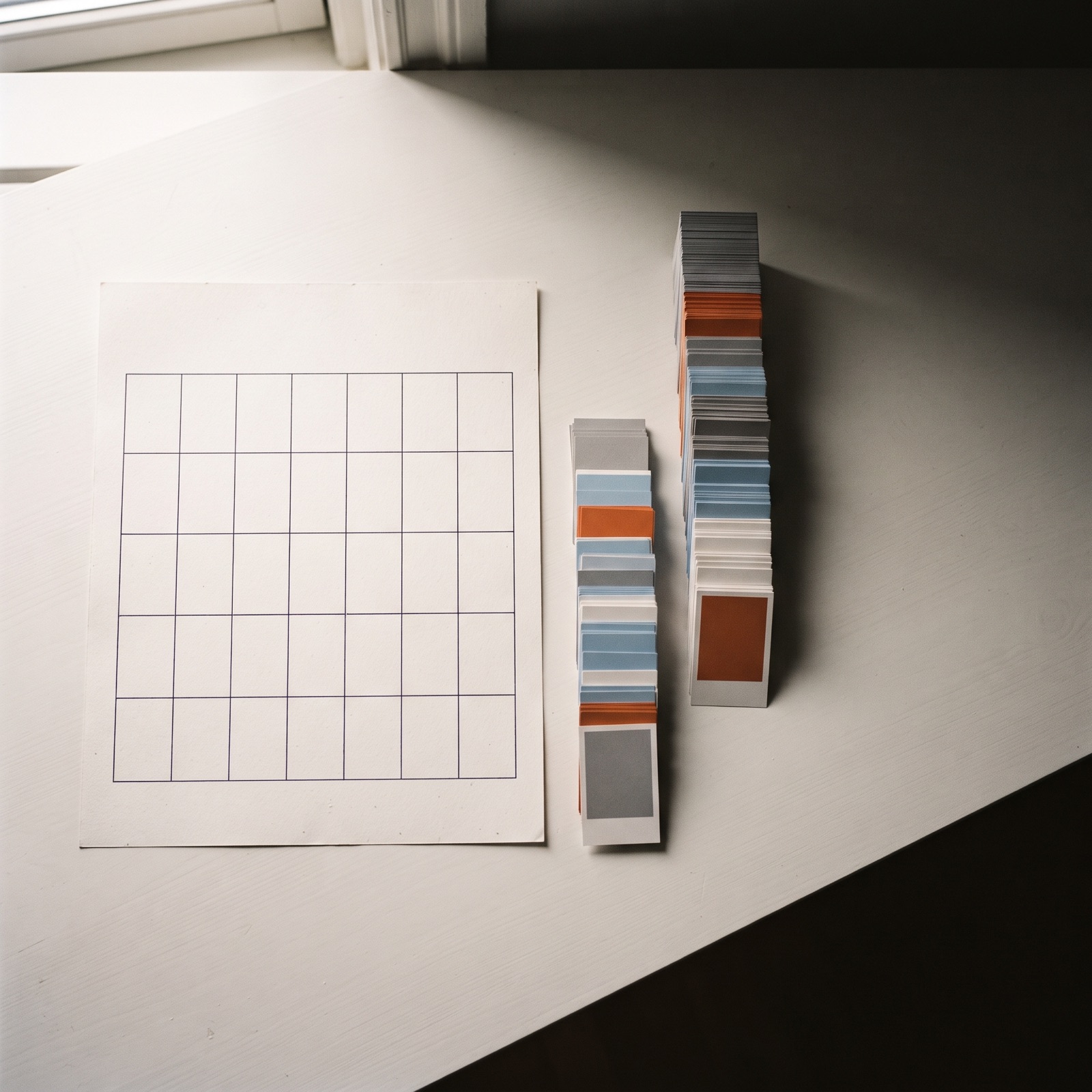
Editorial overhead scene of a four-rung wooden ladder motif on a warm white studio surface, with ascending stacks of printed ad frame cards beside each rung, a few cards tinted burnt orange.
On this page8 sections

AI Vidia gets asked how many ad creatives to test per month more than any other planning question, and the answer is arithmetic, not taste. The consensus across Meta media-buying benchmarks is 15 to 25 new creatives per month for a mid-spend DTC account, scaling at roughly one new creative per USD 1,000 to 3,000 of monthly ad spend. The AI Vidia team has shipped 1,834 AI videos and 70,342 AI images for 48 brands in 14 countries, and across that volume one rule holds: monthly creative volume is a function of spend, fatigue speed, and hit rate. This article turns that function into a ladder you can read your own floor from.

One benchmark frames everything that follows. Motion's 2026 creative benchmark report, built on 578,750 creatives and USD 1.29B in analyzed ad spend, found that roughly 5 percent of creatives become winners, and that the top 1 to 2 percent of creatives absorb about half of total spend. If only 1 in 20 ads wins, monthly test volume is not a vanity metric. It is the input that decides whether the next winner arrives before the current one fatigues.

Why monthly creative volume decides your CPA curve

5%CREATIVES THAT BECOME WINNERS
15 to 25CONSENSUS MONTHLY CREATIVES
3 to 4WEEKS TO CREATIVE FATIGUE
30 to 50%LOWER CPA WITH 5+ VARIATIONS

Creative fatigue sets the clock. At scale, Meta ad performance decays inside a 3 to 4 week window, and audience frequency above roughly 2.5 is the danger zone where CPMs climb and CTR sags. A brand spending EUR 40,000 per month that tests 6 creatives is replacing winners slower than the platform burns them: at a 5 percent hit rate, 6 creatives per month produce a winner roughly once a quarter, while the current winner fades in under a month.

Volume also buys auction efficiency directly. Meta for Business reports that campaigns with 5 or more creative variations see 30 to 50 percent lower CPA. Forrester measures a 20 to 35 percent paid media ROAS improvement when creative volume increases. Both numbers point the same way: for a DTC brand at meaningful spend, under-testing is the expensive option, not the cautious one.

Price the gap in winners, not in production line items. A EUR 60,000 account testing 10 creatives per month should expect about 6 winners per year; the same account at its 30 to 50 band floor should expect 18 to 30. Every missing winner keeps spend parked behind fatigued ads, and the fatigue tax shows up as CPMs and CPA climbing while frequency drifts past 2.5. The production budget is rarely the expensive part of creative testing; the missing winners are.

Overhead editorial scene of a wall calendar page beside four ascending stacks of printed ad frame cards on a warm white desk, a few cards tinted burnt orange among grey ones.
At a 5 percent hit rate, the stack you test each month sets how many winners the quarter can produce.

The benchmark: monthly creative volume by spend band

The consensus across Meta media-buying benchmarks is consistent on three points: 15 to 25 new creatives per month for mid-spend DTC accounts, roughly one new creative per USD 1,000 to 3,000 of monthly ad spend, and accounts testing 15 or more concepts per month materially outperforming low-volume testers. AI Vidia maps that consensus onto four spend bands, with expected winners calculated at Motion's 5 percent hit rate.

Monthly spend bandMonthly creative floorConceptsVariants per conceptExpected winners per month at a 5% hit rate
Under EUR 10,0008 to 122 to 340 to 1 (about one every other month)
EUR 10,000 to 30,00015 to 254 to 64About 1
EUR 30,000 to 100,00030 to 506 to 1051 to 2
EUR 100,000 plus60 to 15010 to 2063 to 7

Read the winner column first; it is the whole argument. At a 5 percent hit rate, a brand testing 10 creatives per month finds a winner roughly every other month. At 20 creatives per month, it finds about one winner per month. At 40 creatives per month, it finds about 2 winners every month. Over a quarter, the 10-creative account banks 1 to 2 winners while the 40-creative account banks about 6. Motion's concentration curve explains why that gap compounds: the top 1 to 2 percent of creatives absorb about half of total spend, so every additional winner is a candidate for the ads that end up carrying the account.

The spend rule and the consensus band agree with each other, which is why the table holds. At USD 30,000 in monthly spend, one creative per USD 1,000 to 3,000 gives a range of 10 to 30 new creatives, and the consensus band of 15 to 25 sits inside it. When two independently derived rules land on the same range, treat that range as the floor, not the ceiling.

The split between concepts and variants matters as much as the total. A concept is a new idea: a new hook, a new angle, a new format. A variant is an execution of that idea: a ratio cut, a hook swap, a claim change. The ladder holds the split between 1:4 and 1:6 because concepts find new winners while variants sharpen existing ones. For the grid mechanics behind the split, read how AI Vidia sizes a creative testing matrix from 4 to 35 variants.

Want a structured plan for your AI creative pipeline?
20-minute call, no pitch deck.
Book a call

The Spend-to-Creative Ladder

The Spend-to-Creative Ladder is the strategic framework the AI Vidia team uses to set a monthly creative floor on every new account. It has 5 steps. Run it at kickoff and again at the top of each quarter; the output is one number for the month and a concept-to-variant split to build against.

  1. Fix the spend band. Pull the rolling 30 day spend across Meta, TikTok, and YouTube and place the account in one of four bands: under EUR 10,000, EUR 10,000 to 30,000, EUR 30,000 to 100,000, or EUR 100,000 plus. The band sets the starting rung, not ambition and not last month's design capacity.
  2. Set the monthly creative floor. Apply the spend rule of one new creative per USD 1,000 to 3,000 of monthly spend, then check it against the band floor in the table. Take the higher of the two numbers. A EUR 50,000 account gets a floor of 30 even when the spend rule alone would allow 17.
  3. Split concepts from variants. Divide the floor into concepts and variant cuts at a ratio between 1:4 and 1:6. Benchmarks favor concept-heavy testing: accounts testing 15 or more concepts per month materially outperform low-volume testers, because concepts discover new winners while variants only sharpen existing ones.
  4. Model expected winners. Multiply the monthly floor by the 5 percent hit rate. If the expected winner count cannot replace fatigued ads inside the 3 to 4 week decay window, the floor is too low. An account that needs 2 fresh winners per month needs roughly 40 creatives per month in test.
  5. Re-check against frequency. Review audience frequency monthly. Frequency above roughly 2.5 with rising CPA means the account is burning creative faster than the ladder assumed. Climb one rung and re-run the winner math before touching budgets or audiences.

Kevin's take

Worked backwards, the arithmetic is blunt. An account that needs 2 fresh winners per month to rotate out fatiguing ads needs about 40 creatives per month in test. An account that can live on 1 winner per month can defend 20. The only genuinely wrong answer is a volume chosen because it matches the design capacity the team happened to have last quarter.

The 3-Week Volume Ramp

The ladder sets the destination; the 3-Week Volume Ramp is how AI Vidia gets an account there without breaking review discipline. The first creative is in your hands within 72 hours of kickoff, and the ramp follows a fixed weekly cadence.

  1. Week one, ship 12 variants. The opening batch calibrates the brand lock, the review rubric, and the naming conventions. Twelve variants is deliberately small: the goal is a clean approval loop and a first read on hooks, not coverage. Anything that fails brand review here is cheap to fix.
  2. Week two, ship 30 to 50 variants. With the lock approved, the batch widens to 30 to 50: more concepts, plus ratio cuts across 9:16, 1:1, and 4:5 for placement coverage. The client review window moves to a fixed weekday so the kill rhythm forms before full volume arrives.
  3. Week three, ship 80 to 150 variants. From week three the account runs at full production cadence, 80 to 150 variants per week, with day 10 kill rules live on performance data. This is the rung where the 5 percent math starts paying monthly winners instead of quarterly ones.
  4. Week four, settle the retainer cadence. After the ramp, volume settles at the ladder floor: most accounts run 40 on-brand videos per month on the Performance Retainer or 70 per month on the Brand System. The full weekly mechanics are in the playbook for scaling to 100 ad variants per week.

Proof: the volume math in production

AI Vidia has shipped 1,834 AI videos and 70,342 AI images across 48 brands in 14 countries, with a 99.2% brand-safe pass rate and 2.4x ROAS on tested winning cohorts. The tiers map straight onto the ladder: the Pilot Sprint ships 12 to 18 variants in 14 days, the Performance Retainer ships 40 on-brand videos per month, and the Brand System ships 70 per month. Per-video effective cost across tiers lands between EUR 213 and EUR 272; the full tier arithmetic is on the published AI Vidia pricing page.

The live public case is IndianBites, a fast-growing DTC food brand with a Meta account starving for fresh creative. The AI Vidia team shipped 142 AI ads in 11 weeks, a 12x lift in weekly test volume, with 2.4x ROAS on winning cohorts and a 62 percent drop in creative production cost inside 90 days. The account moved from a handful of creatives per month to a weekly 12-variant batch, which is the ladder's EUR 10,000 to 30,000 rung executed on schedule. The full numbers are in the IndianBites case study.

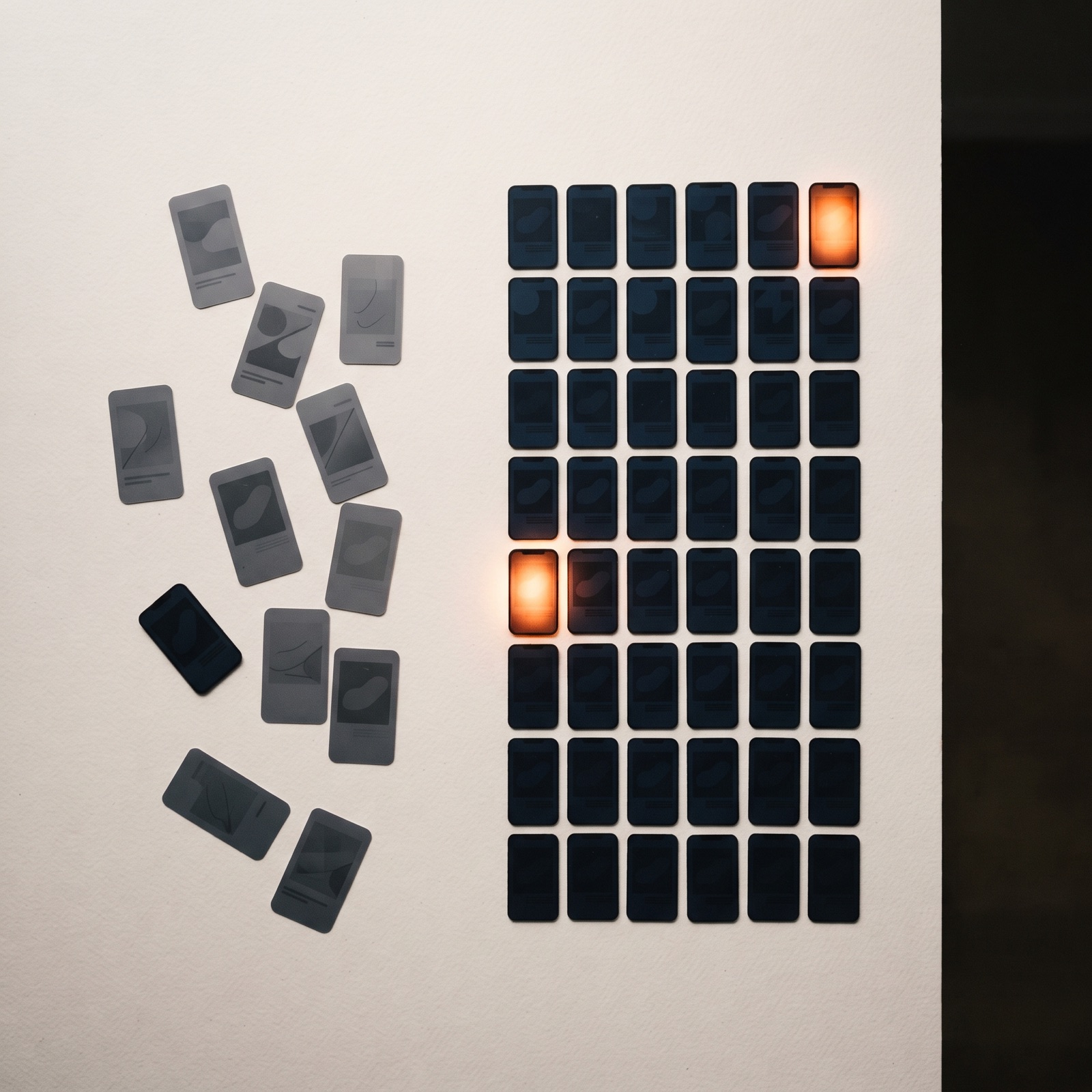
Winners are a volume game with a quality floor. Ship 40 on-brand creatives a month and the 5 percent math pays you about two winners; ship 10 and you are hoping for one every other month.
A sparse scatter of grey phone-frame ad cards beside a dense dark grid of ad cards with a few glowing burnt orange, showing how larger monthly test volume yields more winners.
Forty creatives in test converts to about two winners a month; ten converts to one every other month.

When each rung wins

Stay under 12 creatives per month only when spend is under EUR 10,000 and the goal is maintaining signal rather than growth. At that scale the priority is protecting per-creative budget so each test gathers enough events to be judged, and the metric worth chasing first is hook rate: Motion's benchmark puts a good hook rate at 30 percent or higher. Fix hooks before adding volume.

Hold the 15 to 25 band when spend sits between EUR 10,000 and 30,000 and frequency is stable below 2.5. This band is the consensus for a reason: it produces about one winner per month, which is enough to rotate creative inside the 3 to 4 week fatigue window at that spend level.

Climb to 30 to 50 the month spend crosses EUR 30,000, or earlier if frequency runs above 2.5 while CPA rises. Climb again past EUR 100,000, where 60 to 150 creatives per month keeps 3 to 7 winners arriving monthly. Descend a rung only when review capacity genuinely cannot keep up, never to save production cost; Forrester's 20 to 35 percent ROAS spread is the price of standing still.

Two overrides trump the ladder. If the team cannot review and kill what it already ships, fix review capacity before adding volume; unreviewed creative is spend without signal. And if hook rate sits below 30 percent across the last two batches, spend the next batch on new hooks rather than more cells, because volume multiplies the quality of the concepts it carries.

The next step

If you want the monthly number for your account calculated against actual spend, book a 30 minute scoping call and the AI Vidia team will run the Spend-to-Creative Ladder on your last 30 days of data. To see what the volume looks like as finished work, start with the AI video ads service. First creative inside 72 hours of kickoff; the full ramp lands inside three weeks.

Frequently asked questions

01How many ad creatives should a DTC brand test per month?
The consensus across Meta media-buying benchmarks is 15 to 25 new creatives per month for a mid-spend DTC account. The scaling rule is roughly one new creative per USD 1,000 to 3,000 of monthly ad spend, so a EUR 50,000 account should test 30 to 50. Accounts testing 15 or more concepts per month materially outperform low-volume testers. AI Vidia sets the floor by spend band and models expected winners at a 5 percent hit rate before committing to a number.
02How does monthly ad spend determine creative testing volume?
Spend sets both the budget each creative needs to gather signal and the speed at which audiences fatigue. The working rule is one new creative per USD 1,000 to 3,000 of monthly spend: under EUR 10,000 that means 8 to 12 creatives, EUR 10,000 to 30,000 supports 15 to 25, EUR 30,000 to 100,000 supports 30 to 50, and above EUR 100,000 the floor moves to 60 to 150. Testing far below the band leaves winners undiscovered while live ads decay. Testing far above it starves each creative of the budget needed to prove itself.
03What percentage of ad creatives become winners?
Motion's 2026 creative benchmark report, which analyzed 578,750 creatives and USD 1.29B in ad spend, found that roughly 5 percent of creatives become winners. The same report found that the top 1 to 2 percent of creatives absorb about half of total spend, and that a hook rate of 30 percent or higher is a good result. The practical consequence is that winner count scales linearly with test volume. A brand testing 40 creatives per month should expect about 2 winners; a brand testing 10 should expect one every other month.
04How fast does ad creative fatigue set in on Meta?
At scale, Meta creative performance decays inside a 3 to 4 week window. Audience frequency above roughly 2.5 is the danger zone where CPMs rise and CTR falls. That decay clock is why monthly test volume matters: replacements must be found before the current winners fade. An account producing fewer than one new winner per month at meaningful spend will see CPA drift upward even if nothing else changes.
05What is the difference between concepts and variants in creative testing?
A concept is a new idea: a new hook, angle, or format. A variant is an execution of an existing concept: a ratio cut, a hook swap, or a claim change. Benchmarks favor concept-heavy testing because concepts discover new winners while variants only sharpen existing ones, and accounts testing 15 or more concepts per month materially outperform low-volume testers. AI Vidia holds the split between one concept per 4 variants and one per 6, and Meta for Business reports that campaigns with 5 or more creative variations see 30 to 50 percent lower CPA.
06How quickly can a brand ramp to high monthly creative volume?
AI Vidia ramps every account over three weeks: 12 variants in week one, 30 to 50 in week two, and 80 to 150 from week three. The first creative is delivered within 72 hours of kickoff. After the ramp, volume settles into a monthly cadence: the Pilot Sprint ships 12 to 18 variants in 14 days, the Performance Retainer ships 40 on-brand videos per month, and the Brand System ships 70 per month. Per-video effective cost across tiers lands between EUR 213 and EUR 272.

Next step

Get your first 12 on-brand AI variants in 14 days.

Book a 20-minute strategy call with the AI Vidia team. No pitch deck, just a structured plan for your creative output.

Book a call

Read next