
AI/Vidia
All insights

Kling 2 vs Runway Gen-4 for UGC Ads in 2026

Kling 2 vs Runway Gen-4 ugc ads for Meta and TikTok: hook routing, cost per clip, Act-Two lip-sync, character continuity, and when each model wins in 2026.

Founder, AI Vidia
Editorial overhead flat lay of two matte film canisters in burnt orange and deep ink on a warm white Nordic surface representing Kling 2 and Runway Gen-4 for UGC ads
On this page8 sections

AI Vidia ships UGC-style AI video ads on Kling 2 and Runway Gen-4 every week, for DTC food, beauty, fashion, and wellness brands across Meta and TikTok. The kling 2 vs runway gen4 ugc ads question is now a routing decision, not a model preference debate. Kling 2 wins on physical creator motion and product interaction frames. Runway Gen-4 wins on character continuity across clips and on performance-driven dialogue through Act-One and Act-Two. The right model depends on whether the UGC hook is a body action with a product or a creator-frame moment with spoken delivery.

As of May 2026, the AI Vidia team uses Kling 2 as the default for hand-in-frame product interaction, fast UGC reactions, and physical hook moments. Runway Gen-4 is the default for talking-head UGC, multi-clip campaigns with a recurring creator face, and any scene where lip-sync to a scripted line is the hook. Most UGC briefs need a mix, not one model running the entire weekly batch.

Why UGC Ads Break Generic Video Model Comparisons

0.8sUGC SCROLL DECISION WINDOW ON REELS AND TIKTOK
10sKLING 2 AND RUNWAY GEN-4 NATIVE CLIP LENGTH
1,834AI VIDEO ADS SHIPPED BY AI VIDIA
38%AVERAGE CTR LIFT ON AI VIDEO

UGC ads pass or fail on a different criterion than product-hero or lifestyle ads. The viewer must believe a real person is speaking or interacting with the product in the first second of the clip. A flat opening, slightly off facial geometry, or an unnatural hand position reads as fake within 200 milliseconds, before the viewer can articulate why. Meta and TikTok algorithms reward stop-scroll, not aesthetic quality in isolation. UGC that loses the authenticity check in the first frame loses the impression even when the clip is well-lit and color-graded.

That constraint reshapes the model comparison. The right metric is not visual fidelity in a vacuum. The right metric is how the first frame holds up under the viewer's authenticity check. Kling 2 and Runway Gen-4 solve this problem from two directions. Kling 2 leans on physics: realistic hand movement, body weight, micro-motion in shoulders and breathing. Runway Gen-4 leans on identity: character continuity across clips through its References system, and human performance capture through Act-One and Act-Two. Two paths to the same outcome, with different downstream production implications.

Editorial overhead view of two matte film canisters side by side on a warm white Nordic surface, one burnt orange and one deep ink, representing Kling 2 and Runway Gen-4 UGC ad model decision
UGC authenticity is decided in the first 0.8 seconds: Kling 2 wins on physical motion, Runway Gen-4 wins on identity and performance.

Kling 2 vs Runway Gen-4: Head-to-Head for UGC Ads

The following table reflects the AI Vidia team's production observations across Meta Reels and TikTok ad briefs from January to May 2026. Both models were run on identical UGC briefs where the format allowed. Cost figures reflect typical batch pricing through API providers at the time of writing.

Criterion Kling 2 Runway Gen-4 Winner for UGC ads
9:16 native output for Reels and TikTokYesYesTie
Max native clip length10 seconds10 secondsTie
Hand-in-frame product interaction realismOutstandingVery goodKling 2
Talking-head lip-sync to a scripted lineLimitedExcellent via Act-One and Act-TwoRunway Gen-4
Character continuity across clipsReference-image dependentGen-4 References nativeRunway Gen-4
Physical hook authenticity at 0 to 1 secondOutstandingVery goodKling 2
Multi-character UGC scenesStrongStrong with ReferencesTie
Batch API access for production scaleBeta via third-party providersGA via Runway APIRunway Gen-4
Estimated cost per 5-second clipEUR 0,28EUR 0,45Kling 2
Creator-face IP and licensing clarityGenerated identity onlyGenerated or captured from owned performanceRunway Gen-4

Two rows decide the routing. Hand-in-frame product interaction is where Kling 2's physics engine pulls clear of every other production-grade model. The way the hand grips a bottle, the wrist micro-rotation when pouring, the finger placement on a tube of cream all read as physical rather than rendered. Runway Gen-4's edge is identity stability. With a single reference image of a face, Gen-4 generates the same character across five or fifty clips without drift, which is what a recurring UGC creator concept requires. No other production-grade model does both today, which is why the routing matrix below assumes a two-model stack.

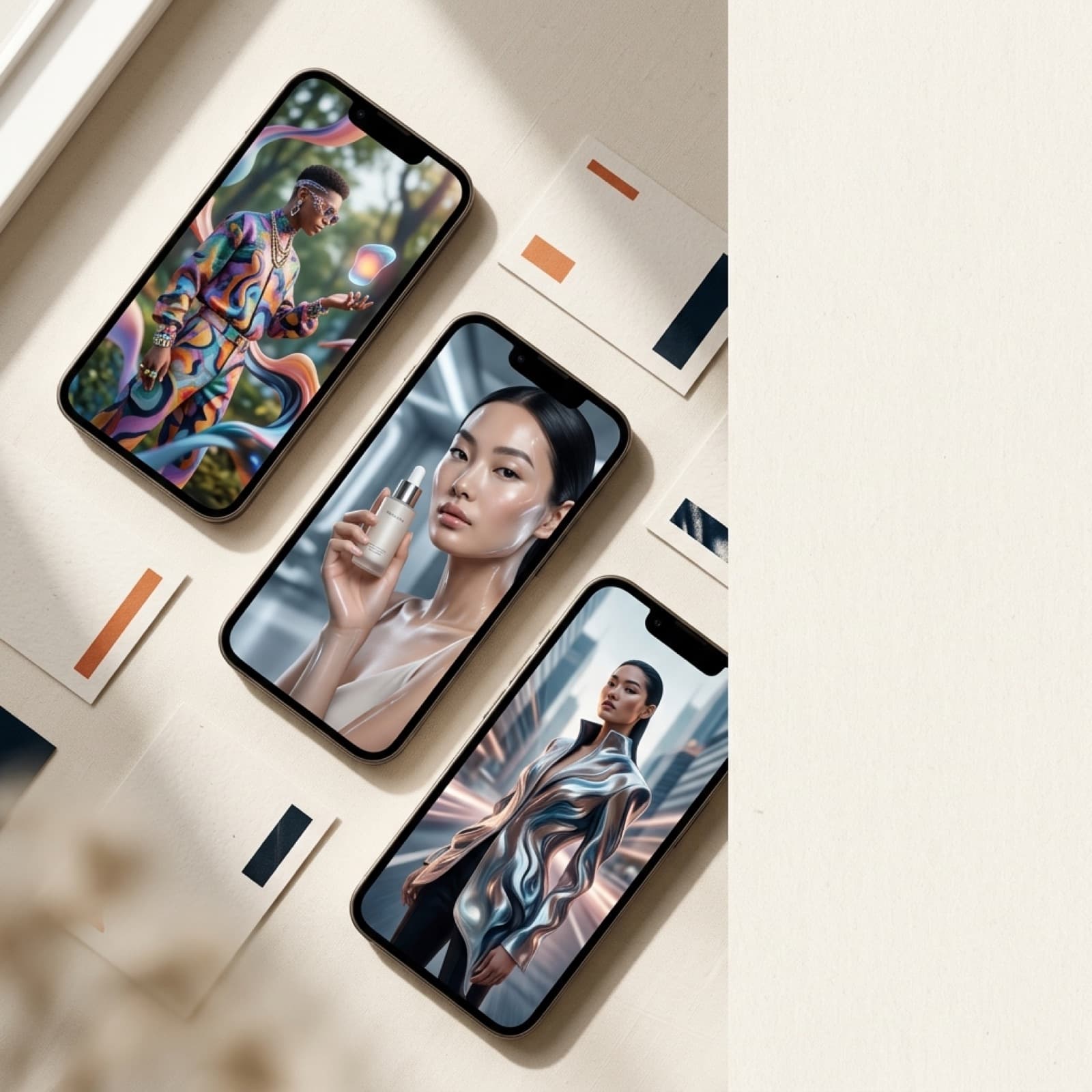
Slim smartphone in 9:16 portrait orientation showing a UGC hand-in-frame moment with a product, illustrating Kling 2 physical interaction realismSlim smartphone in 9:16 portrait orientation showing a UGC talking-head creator frame with consistent identity across multiple clips, illustrating Runway Gen-4 References
Hand-in-frame product hooks (left) route to Kling 2; recurring creator-face campaigns (right) route to Runway Gen-4.

The AI Vidia UGC Hook Routing Matrix

This is the strategic framework the AI Vidia team uses to assign Kling 2 or Runway Gen-4 to each UGC brief before any generation starts. The matrix takes under two minutes per brief and cuts first-pass rejection rates on UGC batches.

  1. Classify the hook as physical or performative. Physical hooks lead with a body action: a hand applying a product, a creator unboxing, a pour, a reaction to a taste. Performative hooks lead with speech: a direct-address opener, a scripted line, a question to camera. Kling 2 is the default for physical hooks because hand and body motion realism is its strongest dimension. Runway Gen-4 is the default for performative hooks because lip-sync, eyeline, and identity stability through Act-One and Act-Two outperform Kling 2 on the same brief.
  2. Check whether the campaign needs the same creator face across multiple clips. Recurring-creator concepts, multi-week UGC series, and brand-character ad systems need identity stability across batches. Runway Gen-4 References holds a face across clips within the same project without drift. Kling 2 can hold an identity with image-prompted seeds, but consistency degrades after roughly five clips in the same character. If the brief calls for one recurring creator across 20 or more clips, Runway Gen-4 is the safer routing choice.
  3. Assess whether the brief includes spoken dialogue or only ambient audio. Spoken UGC requires precise lip motion to a scripted line. Runway Gen-4 with Act-Two performance capture takes a short webcam recording and maps mouth, eye, and head motion onto a generated character, producing dialogue scenes that hold up against the authenticity check at the 0.8 second mark. Kling 2 generates speech-adjacent motion but does not lock lips to a specific audio track. For voice-over UGC and spoken-hook concepts, Runway Gen-4 is the default.
  4. Map the brief to the placement view-time profile. TikTok and Reels reward an instant physical or performative event in the first 0.8 seconds. YouTube Shorts and longer Reels reward sustained authenticity over 8 to 10 seconds. Kling 2's motion smoothness holds up well across the full 10 second window for physical hooks. Runway Gen-4's identity stability holds up across multi-clip sequences in longer placements. Match the model to the placement view-time profile, not to the highest demo-reel quality.
  5. Confirm batch volume and API access before lock-in. Runway Gen-4 is API-accessible at scale through the Runway API with documented rate limits. Kling 2 is accessible through third-party providers in beta, with variable rate limits and queue times. A studio producing 30 or more UGC clips per week needs predictable batch behavior. If your weekly UGC volume is above 25 clips and the brief mix is split, running both models in parallel routed by hook type produces faster delivery than forcing a single model.
Want a structured plan for your AI creative pipeline?
20-minute call, no pitch deck.
Book a call

Kevin's Take

The practical consequence: the comparison conversation should stop being model versus model. It should become brief versus brief. A UGC brief that names the hook type, the campaign character continuity requirement, and the speech versus ambient audio profile routes itself. The model is selected by the brief in under two minutes. A brief that does not name those three elements produces uneven output from either model and forces re-generation that kills the weekly cadence.

The Weekly UGC Production Cadence Across Two Models

This is the tactical execution sequence the AI Vidia team uses to ship a weekly UGC batch routed across Kling 2 and Runway Gen-4. The cadence is built for accounts running 20 to 50 UGC variants per week on Meta and TikTok.

  1. Brief sort on day one. Sort the week's UGC briefs into three piles before any generation starts: physical-hook, performative-hook, and mixed-hook. Tag each brief with its character continuity requirement and audio profile. Briefs with unresolved tags go back to the writer before they enter the production queue. This sort takes 30 to 45 minutes for 40 briefs and prevents model misrouting downstream.
  2. Generate the Kling 2 physical batch on day two. Run all physical-hook briefs in Kling 2 in a single batch, with consistent motion direction and starting-frame instructions across the batch. Use the same lighting and surface vocabulary across prompts to keep the visual identity coherent. Pull rough cuts for review the same day. Kling 2 batch turnaround is typically four to six hours per 20 clips through current third-party API providers.
  3. Capture Act-Two performances on day three. For performative-hook briefs, record short webcam takes of each scripted line. The takes are not the final ad. They are the performance reference that Runway Gen-4 Act-Two maps onto the generated creator face. Recording 10 to 15 lines takes one hour. The capture step replaces casting and shoot scheduling for spoken UGC and is the single largest production-time saving in the workflow.
  4. Generate the Runway Gen-4 performative batch on day four. Run all performative-hook briefs in Runway Gen-4 with References for character continuity and Act-Two for performance mapping. Batch processing through the Runway API delivers 20 clips in roughly four hours. Review identity continuity across the batch against the reference face. Re-generate any clip where eyeline or jaw geometry drifts from the reference.
  5. Edit, caption, and ship on day five. Assemble final cuts with captions, music, and platform-specific aspect handling for 9:16 Reels and TikTok and 1:1 for in-feed Meta. Ship the batch into the ad account on Friday for weekend testing. Tag every clip in the DAM with model, hook type, character reference, and brief ID so the winners report routes the next week's brief sort.
  6. Score winners on Monday and feed back to the brief sort. Pull the weekend's performance data. Mark clips above the account benchmark on CTR and hook rate as winners. Update the brief sort tags for the upcoming week with patterns from the winners. The cadence learns from itself, not from model preference debates. Within three weeks the routing logic stabilizes and the brief sort time drops to under 20 minutes.

What the AI Vidia Production Record Shows

The AI Vidia team has shipped 1,834 AI video ads across Kling, Runway, Veo, Sora, Luma, and Pika for 48 brands in 14 countries. On UGC-specific placements across Meta Reels and TikTok, hook-routed batches deliver a 38 percent average CTR lift and 2.4x ROAS on winning cohorts. EUR 2.4M in paid social spend has been optimized against this creative output across a 99.2 percent brand-safe pass rate.

The IndianBites case shows the cadence in production. The brand needed 12 UGC-style variants per week to keep Meta out of the learning phase. The AI Vidia team routed hand-in-frame food interaction hooks to Kling 2 for the physical reaction frames and routed scripted recipe walk-through hooks to Runway Gen-4 for the talking-head cooking moments. 142 AI ads shipped in 11 weeks. Creative production cost dropped 62 percent. ROAS on winning cohorts reached 2.4x. The full breakdown is in the IndianBites case study.

"Stop asking which model is better. Ask which model the brief routes to. The brief routes the model. The model does not route the brief."Kevin Dosanjh, founder, AI Vidia

For brand teams building a UGC-style AI ad pipeline, the routing logic above replaces the model preference conversation that stalls most pilots. The decision becomes operational, not aesthetic. To see how the broader Kling production stack compares against Pika and Luma for non-UGC short-form, the Kling vs Pika vs Luma routing guide applies the same hook-type logic to a different model spread. For the wider Runway Gen-4 cost and quality picture against Sora, see the Runway Gen-4 vs Sora verdict.

Overhead editorial diagram on warm white Nordic surface showing a hook-type routing card sort assigning physical briefs to Kling 2 and performative briefs to Runway Gen-4 with character continuity tags
The hook-type routing card sort assigns Kling 2 or Runway Gen-4 per brief in under two minutes, the operating layer for a 40-clip-per-month UGC system.

When Each Model Wins for UGC Ads

Use Kling 2 when the UGC brief is hand-in-frame product interaction, a physical reaction shot, a body-language reveal, a creator pouring, applying, eating, or holding a product with clear physical contact in the first second of the clip. Kling 2 wins when motion physics realism at the 0.8 second mark decides the hook. Volume routing through Kling 2 is most effective when the campaign does not require strict character continuity across clips.

Use Runway Gen-4 when the UGC brief is a talking head, a scripted line delivered to camera, a multi-clip series with a recurring creator face, or a campaign where one consistent character carries the brand across 10 or more clips. Runway Gen-4 wins when identity stability and lip-sync to specific audio decide the hook. Act-Two performance capture is the strongest case for Runway Gen-4 because it converts a one-hour webcam session into a full week of generated UGC dialogue.

Run both when the weekly UGC brief mix is split across physical and performative hooks. The hook-routing matrix above produces a routing decision in under two minutes per brief and removes the model preference debate from the weekly planning meeting. Most ad accounts spending above EUR 30,000 per month on Meta and TikTok need both routes operating in parallel to keep up with the testing cadence.

Run neither when the brief is product-hero without a creator presence, a flat-lay product motion clip, or a lifestyle ambient shot without a person. Those briefs route to product-specific image and video models with no UGC requirement. Forcing them into Kling 2 or Runway Gen-4 burns clip budget on capabilities the brief does not use.

Book a Brief Call

AI Vidia builds UGC-style AI ad batches for brands with meaningful Meta and TikTok spend and a UGC production bottleneck. The conversation starts with a hook-type audit of your current UGC creatives, not a model preference discussion. If your ad account needs 20 to 50 UGC variants per week routed across Kling 2 and Runway Gen-4, book a brief call to see what a hook-routed UGC pipeline looks like for your category.

Frequently asked questions

01Which AI video model is best for UGC ads on Meta and TikTok: Kling 2 or Runway Gen-4?
The right model depends on the hook type in the brief, not on a single platform-level preference for one model. Kling 2 wins on physical hooks where hand-in-frame product interaction, body motion, and physical reaction at the first second of the clip determine the scroll-stop on Reels and TikTok. Runway Gen-4 wins on performative hooks where a scripted line delivered to camera, lip-sync to specific audio, and character continuity across multiple clips define the creative direction. AI Vidia uses a hook-type routing matrix on every UGC brief that assigns Kling 2 to physical briefs and Runway Gen-4 to performative briefs in under two minutes per brief. Mixed-hook campaigns split the batch across both models in parallel, which is the common case for ad accounts running 20 or more UGC variants per week.
02What is Runway Act-Two and how does it work for UGC video ads in production?
Runway Act-Two is the performance capture system inside Runway Gen-4 that maps a short webcam recording onto a generated character with frame-accurate motion transfer. The production team records a take of the scripted line, and Gen-4 transfers mouth, eye, and head motion onto the generated UGC creator face without re-recording on set. For ads, this means lip-sync to a specific voice-over track without casting a real creator or scheduling a full production shoot day. AI Vidia uses Act-Two for talking-head UGC briefs, scripted reaction hooks, and recurring-creator campaigns where dialogue is the hook that decides the scroll-stop. The capture step typically takes one hour for 10 to 15 lines and replaces traditional casting and shoot scheduling for spoken UGC in a weekly cadence.
03Can Kling 2 hold the same character face across multiple ad clips in a campaign?
Kling 2 can hold a character identity using a reference image as a seed, but consistency degrades after roughly five clips in the same character within the same project batch. For one-off UGC clips or short-run campaigns this constraint is acceptable, especially when the physical motion realism is the hook and the character face is secondary in the brief. For recurring-creator campaigns with 10 or more clips on the same face, Runway Gen-4 References is more reliable because it is designed for identity continuity across batches and longer projects. AI Vidia routes character continuity requirements to Runway Gen-4 by default and only uses Kling 2 for fresh-character physical hooks where identity reuse is not part of the brief. Mixing both models on the same campaign across hook types is the common production pattern.
04How much does it cost to produce 40 UGC ads per month with Kling 2 and Runway Gen-4?
On a Performance Retainer with AI Vidia, the production of 40 UGC-style ad variants per month is bundled into a flat monthly fee that covers briefs, generation across both models, editing, and ad-ready 9:16 and 1:1 cuts. Raw model cost per 5-second clip lands at roughly EUR 0.28 on Kling 2 and EUR 0.45 on Runway Gen-4, but model cost is a small fraction of total production cost in a structured retainer with a brief sort and DAM workflow. Typical mid-market budgets for this kind of UGC retainer run EUR 3,000 to EUR 5,000 per month, including the hook-type brief sort, character reference management, and weekly winners report. For one-off campaign tests outside a retainer, expect higher per-clip cost because the brief sort and routing logic are not amortized across volume. The Pilot Sprint format covers 12 to 18 variants over 14 days for a fixed quote.
05Will the UGC ads look AI-generated to a viewer scrolling Meta Reels or TikTok?
On a structured brief with proper hook routing, current production output from Kling 2 and Runway Gen-4 holds up against the authenticity check at the 0.8 second scroll decision mark on Meta Reels and TikTok. AI Vidia maintains a 99.2 percent brand-safe pass rate across 1,834 video ads shipped, which includes the in-feed authenticity criteria for each placement. The clips that read as AI-generated are almost always briefed without a clear hook type, without motion direction, or without a character reference, and the model output reflects the briefing gap. Audiences do not see model identity, they see hook quality and physical credibility in the first frame. With a hook-routing matrix in place, UGC clips compete on hook strength against creator-recorded UGC at a fraction of the per-clip production cost.
06When should I not use Kling 2 or Runway Gen-4 for UGC ads?
If the brief is a flat-lay product motion clip, an ambient lifestyle shot without a person in frame, or a pure product-hero ad with no creator presence, neither model is the right tool for the job. Those briefs route to product-specific image or video models, not to UGC-focused models like Kling 2 or Runway Gen-4. If the brief requires a specific real creator with established follower trust on a target platform, no AI model substitutes for that creator, and the brief should route to a creator partnership instead. If the campaign is in a regulated category that requires real-person testimonials with verified product usage, neither model produces compliant output and the brief should route to a hybrid human plus AI workflow. The hook-type routing matrix surfaces these mismatches at the brief sort stage before any clip budget is committed.

Next step

Get your first 12 on-brand AI variants in 14 days.

Book a 20-minute strategy call with the AI Vidia team. No pitch deck, just a structured plan for your creative output.

Book a call

Read next