All insights

Meta Ads Creative Fatigue: Fix It in 7 Days

Meta ads creative fatigue: confirm it is fatigue and not saturation, bidding or seasonality, then refresh proven concepts with new hooks inside seven days.

Kevin Dosanjh
"CMO, AI Vidia" · Updated August 8, 2026
A declining CTR curve being reset by a fresh batch of ad-creative variants with new hooks, on a warm off-white Nordic surface.
On this page11 sections

Meta ads creative fatigue is what happens when the same audience sees the same ad too many times: CTR falls, CPM climbs, and CPA follows within days. AI Vidia treats it as a diagnosis before it is a production job, because a refresh only works once fatigue has been confirmed as the actual cause. At scale, Meta creative performance decays inside a 3 to 4 week window, and audience frequency above roughly 2.5 is the danger zone where CPMs climb and CTR sags. The fast fix is fresh creative volume on a proven concept, shipped inside a week, not a new campaign and not a new audience.

Concentration is what makes fatigue expensive in 2026. Motion's 2026 creative benchmark, built on 578,750 creatives and USD 1.29B in analyzed ad spend, found that roughly 5 percent of creatives become winners and that the top 1 to 2 percent absorb about half of total spend. When half an account's spend sits behind one or two ads, the week those ads fatigue is the week the account stalls. This guide covers how the AI Vidia team separates true creative fatigue from the three problems that imitate it, then refreshes inside seven days.

How to spot Meta ads creative fatigue

3 to 4WEEKS TO CREATIVE DECAY
2.5FREQUENCY DANGER ZONE
30%GOOD HOOK RATE FLOOR
30 to 50%LOWER CPA WITH 5+ VARIANTS

Four signals identify creative fatigue, and they have to appear together. Audience frequency climbs past roughly 2.5 and keeps rising. Hook rate on a previously winning ad declines week over week. CPM and CPA rise while the audience, the offer, and the bid strategy stay unchanged. The first-time impression ratio falls, which is Meta reporting that it is re-showing the same asset to the same people.

Two or more of those signals on one ad set is a fatigue call. One on its own is not. Motion's benchmark puts a good hook rate at 30 percent or higher, so an ad drifting from 32 percent to 24 percent across three weeks at frequency 3.1 is fatigued; the same drop at frequency 1.4 is a different problem.

Getting the call wrong costs stalled spend. Meta for Business reports that campaigns with 5 or more creative variations see 30 to 50 percent lower CPA, and Forrester measures a 20 to 35 percent paid media ROAS improvement when creative volume increases. A brand on EUR 40,000 per month that rebuilds audiences for a fortnight instead of shipping hooks pays that spread twice.

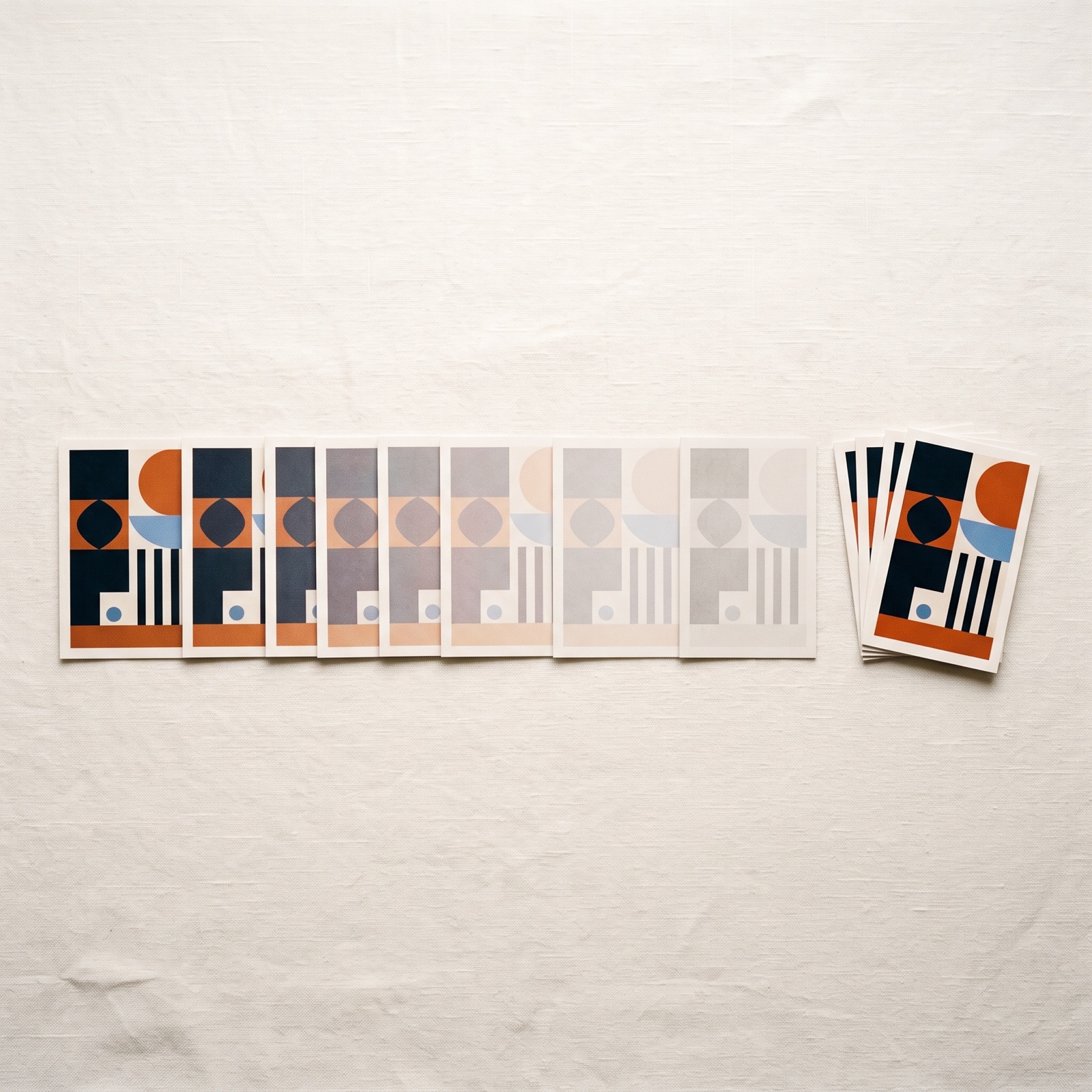
A left to right row of identical printed ad frame cards fading from deep ink to pale grey, beside a compact batch of vivid new ad frame cards on a warm white surface.
Performance decays inside a 3 to 4 week window, so the replacement batch has to be briefed before the current winner fades.

Fatigue or something else: read the symptom table

Creative fatigue gets blamed for outcomes it did not cause. Audience saturation, an auction or bidding shift, and seasonality all draw the same declining chart, and all three are fixed with a different lever. Read the symptom, then the confirmation column, before briefing a single new asset.

SymptomLikely causeHow to confirmThe fix
Frequency past 2.5 on a previously winning adTrue creative fatigueHook rate falls in step with frequency, only on the longest-running adsShip new hooks on the same proven concept inside 7 days
Hook rate falling while frequency stays under 2Weak concept, not fatigueA fresh audience shows the same low hook rate from day oneRebrief the concept and the first 2 seconds, not the volume
CVR falling while CTR holds steadyPost-click problem: page, offer, stock or checkoutOn-site conversion rate is down across every traffic source, not just paid socialFix the post-click experience first; a refresh buys nothing here
CPM rising across every ad at onceAuction pressure or seasonalityNew creative launches at the same elevated CPMAdjust budget pacing and bid strategy; defend CPA with hook rate
One winner absorbing most of the ad set spendConcentration risk, fatigue pendingNo second ad clears the 30 percent hook rate floorBrief 3 to 5 new concepts now, while the winner still works

Row one is the only row where a creative refresh is the primary fix, and that is the point of the table. Frequency rising while hook rate falls on the oldest ads in the set is the fingerprint of genuine fatigue, because the decay depends on time in market rather than on the idea.

Rows two and three are the expensive misdiagnoses. A weak concept looks identical to fatigue on a CTR chart, but it fails on a fresh audience from day one, which fatigue never does. A post-click problem shows CTR holding while CVR drops, and every extra variant shipped against it is spend without signal. Row five is different again: one ad carrying half the spend with no backup above the hook rate floor is a successful account 3 to 4 weeks from a hard drop.

The Fatigue Differential

The Fatigue Differential is the strategic diagnostic AI Vidia runs before any refresh work is briefed. It has 5 steps, takes about 30 minutes on a live account, and answers one question: is creative the binding constraint this week?

  1. Check frequency first. Pull 7 day and 28 day frequency at ad level, not campaign level. Frequency above roughly 2.5 and still climbing on the ads that have been live longest is the entry condition for every other step. Below 1.5, stop here; whatever is wrong is not fatigue.
  2. Compare the hook rate trend against the CVR trend. Fatigue shows up at the top of the funnel first: hook rate and CTR fall while on-site conversion rate holds. If CVR is falling while CTR is flat, the problem sits after the click, and new creative will only push more traffic into the same leak.
  3. Test the same creative on a fresh audience. Duplicate the ad into an untouched audience with a small budget for 3 days. If the same asset delivers a normal hook rate there, the creative is fine and the original audience is saturated. If it opens weak on cold traffic, the concept was never strong enough to fatigue.
  4. Rule out auction and seasonal shifts. Check whether CPM rose across every ad in the account in the same week, including ads launched after the decline started. An account-wide CPM lift that new creative cannot escape is auction pressure or a seasonal peak, and the lever is budget pacing and bidding, not production.
  5. Confirm with a fresh-creative holdout. Ship 3 to 5 new hooks against the same proven concept, same audience, same budget, and read at day 7. If the fresh batch recovers hook rate and CPA while the old asset keeps sliding, fatigue is confirmed. If it decays at the same rate, the constraint is the audience or the offer.
Want a structured plan for your AI creative pipeline?
20-minute call, no pitch deck.
Book a call

Kevin's take

The asymmetry is what makes the differential worth running. A false negative costs a few weeks of decaying CPA. A false positive costs a full production cycle aimed at the wrong constraint, while the real problem compounds.

The 7-Day Refresh Sprint

Once fatigue is confirmed, speed is the whole game. The 7-Day Refresh Sprint is the tactical sequence AI Vidia runs on a fatigued ad set, built to land new assets before the decay window closes on the current winner.

  1. Day 1, triage the fatigued set. Rank live ads by spend, then tag each one keep, refresh, or kill. Keep anything still above the 30 percent hook rate floor. Refresh the proven concepts whose hook rate is sliding. Kill the ads that never cleared the floor, because they are not fatigued, they are just weak.
  2. Day 1 to 2, rebrief hooks from the winning concept. Take the best-performing concept and write 5 to 8 new opening angles against it: problem, social proof, demo, comparison, founder, objection. Keep the body and the offer identical so the test isolates the hook. This brief is written, not shot.
  3. Day 3 to 4, ship the batch. Produce 12 to 20 assets: the new hooks, one alternate opening frame per hook, and ratio cuts across 9:16, 4:5 and 1:1. AI Vidia ships the first creative within 72 hours of kickoff at a brand-safe review bar, so review is a check, not a rebuild.
  4. Day 5, stagger the rotation. Launch the new batch alongside the fatigued winner at roughly a 70 to 30 budget split, then taper the old asset over 3 to 5 days. Swapping the whole pool in one day resets learning across the ad set and hides which new hook worked.
  5. Day 7, read the batch and commit. Judge on hook rate first, then CPA. Scale anything above the 30 percent floor, kill the bottom half, and roll the surviving angles into next week's brief. At Motion's 5 percent winner rate, a 20 asset batch produces about one winner, which is exactly enough to replace one fatigued ad.

What to refresh first when budget is tight

The refresh order is hook before body, body before offer. That order is a cost ranking, not a preference. New hooks are a writing and editing job on footage that already exists, so 5 to 8 hook variants ship in 48 hours against a proven concept. A new body means new scenes or a new creator read. A new offer means pricing, margin and landing page work across the whole funnel.

Start with the first 2 seconds, because that is where the largest measurable delta sits and where the 30 percent hook rate floor is decided. On a fatigued but proven concept, swapping the opening angle and the first visual often resets hook rate on its own. Ratio cuts belong in the same tier: 9:16, 4:5 and 1:1 versions spread delivery across placements at near zero incremental cost.

Move to the body only when two consecutive hook batches fail to clear the floor, which is the signal that the concept is tired rather than its opening. Refresh the cast at this tier, which on AI UGC ads with a locked creator roster means re-shooting the same script with a different face in days rather than booking a production. Touch the offer last, and only when hook rate has recovered while CVR has not, because an offer change moves the economics of every ad running against it at once.

How much volume a refresh takes

Fatigue is a volume problem with a diagnostic gate in front of it. A brand spending meaningfully on Meta needs 30 or more fresh on-brand variants per month to stay ahead of the decay window. The arithmetic is Motion's: at a 5 percent winner rate, 20 assets per month yields about one winner, which barely replaces the ad that just fatigued. At 40 assets per month the account banks about two, which is a rotation rather than a rescue.

That is the production wall most in-house teams hit. A team of three designers cannot produce 200 assets per month when they are already stretched at 40, and hiring is not the answer, since it takes 3 to 4 months to recruit a senior creative. AI Vidia ships 40 to 200 AI video ads per brand per month against a locked brand system, and the full volume model is in the monthly creative volume math by spend band.

Proof: the refresh loop in production

AI Vidia has shipped more than 1,000 AI ads for named client accounts like Andy Okay and IndianBites, against live optimized ad spend, at a brand-safe review bar and 2.4x ROAS on tested winning cohorts. The refresh loop described here runs on those accounts weekly: 30 or more variants each week, 48 hours from concept to creative, and a fixed weekday review that decides what scales and what dies.

The live public case is IndianBites, a fast-growing DTC food brand with a Meta account starving for fresh creative, where traditional food photography could not keep up with the weekly testing cadence. The AI Vidia team shipped 142 AI ads in 11 weeks, lifted weekly testing throughout, and held 2.4x ROAS on winning cohorts. The full numbers are in the IndianBites case study.

Fatigue is not a creative failure, it is a calendar failure. The winner was always going to fade in 3 to 4 weeks; the only question is whether the replacement was briefed in week two or panicked into existence in week five.
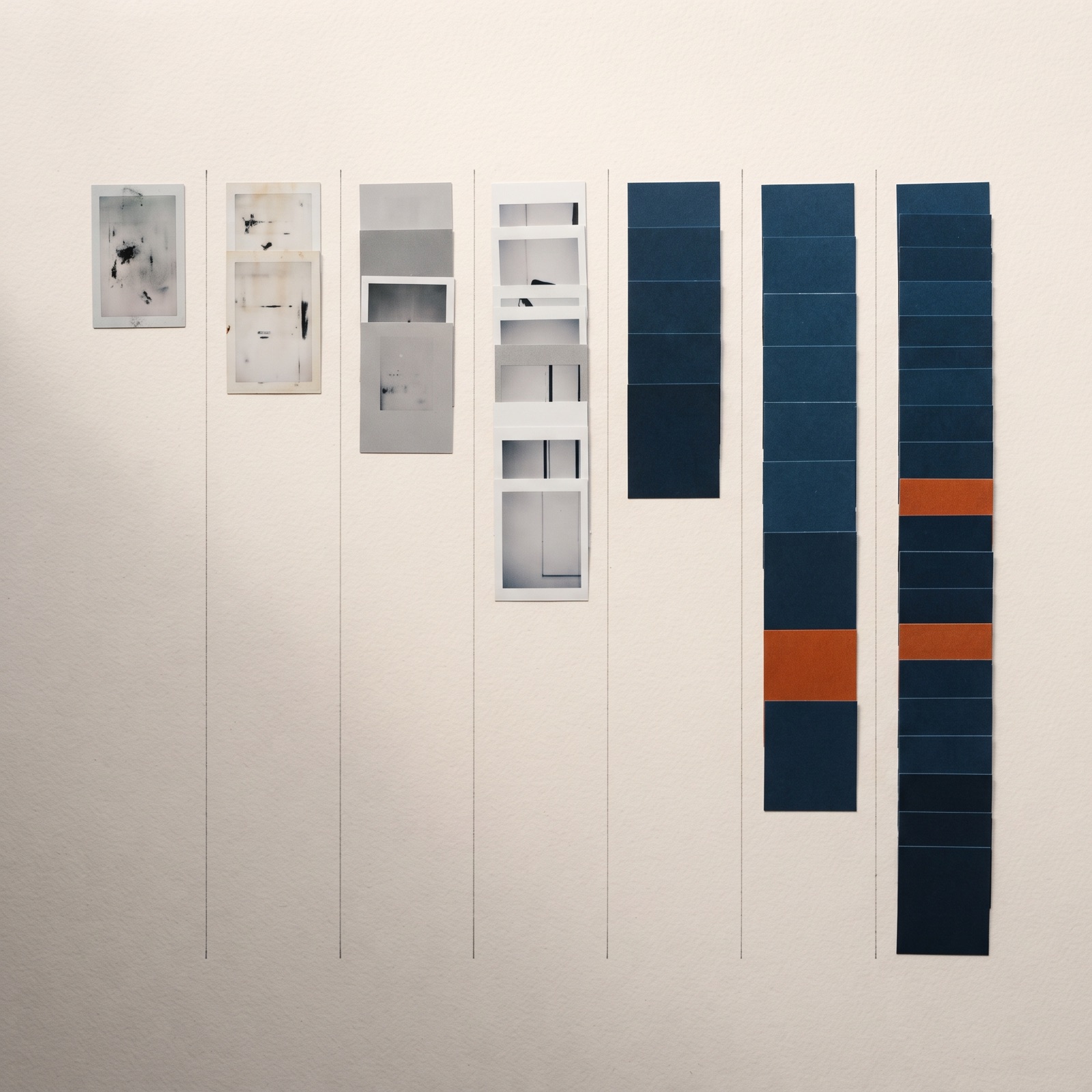
Overhead view of small printed ad frame cards arranged in seven staggered columns across a warm white surface, each column holding a few cards, with two cards tinted burnt orange.
Staggering a new batch across the week keeps the ad set from resetting its learning in a single day.

Prevention: the weekly testing cadence

Brands that never hit hard fatigue do not refresh faster, they never let the gap open. The always-on loop is four moves on a fixed weekday: ship a fresh cohort, read the testing log, scale the winners, and retire ads as frequency crosses 2.5. Because the loop runs on a schedule rather than on alarm, the replacement batch is always mid-production when the current winner starts to slide.

The cadence also protects against the concentration risk in row five of the table. A standing test matrix keeps a second and third candidate in market, so no single ad carries half the spend with nothing behind it. The grid mechanics are in the creative testing matrix sized from 4 to 35 variants.

When a refresh is the wrong move

Do not refresh when frequency is under 1.5, when CVR is falling while CTR holds, or when CPM has risen account wide and new creative launches into the same elevated CPM. Those are a concept problem, a post-click problem, and an auction problem, and creative volume fixes none of them. Refresh anyway and the result reads as a failed batch when it was a failed diagnosis.

Do refresh, immediately, when one ad absorbs about half the ad set budget and no second ad clears the 30 percent hook rate floor. Nothing looks wrong on that account today. In 3 to 4 weeks everything will.

The next step

If CPA is drifting and frequency has passed 2.5, book a 30 minute scoping call and the AI Vidia team will run the Fatigue Differential on the last 30 days of your account before quoting any production. First creative lands within 72 hours of kickoff, and the ramp reaches 30 to 50 variants in week two.

Frequently asked questions

01How do I fix Meta ads creative fatigue fast?
Confirm it is fatigue first, then re-cut the proven concept with 5 to 8 new hooks, one alternate opening frame per hook, and ratio cuts across 9:16, 4:5 and 1:1. Launch the new batch alongside the fatigued ad at roughly a 70 to 30 budget split rather than swapping the whole pool in one day. Read the batch at day 7 on hook rate first and CPA second, scaling anything above a 30 percent hook rate. Pausing and relaunching the same asset does not reset fatigue, because the audience state is unchanged.
02How do I know it is creative fatigue and not audience saturation?
Duplicate the same creative into a fresh, untouched audience with a small budget for 3 days. If the asset delivers a normal hook rate on that new audience, the creative is fine and the original audience is saturated, which is an audience and budget problem. If it opens weak on cold traffic, the concept was never strong enough to fatigue in the first place. True creative fatigue shows frequency above roughly 2.5 and falling hook rate on the ads that have been live longest, not on new ones.
03What should I refresh first when the budget is tight?
Refresh in this order: hook before body, body before offer. New hooks are a writing and editing job on existing footage, so 5 to 8 variants can ship in about 48 hours, and the first 2 seconds carry the largest measurable performance delta. Move to the body, including a new creator or new scenes, only after two consecutive hook batches fail to clear a 30 percent hook rate. Change the offer last, and only when hook rate has recovered while conversion rate has not.
04How fast does Meta ad creative fatigue set in?
At scale, Meta creative performance decays inside a 3 to 4 week window. Audience frequency above roughly 2.5 is the danger zone where CPMs climb and CTR sags. That decay clock is why replacement creative has to be briefed while the current winner is still working. An account with one ad absorbing half its spend and no backup above a 30 percent hook rate is roughly one decay window away from a hard drop.
05How many fresh ad variants does a Meta refresh take per month?
A brand spending meaningfully on Meta needs 30 or more fresh on-brand variants per month to stay ahead of the decay window. The arithmetic comes from Motion's 2026 benchmark of 578,750 creatives and USD 1.29B in analyzed spend, which found roughly 5 percent of creatives become winners. At that rate, 20 assets per month yields about one winner, which only replaces the ad that just fatigued, while 40 assets per month yields about two. AI Vidia ships 40 to 200 AI video ads per brand per month against a locked brand system.
06Can AI creative fix fatigue faster than a reshoot?
Yes, because the bottleneck in a refresh is production time, not ideas. AI-native production re-cuts a winning concept with new hooks, new AI creators in 9:16 in days, without booking a shoot or a studio. AI Vidia delivers the first creative within 72 hours of kickoff and ramps to 30 to 50 variants in week two, at a brand-safe review bar. That speed is what allows the replacement batch to land inside the 3 to 4 week decay window.

Next step

Get your first 12 on-brand AI variants in 14 days.

Book a 20-minute strategy call with the AI Vidia team. No pitch deck, just a structured plan for your creative output.

Book a call

Read next