
AI Vidia publishes this article as the working ai creative brief template for ai ads that the AI Vidia team uses on every brand engagement, from a 12 variant pilot sprint to a 200 ad per month Performance Retainer. It draws on 1,834 shipped AI videos, 70,342 AI images, 48 brands, and 14 countries. If you are a Head of Growth or Brand Director moving from ad hoc Midjourney prompts to a written brief that any operator can render against, this is the template and this is the cadence that produces it.
Two claims up front. First, the failure mode of in-house AI creative is rarely the model. It is the brief. Second, a 12 field brief produces roughly 3x more ad-ready variants per render hour than a 5 field brief, because routing decisions are made once instead of re-litigated on every render. Both claims come out of 48 brand engagements, not theory.
Why a written AI creative brief template matters
1,834AI VIDEOS SHIPPED
70,342AI IMAGES SHIPPED
48BRANDS LIVE
99.2%BRAND-SAFE PASS RATE
Content Marketing Institute 2025 reports that 73 percent of marketing teams cite production volume as their single largest content challenge. Meta for Business shows campaigns running 5 or more creative variants produce 30 to 50 percent lower CPA than campaigns running 1 or 2. Forrester pegs the paid social ROAS lift from variant volume at 20 to 35 percent. That variance is generated by structured briefs that route consistently across Sora 2, Veo 3, Runway Gen-4, Nano Banana 2, and Midjourney v7. An unstructured brief in 2026 is the same operational debt that an unstructured campaign sheet was in 2018.
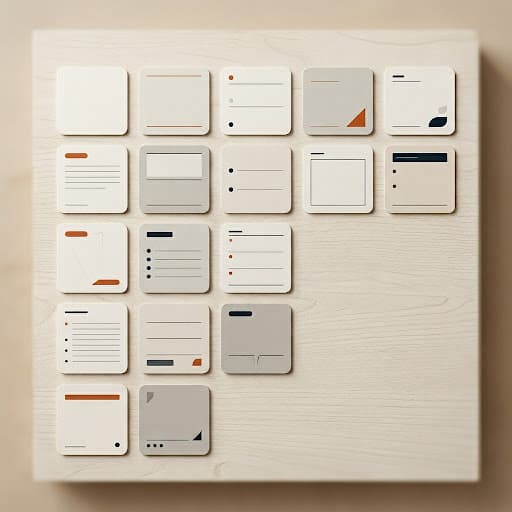
The brief template visualised as a stack of cards. Each card is a field, and the missing fields are the ones that cost output in week three.
A written brief is also the cheapest audit trail a brand has. Legal teams ask where assets came from. Performance teams need to attribute winning hooks back to a brief field. New operators need to onboard inside two weeks. None of that is possible if the brief lives in a Slack thread or a creative director's inbox.
The 12 fields every AI ad brief must carry
Below is the field anatomy AI Vidia ships on every brand. Strip a row and the production cell loses time to ambiguous handoffs. Most in-house briefs ship with 5 to 6 of these fields populated. The other 6 to 7 are the ones that compound over a 12 week production cycle.
Field
What it controls
Pass standard
Skip cost
Creative thesis (1 line)
The single claim the ad makes
Under 18 words, one verb, one number
Renders that test nothing in particular
Reference images (3)
Brand lock against existing hero imagery
3 images from prior winners or shot hero
Hallucinated brand drift inside 2 weeks
Placement spec
Reels, Feed, Stories, TikTok In-Feed, Spark
One row per intended placement
Ratio mismatch at upload
Aspect ratio list
9:16, 1:1, 4:5, 16:9 from master
All 4 ratios named, master noted
Manual ratio cuts on Thursday
Audience primitive
Cold prospecting vs warm retargeting
One named cohort with creative implication
One brief renders for two audiences poorly
Hook seconds 0 to 3
What stops the scroll
One specific visual or claim
Generic 14 percent stopping power
Disclosure copy
Health, finance, beauty, regulated claims
Pre-cleared by brand or legal
Boost rejection at upload
Model route
Sora, Veo, Runway, Nano Banana, Midjourney
One model tag per brief
Producer chooses on the fly
Brand lock cues
Lighting, plateware, palette, font style
3 to 5 named cues from style guide
Off-brand variants ship to the gate
Language and market
EN, DA, SV, NO, DE
One brief per market or one with copy lines
Wrong copy locale at upload
Test matrix tag
Concept seed, variant index, control row
Filled at brief sign-off, not later
Lost attribution on winners
Kill criteria
CTR floor and CPA ceiling
Two numbers, set at brief sign-off
Variants run on hope past ROAS payback
Walk through any row missing from your current brief and the lost output appears in week three. Variants that render correctly but cannot be attributed. Variants that cannot be exported in 4 ratios without a manual cut. Variants that fail the 14 point quality gate on disclosure. The 12 fields are not bureaucratic. They are the difference between a brief that ships 8 ad-ready variants and a brief that ships 2.
The AI Vidia Brief Anatomy Framework
This is the strategic framework that decides what goes into the brief, in what order, and with what authority. Run the 5 steps in sequence. Skipping a step is the most common reason in-house briefs collapse on first render.
Step 1: Lock the creative thesis in one line. Before any reference image is attached, the thesis is written as one sentence with one verb and one number. Example: show the 6 second meal prep claim against a cold weeknight audience. If the thesis takes two sentences, the brief is two briefs. Splitting them up front saves the rerender on Wednesday.
Step 2: Anchor against three brand-locked references. Three reference images that came from prior winners or from a shot hero set. No mood boards from Pinterest. The references decide lighting, plateware, palette, and shot framing inside the model, and they remove roughly 60 percent of off-brand drift on the first pass.
Step 3: Route the model before the render starts. Sora 2 for hook seconds 0 to 3 and dialogue heavy claims, Veo 3 for product demos and continuity scenes, Runway Gen-4 for character anchored sequences and longer cuts, Nano Banana 2 and Midjourney v7 for stills and product images. One model tag per brief. The producer does not choose on the fly, because every on-the-fly choice burns 12 to 18 minutes of context switching per render.
Step 4: Set kill criteria at sign-off. A CTR floor and a CPA ceiling are written into the brief before the brief enters the queue. The media buyer agrees in writing. This is the only field that prevents winning hooks from being killed too early and losing hooks from running past their ROAS payback window.
Step 5: Pre-clear disclosure copy on regulated categories. Health, finance, beauty, and food briefs route through brand or legal before render. The disclosure copy is locked into the brief as a literal string. Boost rejection at upload is the single most expensive failure mode in the pipeline, because it kills a Friday and pushes the test entry into next week.
Run all 5 steps as written for the first four weeks before adapting them. Every shortcut tested in 48 brand engagements has cost output. The cost is concentrated in Step 3, because the temptation to let the producer choose the model on the fly is highest there.
Want a structured plan for your AI creative pipeline? 20-minute call, no pitch deck.
The brands that broke into the 200 ad per month tier last year did not switch models. They wrote the brief once, locked the 12 fields, and stopped re-discussing them on every render. The model is the easy part. The brief is the part that compounds.
The AI Vidia Weekly Brief Authoring Cadence
This is the tactical framework that produces the briefs themselves on a fixed weekly rhythm. It is the operating system every Performance Retainer client runs from week three onward. Five named handoffs, no off cycle exceptions.
Monday morning: 90 minute brief session. The strategist and the client performance lead write 10 to 14 briefs in a single working session. Reference images are pulled from the DAM as the briefs land, not after. The output is signed off as a stack, not item by item.
Monday afternoon: model routing and queue load. The producer reviews the brief stack, tags model routes, and loads Tuesday and Wednesday's render queue. Briefs that are missing a field are kicked back to the strategist by 4 pm, not held to argue. The queue is closed at 6 pm.
Tuesday and Wednesday: render against the locked brief. Production runs the queue without re-opening the briefs. If a render fails, the producer reroutes the model and notes the reason on the brief, not on Slack. By end of Wednesday, every brief has a complete render set ready for the quality gate.
Thursday: quality gate against the kill criteria. The fixed reviewer runs the 14 point rubric, scores the 3 second hook, and checks the brief CTR floor and CPA ceiling against the render. Passed assets export to 9:16, 1:1, 4:5, and 16:9. Failed assets reroute to a same day rerender slot or get killed before they reach the DAM.
Friday: upload, test entry, and brief annotation. The media buyer or the AI Vidia account team uploads ad-ready variants into Meta and TikTok, tags the test matrix, and annotates the brief with first impressions inside 24 hours. The annotation is the seed for next Monday's session, closing the loop.
The cadence is intentionally boring. Boring is the point. Brief authoring is the only step in the pipeline that does not parallelise well, so it gets a fixed slot every Monday morning. Everything else flexes around it.
Proof the template ships
AI Vidia has run the 12 field brief template across 48 brands in 14 countries. Volume output: 1,834 AI videos shipped, 70,342 AI images shipped, 30+ variants shipped each week per brand at steady state, 12 brands currently in flight. Quality output: 99.2 percent brand-safe pass rate. Commercial output: EUR 2.4M plus in optimised paid media spend, 2.4x ROAS median on winning cohorts, 38 percent average CTR lift on video, 62 percent lower creative production cost in 90 days on like-for-like baselines.
Write the brief like an engineering ticket and the model becomes the cheap part of the operation.
Kevin Dosanjh, founder, AI Vidia
The live case is IndianBites, a fast-growing DTC food brand, a limited production budget, and a Meta account starving for fresh creative. Traditional food photography couldn't keep up with the weekly testing cadence. The AI Vidia team stood up the 12 field template against their hero imagery and shipped 142 AI ads in 11 weeks. Results: 62 percent lower creative production cost, 2.4x ROAS on winning cohorts, 12x weekly test volume against their previous baseline. Full case at the IndianBites case study.
Friday annotation in practice. Each winner gets one sentence on the brief, then seeds next Monday's session.
The companion read for media buyers is the pipeline article at how AI Vidia ships 200 ads per month per brand, which extends the brief into the full 5 layer production stack and the kill rule that sits on top.
When to ship the full template and when to ship a stripped one
Ship the full 12 field template if monthly Meta and TikTok spend exceeds 40k EUR, if the brand runs in 2 or more markets, or if the team is producing 60 plus variants per month. Below those thresholds, the full template is overbuilt and the brief author will resent every field. Resentful brief authors write thin briefs, so the template stops working.
Strip the template to 6 fields if monthly spend is under 20k EUR or the brand is in pilot sprint mode. The 6 fields to keep are creative thesis, reference images, placement spec, aspect ratio list, model route, and kill criteria. Drop the rest until the cadence stabilises in week four. Below 10k EUR monthly spend, the brief is over engineered, and a 30 ad per month in-house cycle on the stripped form will serve the account better than a full retainer.
The next step
If you want the AI Vidia team to install the 12 field brief template on your account, book a 30 minute Performance Retainer scoping call at the AI Vidia booking page. The video-first service surface lives at the AI Vidia video ads service page. Product-first brands should review the AI Vidia product photography service. AI Vidia ships the first creative inside 72 hours of kickoff and the first full template-driven month inside 21 business days.
Frequently asked questions
01What is an AI creative brief template for AI ads?
An ai creative brief template for ai ads is a structured 12 field document that translates a one line creative thesis into an ad-ready asset across image and video, with model routing, brand lock cues, kill criteria, and disclosure copy locked at sign-off. It exists because the failure mode of in-house AI creative is rarely the model and almost always the brief, where ambiguous routing burns 12 to 18 minutes of producer context switching per render. AI Vidia ships the template on every brand engagement across 48 brands and 14 countries, on top of 1,834 AI videos and 70,342 AI images. The template replaces ad hoc Midjourney prompts with a written artifact any operator can render against on a fixed weekly cadence.
02What are the 12 fields in the AI Vidia brief template?
The 12 fields are creative thesis, reference images, placement spec, aspect ratio list, audience primitive, hook seconds 0 to 3, disclosure copy, model route, brand lock cues, language and market, test matrix tag, and kill criteria. Most in-house briefs ship with 5 to 6 of these fields populated, while the other 6 to 7 fields are the ones that compound over a 12 week production cycle. Stripping a field looks innocuous in week one and shows up as lost output in week three, when variants render correctly but cannot be attributed, cannot be exported in 4 ratios, or cannot be pre-cleared for boost. AI Vidia has run the full 12 field template across 48 brands and recorded the strip cost on every field tested.
03Why does an unstructured brief fail at 60 ads per month?
An unstructured brief fails at the 60 ad per month threshold because every render forces the producer to make routing, brand lock, and disclosure decisions on the fly, which adds 12 to 18 minutes of context switching per render. Across 100 renders per week, that lost time becomes a full FTE that the cell never planned for and never recovers in the back half of the month. The cell appears busy but ships under 60 ad-ready variants per month, which is the gap between a paid social account that fatigues and one that compounds. AI Vidia reproduced this pattern on 9 of the first 10 in-house teams audited in 2025, and the fix in every case was the brief, not the model.
04How long does it take to roll out the 12 field template?
AI Vidia rolls out the 12 field brief template inside the first two weeks of a Performance Retainer engagement, on top of the existing brand lock library and reference image set. Week one ships 12 variants while the strategist and the client performance lead write the first brief stack against the template. Week two ships 30 to 50 variants as the producer trains on the model routing field and the quality gate reviewer trains on the kill criteria. By week three the template is the default authoring artifact across the entire cell and the cadence moves into steady state.
05Can the template be stripped for smaller brands?
Yes, the template can be stripped to 6 fields for brands under 20k EUR monthly Meta and TikTok spend or for brands in pilot sprint mode. The 6 fields to keep are creative thesis, reference images, placement spec, aspect ratio list, model route, and kill criteria, because each of these protects a different point in the pipeline that fails first when the field is omitted. Drop audience primitive, disclosure copy, brand lock cues, language and market, and test matrix tag until the cadence stabilises by week four of the engagement. AI Vidia uses this stripped form on every pilot sprint to keep brief authoring under 30 minutes per brief while still routing every render correctly.
06How does the template feed the test matrix?
Each brief carries a test matrix tag at sign-off with concept seed, variant index, and a control row reference, so the variant ships into Meta and TikTok with attribution already attached to it. When a winner fades or a kill decision lands, the reason it won is written back into the brief inside 24 hours as a single sentence note for the next Monday session. By week six, roughly 60 percent of brief seed inputs are recycled winning hooks and 40 percent are fresh experiments, which is the ratio that compounds win rate to 30 to 40 percent across the live test set. AI Vidia has reproduced this curve on every brand that ran the template for 8 consecutive weeks.
Next step
Get your first 12 on-brand AI variants in 14 days.
Book a 20-minute strategy call with the AI Vidia team. No pitch deck, just a structured plan for your creative output.