
AI/Vidia
All insights

AI Content Production Team Structure 2026

An AI content production team structure that ships at scale: the roles, ratios, and weekly cadence AI Vidia uses to run an AI-native content team.

Founder, AI Vidia
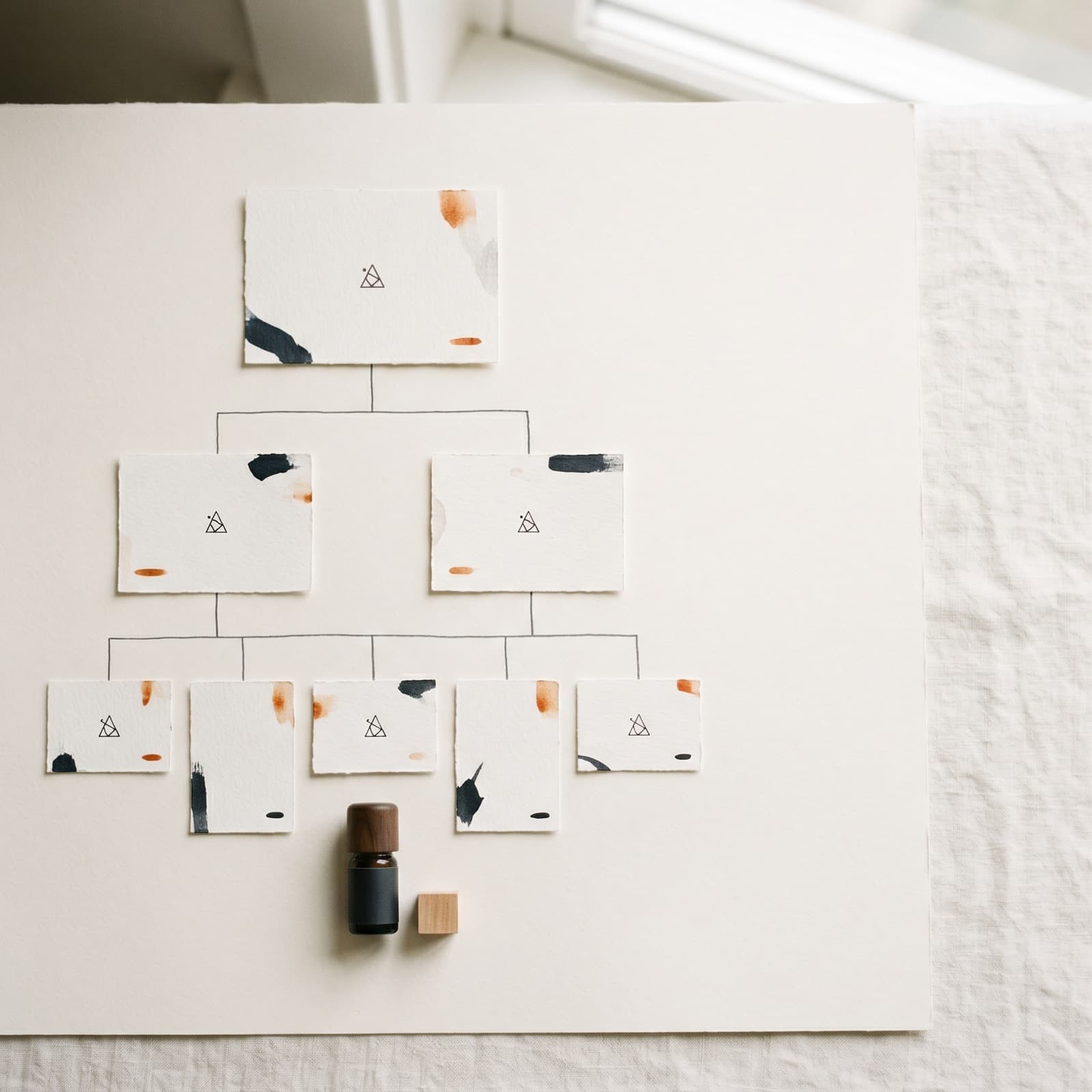
Overhead flat lay of small numbered paper cards arranged as an org chart on a warm off-white Nordic surface.
On this page8 sections

AI Vidia builds and runs AI-native content teams, and the ai content production team structure that ships at scale looks nothing like a traditional creative department. An ai content production team structure is the set of roles, ratios, and weekly handoffs that lets a small team produce hundreds of on-brand ad variants a month instead of dozens. The shift is not more headcount. It is fewer people in different roles, with AI doing the production volume while humans own brief, brand lock, and judgement. The AI Vidia team has shipped 70,342 AI images and 1,834 AI videos for 48 brands across 14 countries on exactly this structure, testing 30 or more variants every week.

What the wrong team structure costs a scaling brand

70,342AI IMAGES SHIPPED
1,834AI VIDEOS SHIPPED
48BRANDS SHIPPED FOR
30+VARIANTS PER WEEK

The bottleneck for a growing DTC brand is rarely strategy. It is production throughput. A team of three designers cannot produce 200 assets a month when they are already stretched at 40, and hiring does not fix it fast: recruiting a senior creative takes 3 to 4 months, and a designer forced into high-volume production work burns out and leaves. The Content Marketing Institute reported in 2025 that 73 percent of B2B marketing teams cite producing enough content as their biggest challenge. When creative throughput cannot match paid spend, the ad account starves, creative fatigue sets in, and ROAS falls while the media budget keeps climbing. The longer the gap runs, the more expensive it gets, because a starved account spends its budget relearning instead of scaling winners.

The cost shows up in two lines. First, in wasted salary: a senior designer on EUR 5,000 a month spending 70 percent of their time on repetitive variant cuts is roughly EUR 3,500 a month of expensive talent doing work AI can do at a fraction of the cost. Second, in lost revenue: Meta for Business reports that ad sets with 5 or more creative variations produce 30 to 50 percent lower CPA than ad sets with 1 or 2, so a team that cannot ship variation volume pays a direct CPA penalty on every euro of spend. The structure problem is a margin problem. Brands that run the math on an AI creative retainer versus freelance and in-house cost usually find the in-house production model is the most expensive way to make a variant.

Traditional team versus AI-native team, role by role

The two structures hire for different things. A traditional team buys hands: more designers to cut more variants. An AI-native team buys judgement and throughput separately, so the expensive people make decisions and the production volume comes from AI. The table below maps the same six functions across both shapes, and the output column is the part that changes the economics.

FunctionTraditional teamAI-native teamOutput shift
Creative directionOne lead on concept plus oversightOne lead who owns brief and brand lockSame seat, sharper remit
Design and productionThree to five designers cutting variants by handOne AI production layer generating variants on demand40 to 210 assets a month
CopyOne copywriter per campaignOne copy lead writing hook angles for batch testingA few headlines to a hook library
Media buyingOne buyer waiting on creativeOne buyer running a live test matrix4 to 35 variants per campaign
QA and brand safetyAd hoc, done by the designerOne reviewer running a written QA gate99.2% brand-safe pass rate
Project managementOne manager chasing handoffsA weekly batch ritual replaces chasing3 week to 5 day launch

Read the table as a reallocation, not a layoff. The judgement seats survive in both columns: a brand still needs a creative lead, a media buyer, and a brand-safety reviewer. What collapses is the production tier, the three to five designers cutting ratios by hand, which becomes a single AI production layer. The output column is where the structure pays for itself: a Nordic ecommerce brand on this shape moved from 20 assets a month to 210, a 10.5x lift, without adding a full-time hire. That lift came from changing the shape of the team, not from spending more on it.

The AI Vidia Content Team Blueprint

The first framework is the decision model for structuring the team, because the most common mistake is scaling headcount when the real fix is scaling output per person. Use it to design the team around demand and judgement, not around job titles inherited from a pre-AI creative department.

  1. Size the team to monthly output, not to headcount. Start from the number of on-brand variants paid social actually needs each month, then work backward to roles. A brand that needs 200 variants a month does not need five designers; it needs one production layer that can generate 200 and two people who can brief and judge them.
  2. Split the team into brief owners and brand owners. One role owns the brief: the angle, the offer, the hook, and what to test this week. Another owns the brand: the locked style, the claim rules, and what is allowed to ship. Keeping these distinct stops the team from drifting off-brand while it chases test velocity.
  3. Put AI on volume and humans on judgement. The production layer generates the repetitive variant cuts, the ratios, and the placements, which is the work that burns out senior designers. Humans spend their time on concept, brand lock, and reading which cohort is winning, which is the work AI cannot do reliably.
  4. Fix the core ratio at one lead, one buyer, one production layer. The stable unit is one creative lead who owns brief and brand, one media buyer who owns the test matrix, and one AI production layer that supplies variants on demand. Add a dedicated QA reviewer once weekly output passes roughly 100 variants, not before.
  5. Centralize brand lock in a single source of truth. Every generated asset must start from one locked reference set: palette, logo rules, plateware, lighting, and framing tuned against existing hero imagery. When the brand lives in one place rather than in five designers' heads, consistency holds as volume climbs.
Want a structured plan for your AI creative pipeline?
20-minute call, no pitch deck.
Book a call

Kevin's take

The instinct to hire is understandable, because for twenty years more output did mean more hands. That link is broken now. When the production tier is AI, adding a person to it adds cost without adding throughput, and the only seats worth filling are the judgement seats that decide what to make and whether it is on-brand. That is the whole game now: spend your salary budget on judgement, and let the production volume cost a fraction of what it used to.

The AI Vidia Weekly Production Cadence

The second framework is the weekly build, because an AI content team runs on cadence, not on ad hoc requests. This is the execution sequence that turns the structure above into shipped ads every week, and it is the same loop whether the brand ships 40 variants a month or 200.

  1. Monday: lock the brief and the test plan. The creative lead and the media buyer agree the week's angles, offers, and hooks, and write the brief against the locked brand reference. Nothing generates until the brief and the claim lines are agreed, so the week starts on-brand by default.
  2. Tuesday to Wednesday: batch generation. The production layer generates the week's variant volume against the brief, in every required ratio and placement. This is where AI does the heavy lifting, producing dozens of cuts in the time a manual team would produce a handful.
  3. Thursday: run the QA gate. Every asset passes a written gate for brand lock, anatomy, legibility, claims, and placement spec before it can ship. Failures are batched by reason and returned in one consolidated request, not a trickle of one-off comments.
  4. Friday: ship to the account. Cleared assets go live in the test matrix with their ratio and placement tags, so the media buyer is testing fresh creative every week instead of waiting on production. The ad account never starves for new variants.
  5. Monday: read winners and feed the next brief. The buyer reads which cohort won on ROAS and CTR, and those winners become the reference for next week's brief. The loop compounds: every week sharpens the next, so win rate climbs while production cost falls.

Proof from live brand accounts

This structure is not theory. The AI Vidia team has shipped 70,342 AI images and 1,834 AI videos for 48 brands across 14 countries, optimizing more than EUR 2.4M in paid media spend at a 99.2% brand-safe pass rate. On tested winning cohorts the creative returns a 2.4x ROAS, and the structure is what keeps that volume shippable without a brand incident. For IndianBites, a fast-growing DTC food brand whose Meta account was starving for fresh creative, the team ran weekly 12-variant batches through this exact cadence and shipped 142 AI ads in 11 weeks, cutting creative production cost 62 percent while raising paid-social win rate. The full numbers are in the IndianBites case study and its 11 week results, and the production mechanics are in how AI Vidia scales to 100 ad variants a week.

The win was not a bigger team. It was a smaller team in the right shape, with AI doing the volume and people doing the judgement.

The structural lesson holds across brands. A Nordic ecommerce brand with a three-person team moved from 20 assets a month to 210, cut cost per asset by 85 percent, and shrank campaign launch from three weeks to five days, all without adding a single full-time hire. The output came from the structure, not from the headcount. Across both cases the pattern is identical: the structure produced the output, and the headcount stayed flat or shrank.

When each structure wins

The AI-native structure wins when a brand is scaling paid social and production throughput is the bottleneck. If Meta or TikTok spend is climbing faster than the team can ship fresh creative, if ROAS is sliding from creative fatigue, or if a new market or SKU launch needs volume the current team cannot hit, the small AI-native shape outproduces the large traditional one at a lower cost per variant. The traditional structure still wins in two cases: when a brand makes very few, very high-craft hero assets a year where each one justifies a full manual production, and when output volume is genuinely low and steady, where the ramp cost of building AI capability would not pay back. The decision rule is throughput: match the team shape to the number of variants paid social needs, and never staff a high-volume testing program like a low-volume brand film. Get that one judgement right and the rest of the structure mostly designs itself. A brand weighing whether to build this in-house or buy it can compare the tradeoffs in in-house AI creative versus an agency.

Next step

If production throughput is the bottleneck on your paid social, the fix is structure, not another hire. AI Vidia supplies the production and QA layers as a managed service, so your team keeps the brief and the brand and stops doing the variant cutting by hand. See how the production layer works on the AI video ad production page, then book a Performance Retainer call with the AI Vidia team to map the structure to your output targets. The call maps your current variant volume, your team shape, and your spend, so you leave with a concrete structure, not a pitch.

Frequently asked questions

01What is an AI content production team structure?
An AI content production team structure is the set of roles, ratios, and weekly handoffs a brand uses to produce on-brand ad creative at volume with AI doing the production work. It typically replaces a large design team with a small group: a creative lead who owns brief and brand, a media buyer who owns testing, and an AI production layer that generates the variant volume. The humans own judgement, brand lock, and the read on what is winning, while AI handles the repetitive cuts and ratios. AI Vidia runs this structure to ship 30 or more variants a week across 48 brands at a 99.2% brand-safe pass rate.
02How many people do you need on an AI content team?
A working AI-native content team is smaller than most brands expect: three to four core people can outproduce a traditional team of eight. The minimum structure is one creative lead who owns brief and brand lock, one media buyer who owns the testing matrix and reads winners, and one AI production layer that generates the variant volume on demand. A fourth role, a QA and brand-safety reviewer, becomes worth a dedicated seat once weekly output passes roughly 100 variants. AI Vidia supplies the production and QA layers as a managed service, so a brand often only staffs the creative lead and the media buyer in-house.
03What roles get cut when a team moves to AI production?
No roles get cut at the judgement layer, but the high-volume production seats shrink. Brands that scale AI creative usually stop hiring junior production designers whose work was repetitive variant cutting, and they redeploy senior designers onto brand systems and concept rather than execution. The media buyer, the creative lead, and the brand-safety reviewer all stay, because those roles are judgement, not throughput. The net effect is fewer people producing more output, with the expensive talent spending time on decisions instead of resizing.
04How does an AI content team keep brand consistency at high volume?
Brand consistency comes from a locked style system, not from a larger review team. The AI Vidia approach centralizes the brand into a single locked reference: palette, logo rules, plateware, lighting, and shot framing tuned against the brand's existing hero imagery, so every generated asset starts on-brand. A QA gate then checks each batch against written pass criteria before anything reaches the ad account, which is how the team holds a 99.2% brand-safe pass rate. Consistency is a system property here, designed in at the structure level, rather than something a team chases asset by asset.
05Is an in-house AI content team cheaper than an agency?
It depends on volume and on whether you count the ramp. Building an in-house AI production capability means hiring for prompt and pipeline skills that are scarce, buying tooling, and absorbing three to four months of ramp before output is reliable. An agency like AI Vidia delivers the production and QA layers as a managed service, with the first creative in hand within 72 hours and no ramp cost to the brand. For most mid-market brands spending EUR 3,000 to EUR 5,000 a month on content, the managed model is cheaper per variant until in-house volume is both high and steady.

Next step

Get your first 12 on-brand AI variants in 14 days.

Book a 20-minute strategy call with the AI Vidia team. No pitch deck, just a structured plan for your creative output.

Book a call

Read next