Gemini shopping citations come from your Merchant Center feed, not your product page copy. How DTC brands earn product-grounded citations in Gemini and AI Mode.
AI Vidia is a Copenhagen performance creative studio that works with DTC and consumer brands on the images, video and data behind paid social and organic AI visibility. Gemini shopping citations, the product recommendations and shortlists Gemini and Google AI Mode return for a shopping query, are not pulled from a brand's blog or its product page copy. They are pulled from the brand's Google Merchant Center feed, the same Shopping Graph that has powered Google Shopping ads for years. A DTC brand with a strong content strategy and a stale or incomplete feed will still be invisible in Gemini's shopping answers, because the shopping citation surface reads structured commerce data, not prose.
Gemini does not read your product page. It reads your feed.
3 to 4xMORE AI SHOPPING VISIBILITY, COMPLETE VS SPARSE FEED
2026YEAR RETURN POLICY MARKUP BECAME EFFECTIVELY REQUIRED
1SHOPPING GRAPH FEEDING AI MODE, OVERVIEWS AND GEMINI
Complete product feeds get 3 to 4 times more AI shopping visibility than sparse onesMerchant Center attribute completeness vs AI shopping recommendation visibility, 2026
Sparse feed, missing attributes1x
Complete feed, Golden Record3.5x
Paz.ai and Shopify AI shopping benchmarks, 2026
For a DTC brand, this is not an abstract ranking problem. If Merchant Center flags a product as disapproved, or if GTIN, price or availability fields are missing, that SKU drops out of the Shopping Graph entirely, and it cannot surface in a Gemini shopping answer no matter how well the brand's insights content performs elsewhere. Stores with near complete attribute coverage, what the industry calls a Golden Record, see 3 to 4 times higher visibility in AI shopping recommendations than stores with sparse data. That gap keeps widening: Google has been adding new Merchant Center attributes aimed squarely at AI Mode, Gemini and its Business Agent since January 2026, so the bar for what counts as complete keeps rising.
Most GEO advice written for DTC brands targets the chat surface: publish an FAQ, earn a citation in an insights article, get quoted by a review site. That advice does not transfer to shopping citations. A Gemini shopping answer is what the AI Vidia team calls a product-grounded citation, a citation sourced from structured commerce data (price, availability, GTIN, shipping, returns) rather than from written content. A brand can rank first for its category in ChatGPT or Perplexity and still return zero results in a Gemini shopping shortlist, because the two surfaces are reading from different sources entirely.
The confusion is understandable, because both surfaces sit inside the same product: a shopper can move from a Gemini chat answer to a Gemini shopping shortlist inside one conversation, and it looks like one continuous experience. Underneath, the chat answer is grounded in indexed web content while the shopping shortlist is grounded in the Shopping Graph, and a brand that only monitors one side of that split will keep misdiagnosing its own visibility problem.
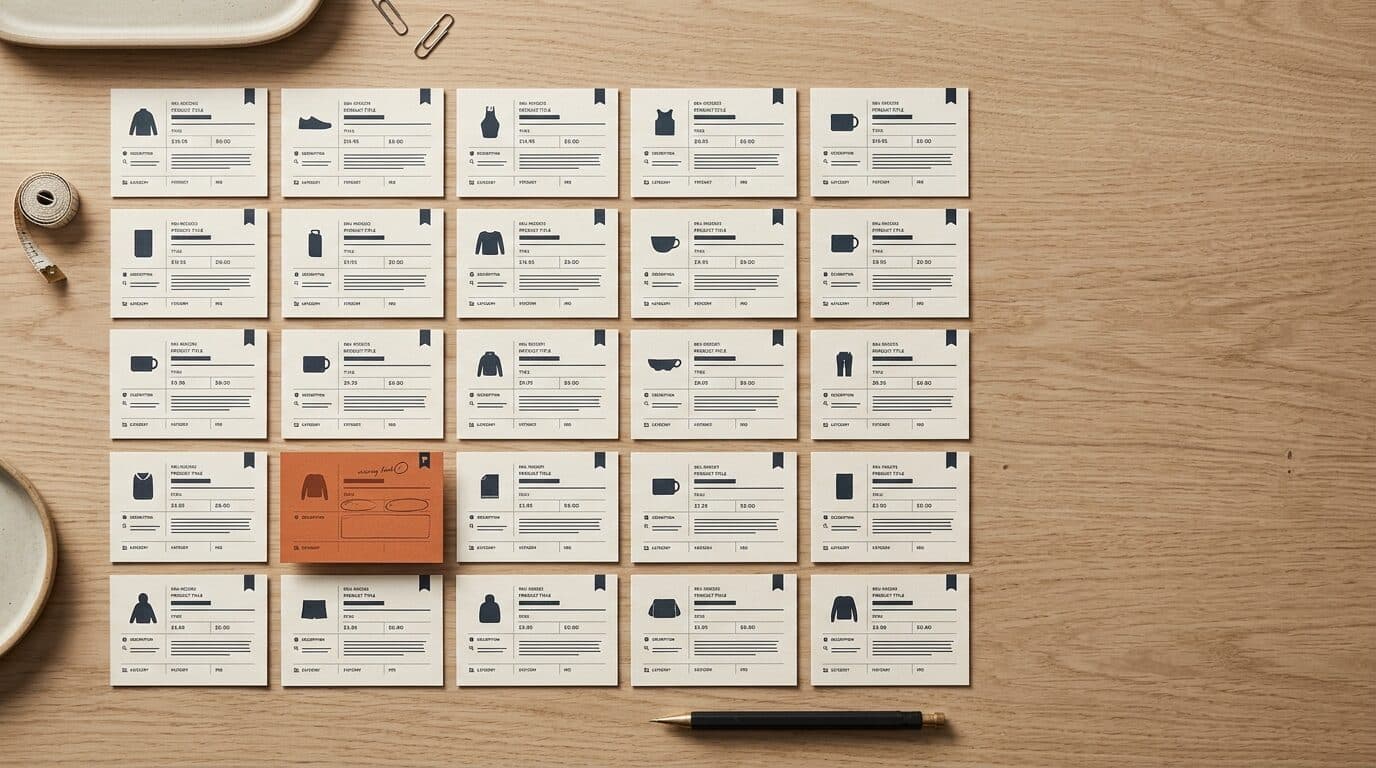
A product feed audit sorts SKUs into cleared and flagged before a single word of GEO content gets written.
The chat surface and the shopping surface read different things
Gemini, AI Mode and AI Overviews are not one citation surface with three names. Each reads a different mix of sources, and each fails a listing for a different reason. The table below sets out the split.
Surface
What it reads
Minimum data requirement
Failure mode
Fix owner
Gemini app, chat answers
Web prose, insights content, reviews, FAQ schema
Clear entity signals and citable, self-contained facts
Vague or unsourced claims get skipped over
Content and SEO team
Google AI Mode, shopping results
Merchant Center feed plus on-page Product schema
Price, ISO 4217 currency, schema.org availability URL, GTIN
Missing or disapproved attributes drop the SKU
Ecommerce and data team
AI Overviews, shopping panel
Same Shopping Graph as AI Mode
Offer and identity fields, plus shippingDetails and hasMerchantReturnPolicy
A stale price or an out of stock flag removes the SKU same day
Ecommerce and data team
Gemini shopping citations, assistant surface
Shopping Graph, ranked by feed quality and review markup
Golden Record level completeness across identity, offer and policy fields
Sparse attributes cap visibility at the low end of the 1x to 4x range
Ecommerce, data and creative team
Read the table left to right and the pattern is clear: only the top row is won with writing. The other three rows are won with data hygiene and imagery that meets Merchant Center's image requirements, which is a production problem before it is a content problem. A brand that assigns every AI visibility task to the content team will fix row one and leave rows two through four exactly where they started.
The failure modes column is where most teams get surprised. A chat answer can be too vague and simply get skipped; a shopping listing gets removed outright the moment one required field disapproves, with no partial credit. That asymmetry is why a feed audit belongs on the same weekly cadence as a creative testing cadence rather than on a quarterly SEO calendar.
Want a structured plan for your AI creative pipeline? 20-minute call, no pitch deck.
The Shopping Feed Eligibility Ladder is the strategic framework the AI Vidia team uses to diagnose why a DTC brand is missing from Gemini shopping citations. Each rung has to clear before the next one matters; a brand stuck on rung two gets no benefit from perfecting rung five.
Feed live and approved. Confirm the Merchant Center feed exists, is connected to the account actually running the brand's shopping surface, and carries zero unresolved disapprovals. A feed with disapprovals does not partially qualify; the affected SKUs are simply absent from the Shopping Graph.
Identity fields complete. GTIN or UPC or EAN, brand, and MPN need to be present and accurate for every branded product. Google requires a GTIN for products from known brands, and a missing or mismatched identifier is one of the most common reasons a listed product never appears in an AI shopping answer.
Offer fields complete. Price as a plain numeric string, priceCurrency as an ISO 4217 code, and availability as a full schema.org URL (InStock, OutOfStock, PreOrder, BackOrder) are the three minimum fields for shopping rich result and citation eligibility. Formatted prices with currency symbols or commas break the parser.
Policy fields complete. shippingDetails and hasMerchantReturnPolicy became effectively required for retail queries in 2026. A brand can clear rungs one through three and still lose eligibility on policy fields alone, which is the rung most legacy feeds skip.
Variant separation. As of the 2026 expectation, product variants (size, colour, bundle) submit as separate entries with unique product IDs rather than one parent listing. Collapsed variants under-report real catalog depth to the Shopping Graph and quietly cap visibility for the whole product line.
On-page schema verification. Schema.org Product markup on the product detail page acts as a secondary verification signal against the feed. It has to be server-rendered: AI crawlers do not execute client-side JavaScript, so schema injected after page load is invisible to them, which makes a rung-six failure look identical to a rung-three failure from the outside.
Kevin's take
The uncomfortable part of that position is who owns the fix. Marketing owns the insights content that wins the chat surface. Ecommerce operations owns the feed that wins the shopping surface. Most teams have never put those two roadmaps in the same room, which is exactly why a brand can be well cited in ChatGPT and invisible in a Gemini shopping shortlist at the same time. The fix is not a bigger content budget, it is a shared owner for product-grounded citation who reports on both surfaces every week.
The Weekly Feed Hygiene Cadence
The Weekly Feed Hygiene Cadence is the tactical framework: one week inside a team that keeps a DTC brand eligible for product-grounded citation. It runs on a fixed clock, same as a creative testing cadence, because feed drift and image staleness compound the same way creative fatigue does.
Monday, pull the diagnostics. Export the Merchant Center disapproval report and the attribute completeness report. Every flagged SKU from last week gets a named owner before Tuesday, so nothing sits in a shared inbox unassigned.
Tuesday, fix identity and offer gaps. Correct GTIN, price formatting and availability status on flagged SKUs first, since those three fields gate Shopping Graph eligibility outright and unblock everything downstream.
Wednesday, refresh imagery on stale SKUs. Any SKU whose photos are outdated, inconsistent in background or below Merchant Center's image specification gets a reshoot slot. This is where AI Vidia's product photography work plugs into the cadence for retainer brands, producing feed-ready imagery on the same weekly rhythm as the data fixes.
Thursday, verify schema against the feed. Check that server-rendered Product schema on each updated page matches the feed's price, availability and identity values exactly. A mismatch between the two is a verification failure Google can read as a trust signal problem.
Friday, spot-check the surfaces directly. Query Gemini, AI Mode and AI Overviews for the brand's top 10 SKUs by revenue and log which ones return a citation. This is the only step that measures the surface itself rather than the inputs to it, and it is the step most teams skip.
Proof: feed hygiene and product photography on the same clock
AI Vidia treats feed-ready imagery as part of the same production discipline it runs for paid social creative, not a separate deliverable. For IndianBites, a fast-growing DTC food brand, the AI Vidia team built a brand-locked style system and shipped 142 AI ads in 11 weeks, with 2.4x ROAS on winning cohorts. The same discipline, consistent framing, accurate colour, clean backgrounds shot to a repeatable standard, is what Merchant Center's image requirements ask for on a product feed. Read the full numbers in the IndianBites case study.
A brand can win every argument in a Gemini chat answer and still be invisible in Gemini's shopping shortlist, because the shopping surface never reads the argument. It reads the feed.
A weekly reshoot slot and a weekly feed audit run on the same calendar, not on separate ones.
When each option wins
Under roughly 50 SKUs and no dedicated ecommerce operations hire, a quarterly feed audit run by whoever owns Merchant Center is usually enough; the catalog is small enough that manual fixes clear the eligibility ladder without a weekly cadence.
Between 50 and 500 SKUs, especially with paid social spend scaling and imagery aging faster than the ops team can reshoot it, pairing a named feed owner with a weekly imagery refresh partner is the point where the Weekly Feed Hygiene Cadence starts paying for itself.
Above 500 SKUs, multiple markets, or a catalog where variant separation and policy fields are chronically behind, the volume of both data fixes and image refreshes stops being a part-time task and becomes a production system question, which is where AI Vidia's AI product photography service earns its place in the stack. The same logic applies whether the brand's growth is coming from Meta, TikTok, or organic AI visibility: the feed and the imagery behind it are shared infrastructure, not a channel-specific cost.
Next step
To find out which rung of the Shopping Feed Eligibility Ladder is actually blocking a brand's Gemini shopping citations, book a 30 minute scoping call with the AI Vidia team. For DTC and ecommerce brands rebuilding product imagery to match feed requirements, see how the work fits alongside paid social creative on the ecommerce industry page.
Frequently asked questions
01What are Gemini shopping citations?
Gemini shopping citations are the product recommendations and shortlists that Gemini, Google AI Mode, and the AI Overviews shopping panel return for a shopping query. They are sourced from the Google Shopping Graph, which is populated by a brand's Google Merchant Center feed, not from the brand's website content. A product only appears in a Gemini shopping citation if its feed entry clears Google's identity, offer, and policy requirements, regardless of how strong the brand's blog or insights content is.
02Why is my brand cited in ChatGPT but not in Gemini shopping results?
ChatGPT and Gemini's chat answers both read indexed web content, so strong insights content and clear entity signals can earn a citation there. Gemini's shopping shortlist reads a completely different source, the Shopping Graph fed by Merchant Center, so a brand with excellent written content but a sparse or disapproved product feed will still return zero results in a shopping-specific query. The fix is feed and schema work, not more content.
03What Merchant Center fields does my feed need for AI shopping visibility?
At minimum, every product needs a complete identity field set (GTIN or UPC or EAN, brand, MPN) and a complete offer field set (price as a plain numeric string, priceCurrency as an ISO 4217 code, and availability as a schema.org URL such as InStock or OutOfStock). As of 2026, shippingDetails and hasMerchantReturnPolicy are effectively required for retail queries, and product variants are expected to submit as separate entries with unique product IDs rather than one collapsed listing. A feed missing any one of these fields does not rank lower, it is simply excluded from the Shopping Graph for that SKU.
04Does on-page Product schema still matter if my Merchant Center feed is complete?
Yes. Schema.org Product markup on the product detail page acts as a secondary verification signal that Google checks against the Merchant Center feed, and a mismatch between the two can read as a trust problem. The schema has to be server-rendered, because AI crawlers do not execute client-side JavaScript, so markup injected after page load is invisible to Gemini, AI Mode, and AI Overviews even if it renders correctly for a human visitor.
05How much more visibility does a complete product feed get in AI shopping results?
Stores with near-complete attribute coverage across identity, offer, and policy fields, what the industry calls a Golden Record, see roughly 3 to 4 times higher visibility in AI shopping recommendations compared to stores with sparse or incomplete data. That gap is widening as Google adds new attributes aimed specifically at AI Mode and Gemini, so a feed that was complete a year ago may already be falling behind the current bar. The comparison is not linear either: a single missing required field, such as availability, can drop a SKU out entirely rather than merely lowering its visibility by a fraction.
06Should product photography be part of a Gemini shopping citation strategy?
Yes, because Merchant Center enforces image requirements alongside data requirements, and stale or inconsistent product photography can hold a SKU back even when its data fields are correct. AI Vidia treats feed-ready imagery and feed data hygiene as the same weekly production discipline, refreshing product photography for retainer brands like IndianBites on the same cadence as the data fixes rather than as a separate, slower workstream. Treating the two as one workflow also avoids the common failure where a data team fixes a feed field on a product whose photo still fails the platform's image specification.