
AI/Vidia
All insights

AI Video Ad Retainer vs Project Pricing 2026

AI Vidia breaks down ai video ad retainer vs project pricing: cost per video, the spend threshold where retainers win, and when a project sprint is right.

Founder, AI Vidia
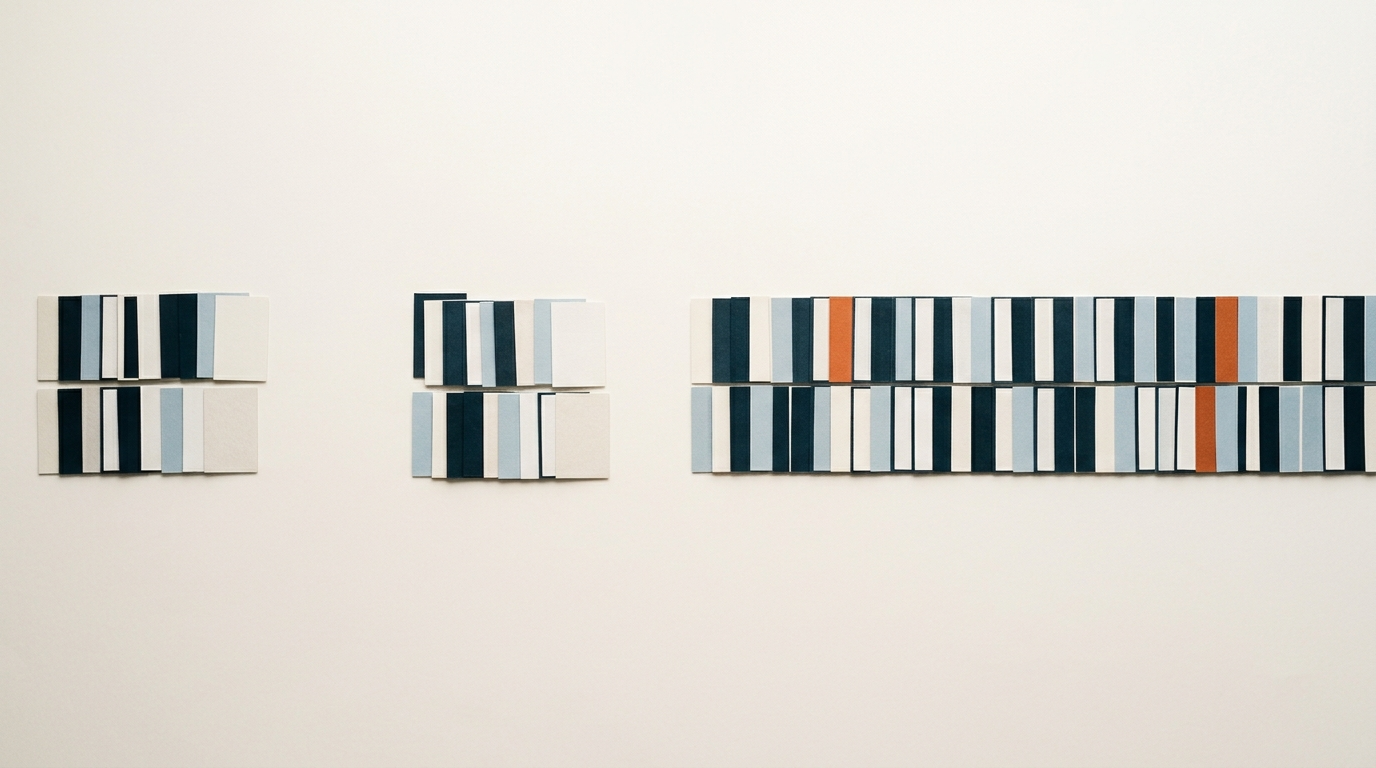
Editorial overhead flat lay comparing a single stack of twelve AI video ad frame cards labeled by a project invoice against a larger continuous row of forty video ad frame cards on a warm off-white Nordic studio surface with burnt orange and deep ink accents.
On this page8 sections

AI Vidia fields the ai video ad retainer vs project pricing question on almost every scoping call with a growth-stage DTC or consumer brand, and the answer depends on one variable: how predictable your Meta and TikTok spend is quarter to quarter. A project-priced AI video ad engagement is quoted per brief, typically EUR 1,500 to EUR 6,000 for a 14-day sprint that ships 12 to 18 variants, while an AI Vidia Performance Retainer runs EUR 3,000 to EUR 5,000 per month for 40 on-brand videos shipped every month, no re-quoting required. This piece breaks down when project pricing wins, when the retainer wins, and the exact spend threshold where the math flips, using numbers the AI Vidia team has tracked across 48 brands and EUR 2.4M plus in optimised paid media spend.

Why the ai video ad retainer vs project pricing decision gets made too late

40VIDEOS PER MONTH ON RETAINER
72hFIRST CREATIVE FROM KICKOFF
2.4xROAS LIFT ON WINNING COHORTS
99.2%BRAND-SAFE PASS RATE

Most brands default to project pricing because it feels lower risk: pay once, get a batch, decide later. That default breaks the moment paid spend crosses roughly EUR 20,000 per month, because a single 14-day project sprint cannot refresh a Meta account fast enough to avoid creative fatigue. Meta for Business data shows campaigns with 5 plus fresh creatives per ad set see 30 to 50 percent lower CPA, and a brand re-quoting a new project every 4 to 6 weeks structurally cannot hold that cadence.

The cost of getting this wrong is concrete. A brand spending EUR 35,000 per month on paid social that stays on project pricing typically loses 25 to 40 percent of achievable ROAS to creative fatigue between sprints, because the gap between project deliveries is exactly when the account runs its oldest, most fatigued creative. That loss never shows up on the project invoice, which is why the retainer decision usually gets made three months later than it should.

Project pricing vs retainer, line by line

Read this as a fully loaded comparison, not a quoted rate. The project column reflects the AI Vidia Pilot Sprint, a 14-day engagement quoted per brief. The retainer column reflects the AI Vidia Performance Retainer at the EUR 3,000 to EUR 5,000 line.

Line itemProject pricing (Pilot Sprint)AI Vidia Performance Retainer
Pricing modelQuoted per brief, 14-day engagementFixed monthly, EUR 3,000 to 5,000
Videos delivered12 to 18 variants per sprint40 on-brand videos per month
First creative turnaround5 to 10 business daysWithin 72 hours of kickoff
Re-briefing cadenceEvery 4 to 6 weeks, coldContinuous, brand lock retained
Brand lock and style systemRebuilt per projectBuilt once, maintained monthly
Gap risk between engagements2 to 4 weeks of stale creativeNone, cadence is continuous
Cost per finished videoEUR 90 to 220EUR 75 to 140
Best fit spend levelUnder EUR 20,000 per monthEUR 20,000 plus per month

Two rows decide the outcome for most brands. Gap risk between engagements is the line project buyers underestimate: every project ends, and the account runs on its last batch until the next brief is scoped, quoted, and delivered. Re-briefing cadence is the second: a project resets the brand lock cold every cycle, while a retainer maintains it, which is why cost per finished video is lower on the retainer even before volume is counted.

Project pricing wins on flexibility. There is no monthly commitment, and a brand can pause between sprints without a cancellation conversation. That flexibility is exactly what makes it wrong for an account that needs continuous testing volume, because the pause between sprints is where ROAS erodes.

The AI Vidia Retainer Readiness Score

This is the strategic model the AI Vidia team runs on every brand before recommending project pricing or a retainer. Four inputs, one score, and the threshold is consistent across the 48 brands in the AI Vidia book of business.

  1. Step 1. Score monthly paid spend. Under EUR 15,000 scores 0. EUR 15,000 to 30,000 scores 1. Above EUR 30,000 scores 2. Spend is the single strongest predictor of which model wins, because it sets the volume of fresh creative the account structurally needs.
  2. Step 2. Score testing cadence. If the team tests new creative monthly or less often, score 0. Biweekly scores 1. Weekly or faster scores 2. A weekly testing cadence cannot survive on a 14-day project cycle without gaps.
  3. Step 3. Score launch frequency. Fewer than 2 new SKUs, markets, or seasonal pushes per quarter scores 0. 2 to 4 scores 1. 5 plus scores 2. Every launch needs its own creative wave, and a project-priced brand re-quotes for each one.
  4. Step 4. Score in-house capacity. A team that can absorb creative gaps between projects scores 0. A stretched team with 1 to 2 designers scores 1. A team with zero creative capacity to fill gaps scores 2.
  5. Step 5. Total the score. 0 to 2 total means project pricing is the right fit. 3 to 4 means the account is on the edge and should pilot a retainer for one quarter. 5 to 8 means the retainer should already be in place, and every month on project pricing is costing ROAS.

A brand scoring 6 or higher and still buying one-off sprints is the single most common pattern the AI Vidia team sees on discovery calls: the spend justifies a retainer, but the buying habit has not caught up to the account's actual testing needs.

Want a structured plan for your AI creative pipeline?
20-minute call, no pitch deck.
Book a call

Kevin's take

The pattern holds across verticals. A DTC brand that scopes a fresh project every six weeks is not saving money by avoiding a monthly line item; it is paying for the gap in a currency that never appears on an invoice; namely, the CPA drift that shows up in the ads manager two weeks after the last batch goes stale.

The AI Vidia Pilot-to-Retainer Ramp

This is the tactical model for moving a brand from a single project engagement into a retainer cadence without a gap in testing. It is the exact ramp the AI Vidia team runs on new accounts.

  1. Step 1. Run the Pilot Sprint. The AI Vidia team ships 12 to 18 variants across a 14-day window against your existing hero imagery and hooks, so a brand can validate quality before committing to a monthly cadence. First creative lands within 72 hours of kickoff.
  2. Step 2. Score the pilot against CTR and hook rate. Variants are ranked against your account benchmark inside the first 7 days. This is the evidence base that replaces guesswork when deciding whether to convert to a retainer.
  3. Step 3. Week one of the retainer: 12 variants. If the brand converts, month one opens conservatively at 12 variants while the brand lock is finalised from the pilot's winning hooks, so cadence never dips below what the pilot already proved.
  4. Step 4. Week two: 30 to 50 variants. Volume scales as the brand lock stabilises. Ratio cuts ship at 9:16, 1:1, 4:5, and 16:9 per concept across Reels, Feed, and Stories, and cost per finished video starts dropping because the cold-brief cost of a new project cycle is gone.
  5. Step 5. Week three onward: 80 to 150 variants. The account reaches steady-state testing volume, the pilot's one-off engagement is retired, and the brand moves onto a single predictable monthly invoice instead of a stack of re-quoted projects.

The ramp works because the pilot's brand lock is not thrown away at the end of the sprint; it becomes the foundation the retainer scales from, which is the opposite of how a second project engagement starts, cold, every time.

Proof from 48 brands and EUR 2.4M in optimised spend

The AI Vidia track record on this exact transition is concrete. 1,834 AI videos shipped. 70,342 AI images shipped. 48 brands across 14 countries. EUR 2.4M plus in paid media spend optimised. 99.2 percent brand-safe pass rate at the QA gate. 2.4x ROAS lift on tested winning cohorts. The clearest live case is IndianBites, a DTC food brand that moved from ad hoc production onto a retainer cadence: see the IndianBites food brand case study. It shows 142 AI ads shipped in 11 weeks, 12x weekly test volume, and 2.4x ROAS on winning cohorts after the switch.

A project buys you a batch of videos. A retainer buys you a testing cadence that never goes cold between batches.

A Nordic ecommerce brand shows the same pattern from a different angle: moving from ad hoc, project-based production to a retainer took the team from 20 assets per month to 210, cut cost per asset from 2,200 DKK to 320 DKK, and shortened campaign launch time from three weeks to five days. For the deeper cost breakdown by model, see the AI Vidia comparison of retainer versus freelance cost, and for a per-asset cost model across spend levels, see the AI Vidia video ad cost calculator.

When project pricing still wins

Pick project pricing when monthly paid spend is under EUR 15,000 and the account tests new creative monthly or less often. At that volume, a 14-day sprint every six to eight weeks covers the account's actual testing surface without paying for capacity that sits idle.

Pick project pricing for a single campaign moment with a hard start and end date: a one-time seasonal push, a single market test, or a launch that will not repeat. A retainer is built for continuous cadence, and forcing a one-off need into a monthly commitment wastes the flexibility a project buys.

Pick the AI Vidia Performance Retainer when monthly paid spend is EUR 20,000 plus, testing cadence is weekly or faster, and the in-house team has no slack to absorb the gap between project cycles. That is the threshold where cost per finished video, ROAS stability, and testing continuity all favour the retainer over re-quoting a new project every few weeks.

The next step

If you are re-quoting a new video project every few weeks and cannot say what it is costing you in creative fatigue, the fastest path is a 30 minute scoping call. The AI Vidia team will run the Retainer Readiness Score against your last quarter of spend and testing cadence, and return a straight recommendation, project or retainer, not a sales pitch. Book a scoping call at book a 30 minute scoping call, and see the full production surface at the AI Vidia video ads service.

Frequently asked questions

01What is the real ai video ad retainer vs project pricing cost difference?
A project-priced AI Vidia Pilot Sprint runs EUR 1,500 to EUR 6,000 for a 14-day engagement shipping 12 to 18 variants, landing at roughly EUR 90 to EUR 220 per finished video. The AI Vidia Performance Retainer runs EUR 3,000 to EUR 5,000 per month for 40 videos, landing at EUR 75 to EUR 140 per finished video. The retainer is cheaper per asset once volume is counted, and it removes the 2 to 4 week gap in fresh creative that occurs between project cycles. The gap cost rarely appears on an invoice but shows up as CPA drift in the ads manager.
02At what spend level does a retainer beat project pricing for AI video ads?
The AI Vidia Retainer Readiness Score puts the threshold at roughly EUR 20,000 to EUR 30,000 in monthly paid spend. Below that, a brand testing new creative monthly or less often is well served by a 14-day Pilot Sprint every six to eight weeks. Above that threshold, weekly or faster testing cadence cannot survive the gap between project deliveries without losing ROAS to creative fatigue. The score also weighs launch frequency and in-house creative capacity, since both push the threshold lower.
03Why does project pricing cause creative fatigue between engagements?
A project engagement ends when the brief is delivered, and the account runs on that final batch until a new project is scoped, quoted, and shipped, typically a 2 to 4 week gap. Meta for Business data shows campaigns with 5 plus fresh creatives per ad set see 30 to 50 percent lower CPA, so an account running stale creative during that gap loses a measurable share of achievable ROAS. The loss compounds every time the project cycle repeats, since each new brief also rebuilds the brand lock cold instead of maintaining it.
04How does a brand move from a project engagement to a retainer without losing testing momentum?
The AI Vidia Pilot-to-Retainer Ramp starts with a 14-day Pilot Sprint that ships 12 to 18 variants and validates quality before any monthly commitment. If the brand converts, month one of the retainer opens at 12 variants using the pilot's winning hooks, so cadence never dips below what the pilot already proved. Volume then scales to 30 to 50 variants in week two and 80 to 150 from week three, because the pilot's brand lock becomes the retainer's foundation instead of being rebuilt from zero.
05When should a brand stay on project pricing instead of switching to a retainer?
Project pricing remains the right fit under EUR 15,000 in monthly paid spend, when testing cadence is monthly or slower, and for one-off moments such as a single seasonal push or a market test with a fixed end date. Forcing a one-time need into a monthly retainer wastes the flexibility a project is built for. A retainer only pays off once continuous testing volume, not a single campaign moment, is the actual requirement.

Next step

Get your first 12 on-brand AI variants in 14 days.

Book a 20-minute strategy call with the AI Vidia team. No pitch deck, just a structured plan for your creative output.

Book a call

Read next